Top 10 L1 Blockchains Ranked by Trading Volume and Market Activity

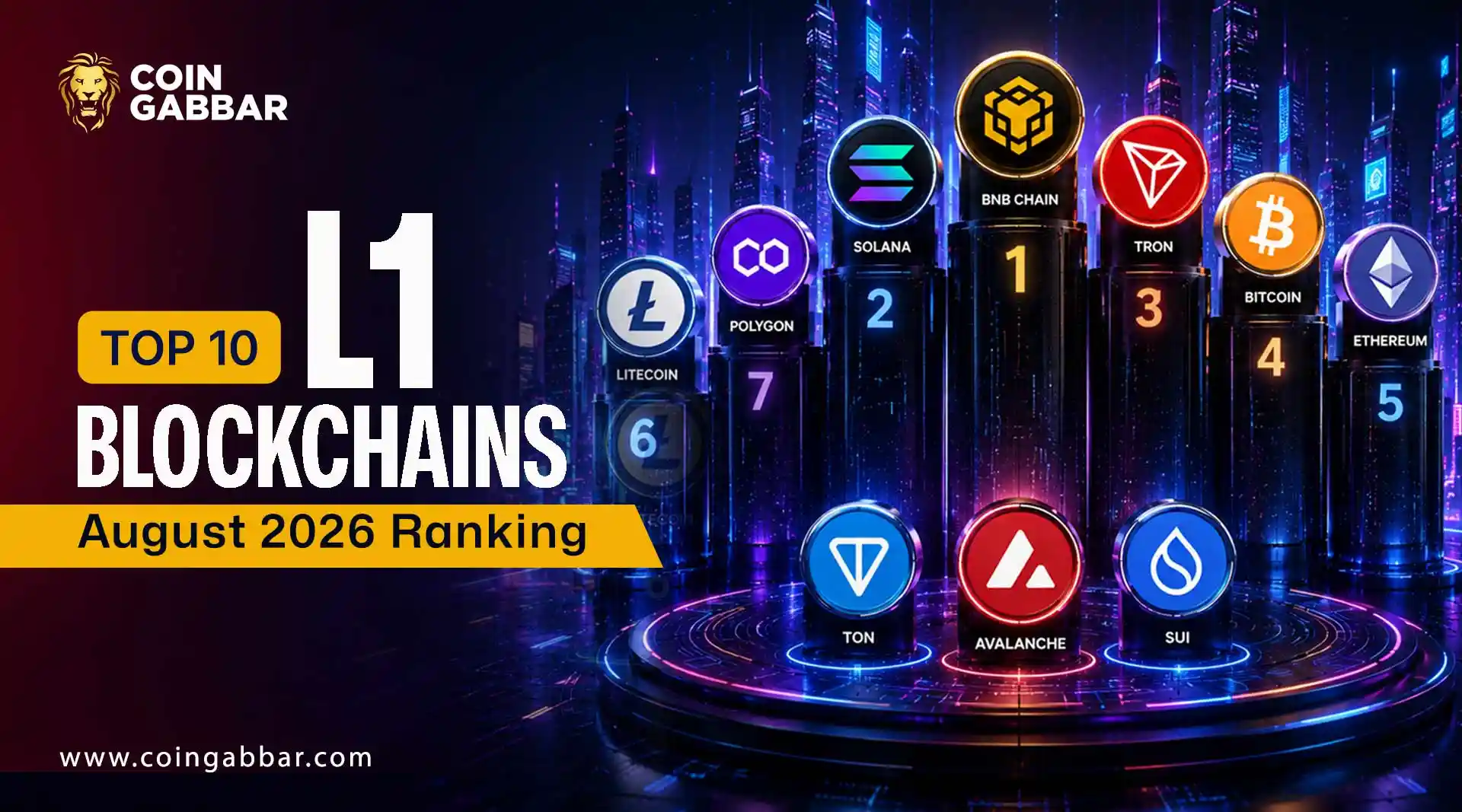
Top 10 L1 Blockchains: August 2026 Ranking and Volume Insights
Every blockchain runs on a base layer that handles its core work moving transactions, securing the network, and confirming everything is real. This base layer is called a Layer 1 blockchain, or L1 blockchain for short. Bitcoin, Ethereum, Solana, and BNB Chain are all examples. They don't rely on any other chain to function; they do everything themselves, from processing transactions to keeping the network secure.
This article looks at the top 10 L1 blockchains by 7-day trading volume, explains what makes each one different, and points out where the risks sit. Whether you're new to crypto or already tracking the space, this should give you a clear and balanced picture of the current top layer 1 blockchains.
Key Takeaways
BNB Chain and Solana are pulling in the highest trading volume among all Layer 1 blockchain projects, well ahead of the rest.
Bitcoin and Ethereum show lower short-term volume here, but that reflects how people use them, not a drop in importance.
Smaller-volume chains like Sui and Avalanche are still worth watching as the wider L1 blockchain ecosystem keeps growing.
What Is a Layer 1 Blockchain?
A Layer 1 blockchain is the foundation network everything else is built on. It handles its own transaction processing, its own security, and its own consensus meaning it doesn't need a second layer sitting on top of it just to work. Think of it as the base floor of a building. Layer 2 solutions, apps, and tokens can all be built above it, but the L1 itself carries the full weight of keeping the network running and secure.
How We Ranked the Top 10 L1 Blockchains
This ranking is based on 7-day trading volume, pulled from real exchange and on-chain activity. Volume is a useful signal because it shows where money is actually moving right now, not just where attention or hype is pointed. That said, it doesn't capture everything total market cap, developer activity, and long-term adoption all matter too, and are worth checking alongside this list.
Top 10 L1 Blockchains to Watch in August 2026
1. BNB Chain
BNB Chain sits at the very top of this list, and it's not a surprise. Its close relationship with Binance, the world's largest crypto exchange, gives it built-in liquidity and a huge existing user base. Fees on the network stay low, which keeps everyday activity high and consistent.
Stands out: Deep liquidity and tight exchange integration.
Risk: Its validator structure leans more centralized than some rival chains, which some users see as a trade-off for speed and low cost.
2. Solana
Solana has built its reputation on raw speed. It processes transactions in a fraction of a second, which has made it the go-to chain for high-frequency trading, NFTs, and meme coin launches. Its ecosystem of developers and apps continues to expand steadily.
Stands out: Very fast transactions and a large, active developer base.
Risk: The network has experienced past outages, and congestion can still slow things down during high-traffic periods.
3. TRON
TRON's volume is largely driven by one thing: stablecoins. A massive share of USDT transfers happen on TRON because fees are close to zero, making it a favorite for quick, cheap transfers across the globe.
Stands out: Extremely low transfer costs that keep volume consistently high.
Risk: The network is often criticized for having a smaller, more centralized group of validators compared to bigger chains.
4. Bitcoin
Bitcoin remains the most trusted name in the entire industry, even though its short-term volume here looks smaller than faster chains. That's largely because people tend to hold Bitcoin long-term rather than trade it constantly, which naturally lowers short-window volume figures.
Stands out: Unmatched security and the longest track record in crypto.
Risk: Slower transaction speeds and higher fees when the network gets busy.
5. Ethereum
Ethereum still powers the largest share of decentralized finance platforms and smart contracts in the industry. Its lower volume here doesn't reflect its importance it reflects the fact that a lot of Ethereum's activity happens through apps built on top of it, not just direct trading.
Stands out: The biggest ecosystem of decentralized apps and active developers.
Risk: Gas fees can spike sharply whenever network demand rises.
6. Litecoin
Litecoin has quietly stuck around since crypto's early years, and it still holds steady volume today. It was built to be a faster, lighter version of Bitcoin, mainly used for simple, quick payments rather than complex applications.
Stands out: Fast block times and a long, stable track record.
Risk: Limited real-world use beyond payments compared to smart-contract-focused chains.
7. Polygon
Polygon exists to make blockchain transactions cheaper and faster, mostly by working closely alongside Ethereum. It's popular with projects and users who want Ethereum-level security without the high gas fees.
Stands out: Strong partnerships and consistently low transaction costs.
Risk: Faces heavy competition from other low-fee scaling networks chasing the same users.
8. TON
TON's biggest advantage is built right in its deep integration with Telegram gives it instant access to hundreds of millions of potential users worldwide, something very few other chains can claim.
Stands out: Direct ties to one of the largest messaging platforms on the planet.
Risk: Its long-term growth is closely tied to Telegram's own platform decisions and policies.
9. Avalanche
Avalanche is built for speed and flexibility, letting projects launch their own custom blockchains, called subnets, directly on top of it. It's less about everyday trading and more about giving builders room to create.
Stands out: The ability for projects to launch their own custom subnets.
Risk: Lower current trading volume means less liquidity compared to top-tier chains.
10. Sui
Sui is the newest and smallest name on this list by volume, but it's steadily earning attention from developers thanks to its modern, high-speed architecture built from the ground up for scalability.
Stands out: A fresh technical design built specifically for speed and low costs.
Risk: Still early-stage, with less market history and lower liquidity than older, more established chains.
Top 10 L1 Blockchains — Quick Comparison
Rank | Blockchain | 7-Day Volume | Known For |
1 | BNB Chain | $40.5M | Low fees, Binance ecosystem |
2 | Solana | $32.9M | Speed, NFTs, meme coins |
3 | TRON | $18.8M | Stablecoin transfers (USDT) |
4 | Bitcoin | $10.4M | Security, store of value |
5 | Ethereum | $9.3M | Smart contracts, DeFi |
6 | Litecoin | $4.5M | Fast, simple payments |
7 | Polygon | $4.0M | Low-cost scaling |
8 | TON | $1.6M | Telegram integration |
9 | Avalanche | $1.5M | Custom subnets |
10 | Sui | $993.2K | New, high-speed architecture |
Which L1 Blockchain Has the Lowest Fees?
Based on current activity, TRON and BNB Chain stand out for consistently low transaction costs, which is a big reason both sit near the top of this list. Ethereum, on the other hand, can get expensive during busy periods, even though the network itself remains one of the most trusted in the industry.
Which L1 Blockchain Is the Fastest?
Solana and Sui are widely recognized as the fastest networks among today's best L1 blockchains. Both were designed with speed as a core goal from day one, which explains why they attract high-frequency trading and fast-moving app activity.
L1 Blockchain Security and Decentralization
Security and decentralization don't always match up with volume. Bitcoin and Ethereum remain the most decentralized and battle-tested networks around, backed by years of uptime and large, widely spread validator or miner networks. Newer or faster chains often trade off some decentralization in exchange for speed, which is worth keeping in mind more volume doesn't automatically mean a safer or more secure network.
Future of Layer 1 Blockchains
The overall L1 blockchain market cap across these networks keeps growing as more users and developers move on-chain. Going forward, competition will likely center on three things: speed, cost, and real-world usability. Chains that manage to balance all three, without sacrificing security, are the ones most likely to stay near the top of future top L1 blockchains 2026 rankings. At the same time, newer entrants like Sui prove the space is far from settled today's smaller chain could easily be tomorrow's leader.
Conclusion
This snapshot of the best L1 blockchain 2026 rankings shows a mix of established giants and fast-rising newcomers. BNB Chain and Solana currently lead on short-term volume, but Bitcoin and Ethereum's lower numbers here don't take away from their overall importance to the industry. Volume is just one piece of the puzzle pairing it with security, decentralization, and real adoption gives a much fuller, more accurate picture of where each network truly stands.
Disclaimer
This article is for informational purposes only and is not financial advice. Crypto markets are volatile, and trading volume can shift quickly. Always do your own research before making any investment decisions.
Also read:






.webp)