Top Memecoins Under $1 That Could 20× in the Next Bull Run

Best Memecoins Under $1 With 20× Potential in the Next Bull Run
Best Memecoins Under $1 With 20× Potential in the Next Bull Run
The crypto market keeps drawing new investors toward cheap tokens that promise big upside from a small entry point. Memecoins under $1 remain a favourite hunting ground for anyone chasing outsized percentage gains without a large starting budget.
Late 2026 has already seen fresh liquidity return to meme-driven assets, with several tokens pulling in renewed attention as trading volumes pick up across major exchanges. Social media activity around these coins has also picked up pace this quarter.
What Exactly Is a Memecoin?
A memecoin is a cryptocurrency built around internet culture, humour, or a viral character rather than a technical whitepaper. Most start as jokes and gain value purely through community strength and social buzz.
Some memecoins stay pure novelty plays. Others add real features over time, like DEXs, NFT platforms, or payment tools, to look less like a passing trend and more like a lasting project.
Because these tokens rarely have a fixed use case, their price is driven almost entirely by attention rather than fundamentals like revenue or adoption metrics.
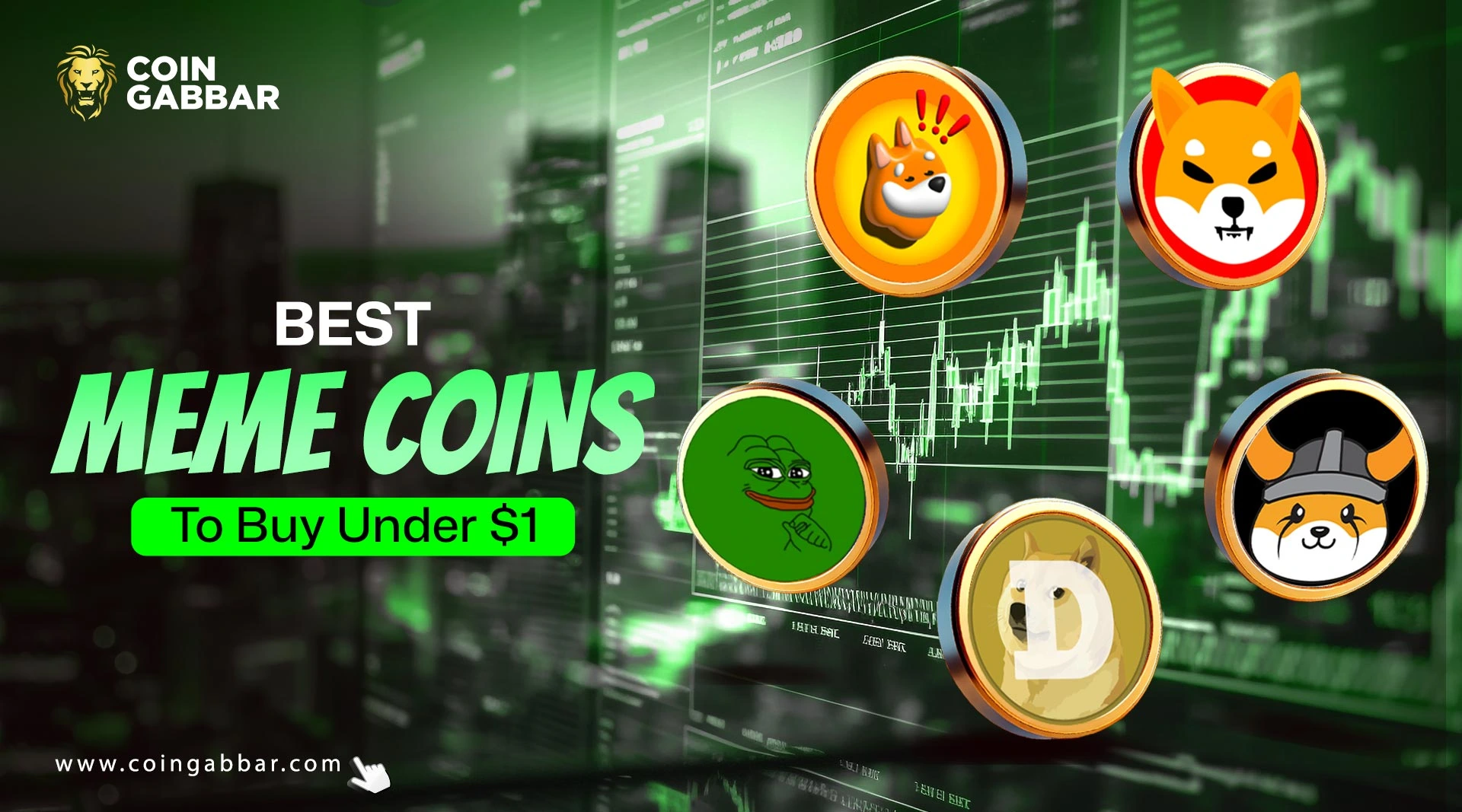
Shiba Inu (SHIB)
Shiba Inu rose to fame right after Dogecoin and built its own identity around a massive, loyal holder base. The project runs Shibarium, a Layer-2 network, along with ShibaSwap and an NFT collection called Shiboshi.
SHIB currently trades near $0.0000055, with a market capitalisation sitting around $3.2 billion. Its huge circulating supply means a token needs enormous demand to move its dollar price meaningfully.
Traders still favour SHIB because of its wide exchange listings and an active burn mechanism tied to Shibarium fees, which slowly reduces supply over time. The project's ecosystem tokens, BONE and LEASH, also add extra layers of utility beyond the main SHIB token.

Pepe (PEPE)
Pepe took the internet's favourite frog meme and turned it into one of Ethereum's most-traded tokens. There's no presale, no team allocation drama, and liquidity provider tokens were burnt early on.
PEPE is priced around $0.0000036 today, giving it a market cap near $1.5 billion. Interestingly, a spot ETF filing tied to PEPE surfaced in 2026, a first for a pure meme asset in a regulated fund wrapper.
The coin still swings hard on social sentiment alone, since it carries no revenue or backing beyond community interest. Its fixed supply of over 420 trillion tokens means big rallies usually come from short, sharp bursts of trading volume rather than steady climbs.

Bonk (BONK)
Bonk belongs to the Solana ecosystem and became a rallying point for builders and traders on that chain after a large community airdrop. It functions as a governance token for the Bonk Community Treasury.
BONK trades around $0.000003 with a market cap close to $268 million. Its fortunes track Solana's own network activity fairly closely, rising when Solana sees fresh usage and cooling when that momentum fades.
Small investors like BONK because a modest dollar amount buys an enormous token count, though that comes with the usual Solana-linked volatility. It also remains a common airdrop reward across Solana-based apps and wallets, which keeps new holders entering the ecosystem.

Floki (FLOKI)
Floki pushes further into utility than most dog-themed tokens, with a gaming metaverse, NFT marketplace, and DeFi products called TokenFi under its umbrella. Partnerships with mainstream media outlets have kept its visibility high through 2026.
FLOKI sits near $0.000026 per token, translating to a market cap of roughly $250 million. Its supply is capped at 10 trillion, so any real price appreciation still needs sustained buying pressure.
The mix of meme appeal and actual product releases keeps it on many watchlists, and its marketing-heavy approach continues to bring it new exchange listings and community campaigns.

Dogecoin (DOGE)
Dogecoin remains the coin that started the entire meme category, and it's still the most widely recognised by casual investors. A 2026 joint SEC-CFTC framework classified DOGE as a digital commodity, adding some regulatory clarity rarely seen for meme assets.
DOGE currently trades around $0.089, with a market cap close to $14.7 billion. Unlike Bitcoin, it has no supply cap, adding roughly 5 billion new coins every year, which keeps long-term price appreciation harder to sustain.
Even so, deep liquidity and constant mainstream chatter keep it near the top of most memecoin lists. Its wide acceptance across payment platforms and continued celebrity mentions also help it stay relevant well beyond its original joke-coin roots.
Why These Coins Keep Trending
Meme coins gain traction fastest when broader crypto sentiment turns positive and traders look for higher-risk, higher-reward plays. Exchange listings, community campaigns, and viral social posts all play a direct role in short-term price spikes.
Quick Comparison
Coin | Approx. Price | Approx. Market Cap | Risk Level |
SHIB | $0.0000055 | $3.2B | High |
PEPE | $0.0000036 | $1.5B | Very High |
BONK | $0.000003 | $268M | High |
FLOKI | $0.000026 | $250M | High |
DOGE | $0.089 | $14.7B | Medium-High |
Risk Factors to Keep in Mind
Memecoins carry no revenue, product moat, or guaranteed utility behind their price.
Prices move almost entirely on social sentiment, so hype can vanish overnight.
Massive token supplies mean huge percentage gains are needed to reach meaningful dollar prices.
Regulatory shifts, even positive ones like DOGE's commodity classification, can trigger sharp short-term volatility.
Low-cap tokens like BONK and FLOKI can see thin liquidity during sudden sell-offs.
Whale wallets holding a large share of supply can trigger sudden price drops if they exit positions.
Conclusion
Cheap memecoins under $1 still offer a low entry point for investors chasing quick percentage swings. Anyone exploring this space should pick a couple of tokens, study the roadmap behind them, and never commit more than they can afford to lose. SHIB, PEPE, BONK, FLOKI, and DOGE each bring a different mix of community strength, utility, and risk, making them worth tracking heading into 2027. Staying updated on exchange listings and community developments can help investors time their entries more sensibly.
Disclaimer:
This article is for informational purposes only and does not constitute financial advice. Price and market cap data as of September 9–10, 2026, compiled from CoinMarketCap.




.jpg)