RIF Network Hard Fork 2026: Complete Guide to Rootstock

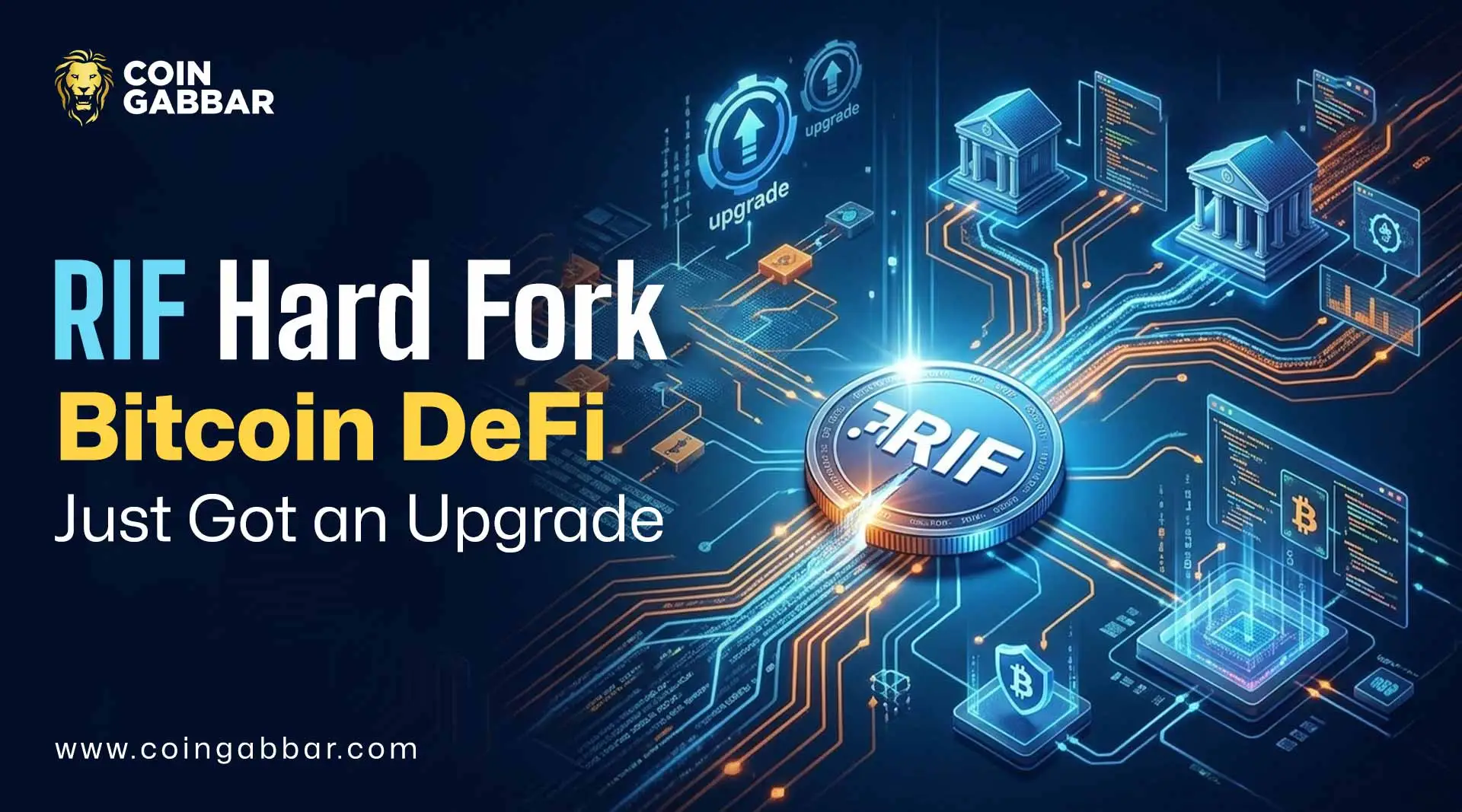
RIF Network Hard Fork: How Rootstock Secures Bitcoin DeFi
Have you heard that RIF Network is going through a critical hard fork on May 4, 2026—and most holders have no idea what it actually means for their tokens? This is not just a routine maintenance update. The RIF Network hard fork represents another step in Rootstock's long-term mission to become Bitcoin's most powerful DeFi layer. If you hold RIF tokens or are watching Bitcoin DeFi closely, here is everything you need to know right now.
TL;DR
RIF Network is the infrastructure layer built on Rootstock—Bitcoin's longest-running smart contract sidechain. A hard fork is scheduled for May 4, 2026. Binance has suspended RIF deposits and withdrawals temporarily to support the upgrade. Trading continues unaffected. No new tokens will be created. The upgrade improves network performance and security for Bitcoin DeFi.
RIF Network Hard Fork: How Rootstock Secures Bitcoin DeFi
Most people think Bitcoin cannot run smart contracts. Rootstock is the first and longest-running Bitcoin sidechain. It combines the security of Bitcoin's proof-of-work with Ethereum's smart contract capabilities. It is open-source EVM compatible, and secured by over 60 percent of Bitcoin's hashing power.
That last number matters enormously. No other Bitcoin Layer-2 solution is secured by that much of Bitcoin's hashrate. Rootstock does not ask you to trust a new consensus mechanism. It borrows Bitcoin's existing security directly.
Rootstock uses merge-mining — a technique that allows miners to secure both the Bitcoin blockchain and the Rootstock network simultaneously using the same hash power. No additional computational resources are needed.
The result is a platform where developers can build Ethereum-compatible dApps—decentralized applications—while inheriting Bitcoin's unmatched security. That combination is what makes Rootstock unique in the entire Bitcoin Layer-2 space.
Rootstock has been running continuously since 2018. That track record is not accidental.
Hard forks on Rootstock happen approximately annually. When Ethereum performs a hard fork to add new functionalities, Rootstock performs a corresponding hard fork to maintain EVM compatibility. This keeps Rootstock aligned with Ethereum's developer tooling while remaining secured by Bitcoin.
The May 4, 2026 hard fork follows this same pattern—a mandatory upgrade that improves network performance, security, and EVM alignment for everything being built on Rootstock.
RIF Network Token: Staking Governance and USDRIF Explained
RIF is designed to scale and accelerate the adoption of Rootstock—Bitcoin's DeFi layer—through community incentives, infrastructure, and interoperability.
The RIF token does four distinct things on the Rootstock network.
First — governance. RIF powers community rewards, governance, and grants on Rootstock Collective—the DAO dedicated to Bitcoin builders. By staking RIF, users receive stRIF, the governance token used for voting, proposal creation, and rewards allocation.
Second — infrastructure access. RIF underpins key infrastructure on Rootstock, including USDRIF—a censorship-resistant stablecoin—and RNS—the RIF Name Service that simplifies wallet addresses.
Third — gas fee payments. RIF tokens can pay for gas fees via RIF Relay without needing to hold Rootstock's native token rBTC. This makes it easier for regular users to interact with Bitcoin DeFi without managing multiple token types.
Fourth — stablecoin minting. USDRIF is a stablecoin pegged 1:1 to USD — fully decentralized and backed by over-collateralization of RIF. It serves as an alternative to centralized stablecoin issuers and enables borderless payments, lending, and currency stability for underserved markets.
Here is how the RIF ecosystem connects:
Product | What It Does | Who Uses It |
STRIP | Governance voting in DAO | RIF stakers |
USDRIF | Decentralized USD stablecoin | DeFi users merchants |
RNS | Simplified wallet addresses | All Rootstock users |
RIF Relay | Pay gas in RIF, not rBTC | New users dApp builders |
rBTC | Native gas token: 1:1 BTC | All Rootstock transactions |
RootstockCollective has secured $10 million in funding for its treasury. Builders can submit ideas to the DAO and unlock funding to develop projects on Bitcoin using Rootstock.
RIF Network Hard Fork May 4: What Changes and What You Must Do
The May 4, 2026, RIF Network hard fork is a mandatory protocol upgrade. All node operators must update to the latest version before the target block height is reached. Failure to upgrade means nodes will fall off the canonical chain.
For regular RIF token holders, the process is much simpler. Binance has confirmed it will handle all technical requirements on behalf of users holding RIF on the exchange. Deposits and withdrawals are temporarily suspended around the fork date. Trading of RIF continues without interruption throughout the upgrade window.
The Rootstock network underwent a PowPeg composition change at Bitcoin block 8,558,281 in February 2026—changing the Bitcoin address used to peg BTC into Rootstock. After activation, users needed to verify the new deposit address before sending BTC. The May 4 upgrade follows a similar pattern of incremental infrastructure improvement.
For users holding RIF in self-custody wallets—MetaMask, Trust Wallet, or any ERC677-compatible wallet—no action is required unless you are running a node. The upgrade happens at the protocol level and does not affect your token balance.
The only thing you need to do right now is avoid initiating large RIF deposits or withdrawals on Binance around May 4.
Binance and RIF Hard Fork — What Exchange Users Must Know
Binance has officially confirmed support for the RIF Network hard fork on May 4 2026. The exchange will temporarily suspend RIF token deposits and withdrawals around the fork date to handle all technical requirements on behalf of its users. This suspension is a standard protective measure Binance applies during every major network upgrade.
The key point for Binance users is this — RIF trading will continue without interruption throughout the entire upgrade window. You can still buy and sell RIF on Binance during the suspension. Only deposits into and withdrawals from the exchange are paused.
Binance will reopen deposits and withdrawals once the upgraded network is confirmed stable. No further announcement will be made when services resume — watch your Binance wallet status directly for confirmation.
If you planned to move RIF on or around May 4 — complete that transfer before the suspension begins.
What Makes This Hard Fork Different
Previous RIF Network hard forks focused on security patches and EVM compatibility maintenance. The May 2026 upgrade comes at a different moment in the market.
Bitcoin DeFi is accelerating in 2026. Rootstock's TVL has been growing as institutional attention turns toward Bitcoin-native yield products. The timing of this upgrade aligns with a broader narrative shift — Bitcoin is no longer just a store of value. It is becoming productive financial infrastructure.
Protocol updates and hard forks can play a significant role in RIF's price trajectory. Each successful upgrade strengthens developer confidence in Rootstock's infrastructure and may attract fresh capital to the ecosystem.
The RootstockCollective DAO is actively funding new Bitcoin DeFi projects in 2026. Builder Rootcamp Cohort 1 kicked off in January 2026—signaling that the developer pipeline is growing alongside the infrastructure upgrades.
Scenario Framework
Scenario 1 — Bull Case — Bitcoin DeFi Breakout: The May 4 hard fork completes successfully and introduces meaningful performance improvements. Bitcoin DeFi TVL on Rootstock accelerates through Q2 2026 as institutional capital searches for Bitcoin-native yield. RIF token demand rises alongside governance participation in RootstockCollective. Price recovers from its current bearish trend toward $0.07 to $0.10 range.
Scenario 2 — Base Case — Steady Infrastructure Growth: Hard fork completes without issues. Network performance improves incrementally. Developer activity grows slowly through 2026 as more teams discover Rootstock's Bitcoin security advantage. RIF price stabilizes in the $0.03 to $0.05 range with gradual appreciation as TVL grows.
Scenario 3 — Bear Case — Upgrade Delay or Macro Pressure: Hard fork experiences technical delays or requires a second patch. Market-wide Bitcoin correction reduces appetite for Bitcoin DeFi speculation. RIF price continues its bearish trend — currently down 35.57% year-to-date — with support tested at $0.02. Thin liquidity amplifies downward moves.
Glossary
Hard Fork — A mandatory protocol upgrade that requires all nodes to update. Nodes that do not upgrade split from the main network permanently.
Rootstock — RSK — Bitcoin's longest-running EVM-compatible sidechain. Secured by over 60% of Bitcoin's hashrate through merge-mining since 2018.
RIF Token — The native token of the Rootstock Infrastructure Framework. Used for governance, gas payments, stablecoin minting, and DAO participation.
USDRIF — A fully decentralized stablecoin pegged 1:1 to USD. Backed by over-collateralized RIF tokens. Enables censorship-resistant dollar payments on Rootstock.
stRIF — Vote-escrowed RIF. Received when you stake RIF in the RootstockCollective DAO. Grants governance voting rights and reward eligibility.
rBTC — Rootstock's native gas token. Always worth exactly one BTC through a two-way peg secured by Bitcoin's proof-of-work hashrate.
Conclusion
The RIF Network hard fork on May 4, 2026, is not just a technical maintenance event. It is one more step in Rootstock's decade-long mission to make Bitcoin's trillion-dollar security layer productive for DeFi. From the USDRIF stablecoin to RootstockCollective governance to RIF Relay gas payments—the ecosystem being built here is real. The upgrade window is brief. Binance handles everything for exchange users. But the story behind this fork is worth understanding before Bitcoin DeFi becomes impossible to ignore.
Disclaimer: Not financial advice. RIF hard fork timelines are estimates. Always verify through official Rootstock and Binance channels before making any decisions







.jpg)




