Spot vs Futures Crypto: The Crypto Showdown Everyone's Talking About

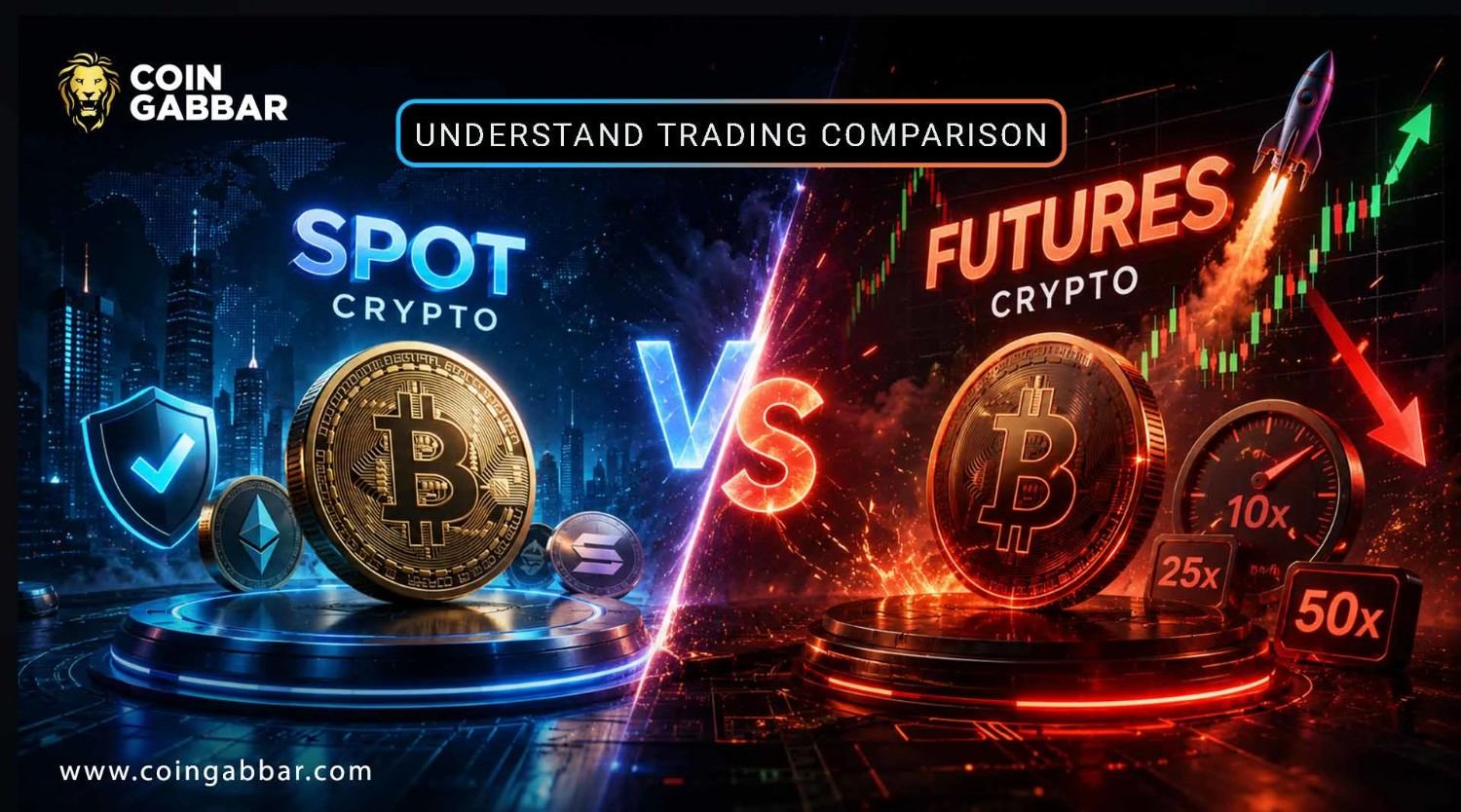
Spot vs Futures-Crypto: A Beginner’s Complete Guide
Picture two crypto traders standing side by side. One just bought real Bitcoin and is holding it in a wallet. The other bought a smart contract that bets on where Bitcoin's price is headed without ever actually owning a single coin.
Same market, two totally different games. That's spot trading vs futures trading in a nutshell, and once the difference clicks, it's honestly kind of fun to watch play out.
This one's going to break both spot vs futures crypto down in plain terms, with no jargon overload, and end with a simple way to figure out which side of the ring actually fits.
Meet the Contender: What Even Is Spot Trading?
Spot trading is the simple stuff, and it's one half of the $spot vs future-crypto picture. Someone buys at today's price and actually owns it. No contracts, no expiration dates, no fine print.
Buy Bitcoin, hold Bitcoin, sell Bitcoin whenever that's the whole game.
Spot Trading Snapshots
Buying Bitcoin or Ethereum straight from an exchange and holding it in a wallet
Swapping one coin for another at the current market rate
Dollar-cost averaging into a coin a little at a time
Long-term holding, buying now and simply waiting it out
$Spot trading feels a lot like buying gold or stock. It's real ownership, and the risk pretty much stops at "the price went down."
Enter the Challenger: What's Futures-Trading All About?
Futures-trading is a bet on price, not the coin itself, and it's the wilder half of $spot vs futures-crypto. A trader agrees to buy or sell-crypto at a set price on a future date, and no actual coin changes hands.
Most crypto-today are "perpetual," meaning they never expire, but the core idea stays the same.
The wild card here is leverage. let someone control a much bigger position than their actual cash would normally allow, sometimes 10x, 20x, even 100x. That sounds exciting, and it is, until the price moves the wrong way.
Futures Trading Snapshots
Perpetual $futures contracts, the most common type on crypto exchanges
Leveraged long positions, betting the price goes up
Leveraged short positions, betting the price goes down
Hedging a spot position by opening an opposite $futures trade to offset risk
Futures-trading feels more like a fast-paced arcade game than a savings account. That contrast is really what makes $spot vs futures crypto such an interesting matchup: bigger swings, bigger thrills, and a much shorter fuse if things go sideways.
Round One: Who Pays More Upfront?
$Spot trading only ever needs the actual purchase price. Buy a coin for $100, and $100 is exactly what's at stake.
It flips that completely. Thanks to leverage, someone might only need a small fraction of that $100 as "margin" to open a much bigger position. It's cheaper to get in, but that same leverage cuts both ways just as fast.
Round Two: Who's Taking the Bigger Gamble?
$Spot risk is simple: the price can drop, and the value drops with it. That's the whole story.
Futures risk gets a lot spicier. A leveraged position can get wiped out entirely if the price moves against it enough, something called liquidation.
It can happen fast, sometimes within minutes, and there's no slow fade to soften the blow.
Round Three: Who Needs More Attention?
$Spot trading barely asks for anything once the purchase is made. Buy it, forget about it, and check back whenever.
Futures trading wants eyes on it constantly. Positions need monitoring, margin needs managing, and funding rates (a periodic fee paid between traders) quietly nibble away at profits in the background.
Scorecard
Category | $Spot Trading | Futures Trading |
Ownership | Real coin, actually owned | No coin, just a contract on price |
Upfront Cost | Full price of the purchase | Smaller margin, thanks to leverage |
Risk Level | Loses value if price drops | Can be wiped out fast through liquidation |
Attention Needed | Low, mostly buy and hold | High, needs constant monitoring |
Best For | Long-term holders, simple ownership | Active traders comfortable with risk |
The Real Verdict
Honestly, there isn't one. It depends entirely on what someone's actually after. In the end, $spot vs futures crypto comes down to personal fit: Spot trading wins for anyone who just wants to own crypto and ride out the years. Futures trading wins for anyone chasing short-term price moves and willing to stomach the risk that comes with it.
Before You Pick a Side
A quick gut check helps decide between spot vs futures crypto. Someone who panics at a 10% dip probably shouldn't touch leverage.
Someone who gets a thrill from watching charts move in real time might find $spot trading a little too slow for their taste.
Plenty of traders actually use both. $Spot for the coins; they believe in long-term $futures for shorter bets they're willing to lose on.
Conclusion
$spot and futures trading aren't really rivals; they're just two different tools built for two very different mindsets.
That's the whole takeaway of $spot vs futures crypto: one is about owning something real and being patient. The other is about speed, leverage, and a much bigger appetite for risk.
Knowing the difference before jumping in is what turns a fun trade into a smart one.
Disclaimer
This article is for informational purposes only and isn't financial advice. $Futures trading in particular carries high risk due to leverage, and losses can happen quickly. Independent research is recommended before trading either spot vs futures crypto.
Also read: