TikCoin Network vs Grey Network: Which Project Leads in 2026?

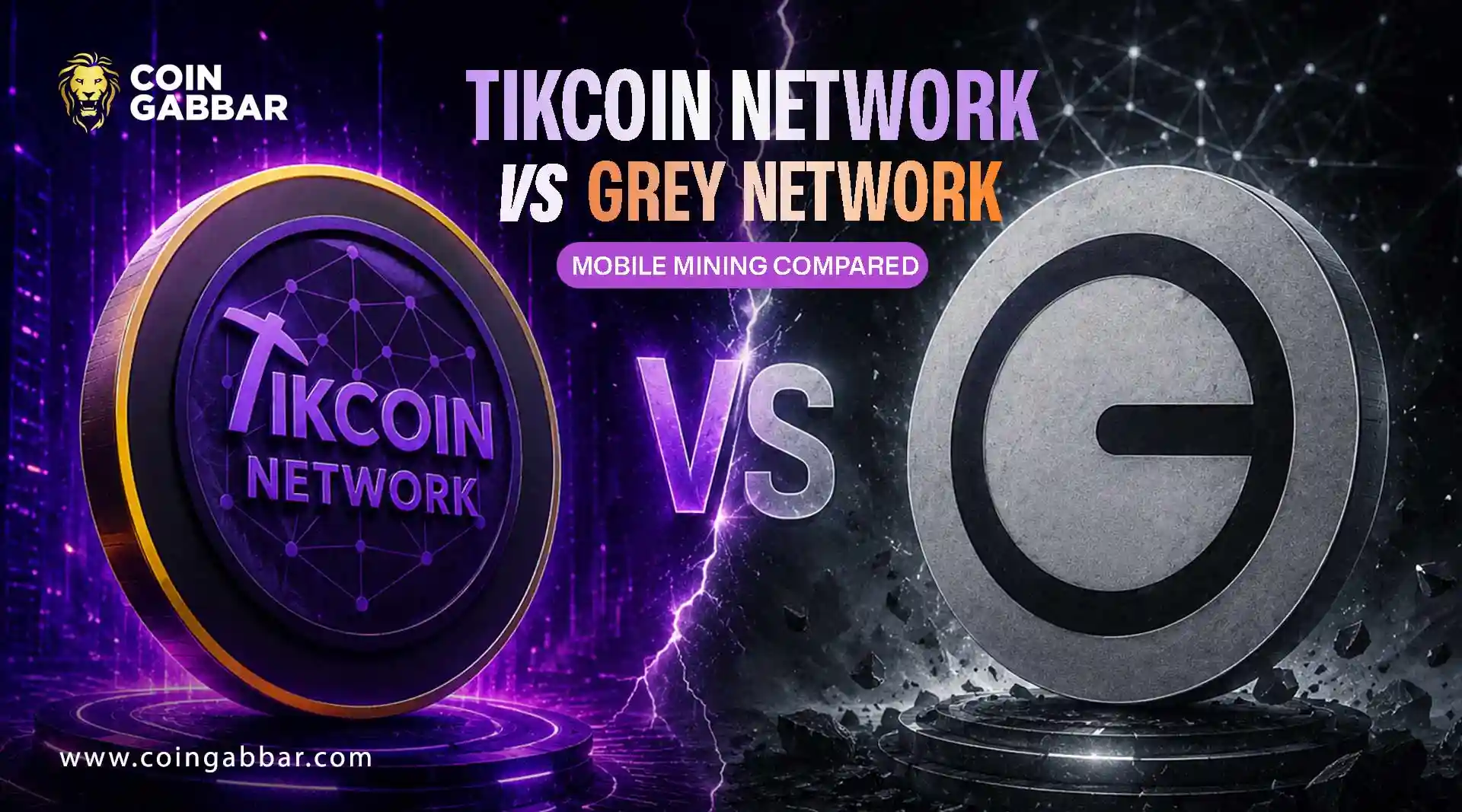
TikCoin Network vs Grey Network: Comparing Two Mobile Mining Projects
Mobile crypto mining keeps taking different shapes, and two projects showing that clearly right now are TikCoin Network and Grey Network. This TikCoin Network vs Grey Network comparison looks at how each one actually works, using details pulled straight from their official websites because despite both falling under "mobile mining," the way each token gets earned is genuinely different.
Key Takeaways
TikCoin rewards social media-style engagement (likes, comments, posts), while Grey-Network rewards a simple daily tap through Proof of Mobile Engagement.
TikCoin has a fixed 3.33 billion TIK supply with 80% going to community mining, while Grey-Network's fixed 2.1 billion supply allocates 70% to its community pool.
Both projects remain pre-listing TIK has a detailed 5-phase rollout with specific 2026 dates, while Grey Network has no live token or confirmed exchange listing yet.
What Is TikCoin Network?
According to TikCoin's official website, TikCoin Network positions itself as a decentralized social platform where user engagement directly translates into token rewards. It's less "mine with your phone" in the traditional sense and more "get paid for using social media the way you already do."
Risk to know: TikCoin's global exchange listing depends on completing four earlier rollout phases first, meaning trading access is tied to a multi-step timeline rather than being available immediately.
Features that stand out:
Engagement mining that rewards likes, comments, and posts automatically
A Zero Gas Fee option users can send TIK for free by watching a short ad, or pay under 1% for instant transfers
A Diamond Miner Program rewarding uninterrupted daily mining streaks with NFTs and priority feature access
Layered anti-dump protection, including KYC, fraud detection, and gradual token unlocking
What Is Grey Network?
Grey Network, per its official platform, takes a more traditional tap-to-mine approach, positioning itself as a full Layer-1 blockchain built around mobile-first participation rather than a social feature layered on top of an app.
Risk to know: Grey-Network has no live token, no exchange chart, and no confirmed launch date everything about its current value remains speculative until an actual token generation event happens.
Features that stand out:
Its own Layer-1 chain with a dedicated Grey-Virtual Machine (GVM) for future developer activity
A large 70% community allocation, among the higher community-first splits in this category
Fixed 2.1 billion supply with no further issuance once minted
48-month team vesting with a 12-month cliff, limiting early insider selling pressure
How TikCoin Network Mining Works
Understanding how TikCoin Network mining works means understanding that it isn't really "mining" in the Bitcoin sense at all. Instead, TIK is earned through everyday social activity inside the app posting, liking, and commenting all generate rewards automatically. On top of that sits the Diamond Miner Program, which specifically rewards users who keep an uninterrupted daily streak going, adding a loyalty layer on top of basic engagement rewards. Miss a day, and that Diamond streak resets, pushing users toward consistent daily activity rather than one-off spikes of engagement.
How Grey Network Mining Works
How mining works follows the more familiar tap-to-mine crypto pattern that's become common across this category. Users open the app and tap once every 24 hours, activating a mining session under a system calls Proof of Mobile Engagement. Rewards are tied to genuine, verified participation rather than computing power, which is designed to prevent "empty" mining and keep token distribution linked to real activity rather than automated farming.
Mobile Mining Ecosystem: TikWallet vs GREY Vault
Both projects route their rewards through a dedicated app-based system, but the mobile mining ecosystem each one is building looks different up close. TikCoin's rewards live inside TikWallet, which becomes the official trading venue in Phase 3 of its roadmap before any token reaches outside exchanges, activity has to happen inside TikWallet first, with requirements like completed KYC and at least 14 consecutive days of mining.
Grey Network's parallel piece, Vault, is positioned similarly as the home for mined GREY balances, though Grey-Network hasn't published a phased trading rollout with the same level of specific dates that TikCoin has laid out.
TikCoin vs Grey Network Tokenomics
TikCoin Network's Token Model
TikCoin's total supply is fixed at 3,333,333,333 TIK:
Allocation | Percentage |
Community Mining | 80% |
Team & Dev | 8% |
Marketing | 5% |
Partnerships | 5% |
Reserve | 2% |
Grey Network's Token Model
Grey Network's total supply is fixed at 2,100,000,000:
Allocation | Percentage |
Community Pool (Mining + Referrals) | ~70% |
Ecosystem & Development | 15% |
Liquidity & Exchange Prep | 10% |
Team & Advisors | 5% |
TikCoin's 80% community share is the larger of the two, and its smaller 8% team allocation is also more conservative than Grey's 5%, though Grey compensates with a longer 48-month vesting schedule versus TikCoin's own gradual unlock system.
TikCoin Network vs Grey Network Roadmap Comparison
This TikCoin Network vs Grey-Network roadmap comparison shows TikCoin with a notably more detailed public timeline. TikCoin's plan runs through five specific phases: KYC verification, partner reward verification, TikWallet trading (beginning August 20, 2026), a fair token unlock starting October 10, 2026 with 30% released in month one and 10% monthly after, and finally global exchange listing once the earlier phases stabilize the market.
Grey Network's roadmap, by comparison, remains less publicly detailed in terms of exact dates, with its mining and community phase still the primary focus ahead of any confirmed listing timeline.
TikCoin vs Grey Network Which Is Better?
There's no single answer to TikCoin vs Grey-Network which is better it comes down to what kind of mining model appeals to you. If you're already active on social platforms and like the idea of turning existing engagement into rewards, TikCoin's model and its detailed, dated rollout plan offer more transparency about what happens next.
If you prefer a simpler, once-a-day tap and a broader long-term vision built on its own Layer-1 chain, Grey-Network's approach fits that better, though it currently asks for more patience given its less detailed public timeline. Both remain free to try, so there's little cost to testing either one directly.
Conclusion
TikCoin Network and Grey-Network both represent different bets on what "mobile crypto mining" can look like one turning social media activity into rewards with a clearly dated rollout, the other sticking to a simple daily tap while building out its own blockchain. Since neither token trades live yet, the more useful comparison right now is transparency and structure rather than price, and that's exactly where these two projects currently differ most.
Disclaimer
This article is for informational and educational purposes only and does not constitute financial or investment advice. Both TikCoin Network and Grey- Network are pre-launch, community-mining projects without live, tradable tokens at the time of writing. Cryptocurrency projects at this early stage carry significant risk, including changes to roadmaps, timelines, and token value. Please do your own research (DYOR) and consult a qualified financial advisor before making any decisions.