What Is Decentralized Identity Web3 and Why It Matters for Privacy

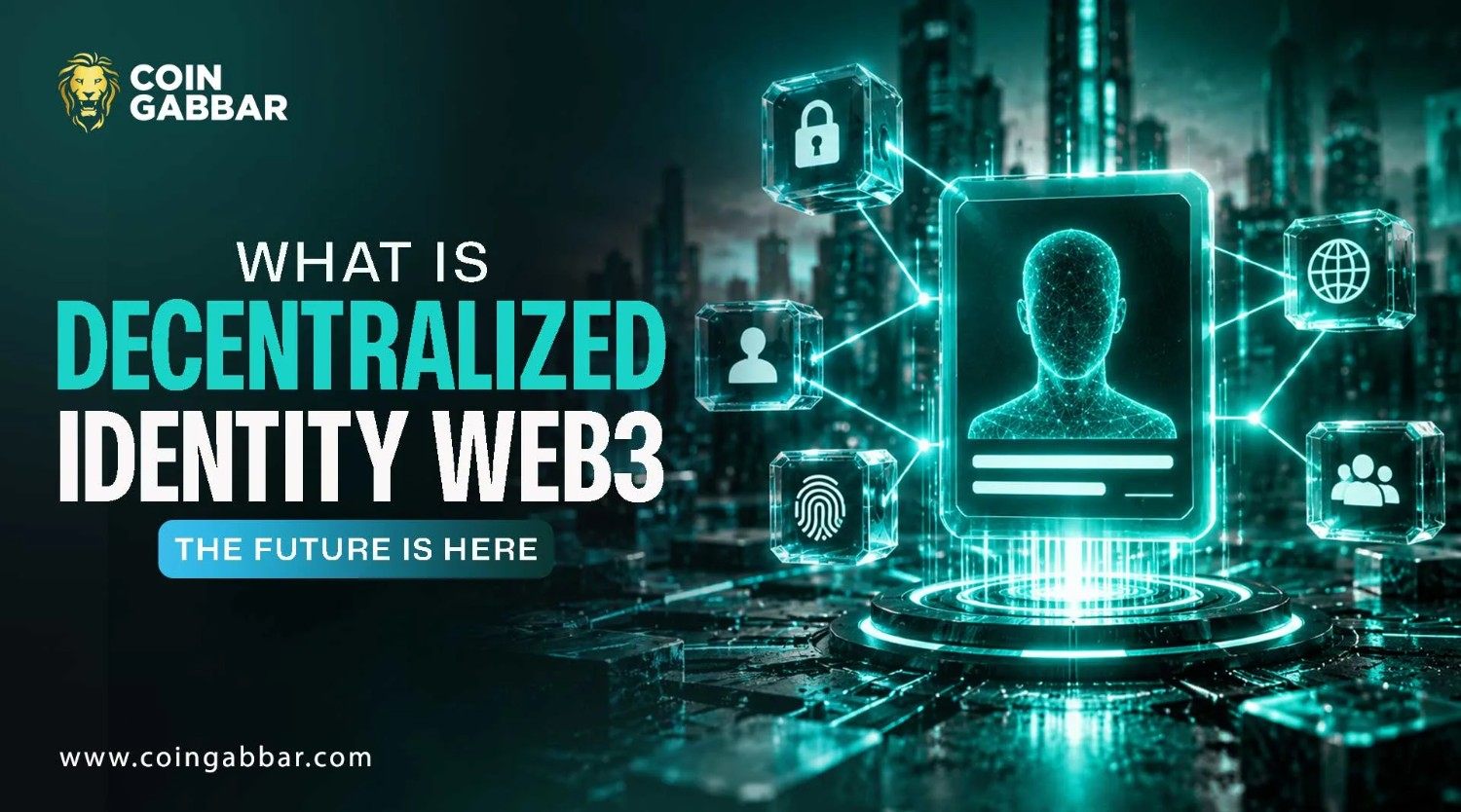
What Is Decentralized Identity Web3? Simplified
Think about the last time you signed up for an app. You entered your name, your email, and perhaps your date of birth. You clicked "Agree," and just like that, a company had your personal information stored on its servers indefinitely.
This happens to all of us, repeatedly, and we rarely stop to consider where that data actually goes. This is precisely why understanding what is Decentralized Identity Web3 matters; it was designed to address exactly this problem.
The Real Issue With the Current Internet Infrastructure
Whenever you log in with Google or Facebook, that company effectively becomes the custodian of your identity. It is they who determine your access and permissions, and they can revoke that access at any time.
This is a centralized model, where a single company holds all the keys to your identity. It is somewhat like renting a house: you live there, but you do not actually own it. Recognizing this problem clearly is the first step toward understanding what is Decentralized Identity Web3.
What Is a DID?
This brings us to another important term: DID, or Decentralized Identifier. In essence, a DID functions like a username, except it is not owned by any corporation; it belongs to you.
It resides on a blockchain, a decentralized ledger that is not controlled by any single organization. Like other foundational technologies in this space, DIDs achieved international standard status in 2022, when the W3C, the organization responsible for setting web standards, formally approved them.
DIDs now serve as the foundation upon which all other components of this ecosystem are built, making them the essential starting point for understanding what is Decentralized Identity Web3.
Understanding the Concept of a DID
To put it simply, a DID, or Decentralized Identifier, can be thought of as a username that no company owns.
It lives on a blockchain, essentially a digital ledger that no single company controls. In 2022, the W3C, the same body that establishes standards for how websites operate, formally recognized DIDs as an official global standard.
This serves as the base upon which everything else is built, making it the first concept to grasp when exploring what is Decentralized Identity Web3.
Verifiable Credentials: Proof You Can Actually Trust
Once you have a DID, you can attach credentials to it, such as your degree, your age, or your address. These are known as verifiable credentials. For example, suppose your school issues you a digital certificate upon completing the 8th grade. Two years later, a new school requires proof of this. You simply tap a button and share the credential; no phone calls, no waiting, and no paperwork required.
The new school can verify its authenticity using cryptographic methods, without ever needing to contact your previous school. This example illustrates what Decentralized Identity Web3 looks like in practice.
The Privacy Advantage: Zero-Knowledge Proofs
Here is something that may sound like magic but is, in fact, simply clever mathematics. Suppose a venue only admits individuals over the age of 18.
Conventionally, you would present your ID, which reveals your full name, address, and exact birthdate, far more information than is actually necessary. A zero-knowledge proof allows you to prove that you are over 18 without disclosing anything else.
No additional information is revealed. This single feature demonstrates the level of thought invested in Decentralized Identity Web3, particularly with respect to protecting user privacy.
How Does This Relate to Crypto and DeFi?
Within the cryptocurrency space, there is a persistent challenge known as KYC, or Know Your Customer. Platforms must verify user identities to prevent fraud. Currently, this typically involves uploading a passport, waiting several days for approval, and repeating the process for every new application.
With digital identity, users can complete KYC once, obtain a credential, and reuse it across multiple platforms. This eliminates repeated document uploads and reduces the number of companies retaining copies of sensitive information such as passports. This is a key reason why the crypto community places such significant emphasis on what is Decentralized Identity Web3.
Real Projects Already Doing This: Worldcoin and Polygon ID
Worldcoin scans a user's iris using a device called the Orb, verifying that the individual is a genuine human rather than a bot or a fabricated account. This has become increasingly relevant given how easily AI can now generate fake identities.
That said, many people remain understandably cautious about submitting to an eye scan, a valid concern. Polygon ID, built on the Polygon network, takes a different approach, enabling applications to verify facts about a user through zero-knowledge proofs, without ever accessing their actual personal information. Both projects represent substantive, real-world implementations of what Decentralized persona Web3 entails.
A Few Things Worth Being Careful About
This technology is promising, but it remains imperfect. If a user loses the key to their digital wallet, they risk losing their entire persona, and there is no "forgot password" option to fall back on.
Additionally, a credential is only as trustworthy as the entity that issued it. A fraudulent institution could still issue fake diplomas even within this framework. Understanding these limitations is just as important as understanding what is Decentralized Identity Web3 and its advantages.
Conclusion
What is Decentralized Identity Web3? At its core, it comes down to one simple principle: your identity should belong to you, not to Google, not to Facebook, and not to any company.
This shift has the potential to transform how students share academic records, how patients share health information, and how millions of people without formal government identification can finally prove who they are.
The technology is still evolving and has genuine challenges left to solve, but for the first time, the tools required to make this a reality actually exist. Understanding this now puts you ahead of most people, and that is always a valuable position to be in.
Disclaimer
This article is for informational purposes only and does not constitute financial, investment, or legal advice. References to specific projects, platforms, or technologies (including Worldcoin, Polygon ID, and related crypto/DeFi applications) are for illustrative purposes and should not be taken as endorsements. Digital identity technology is still developing, and users should independently research any platform or wallet before adopting it and consult a qualified professional where appropriate.
Also read: