What Is Opal Chain, and Why Does It Matter? Step-by-Step Guide

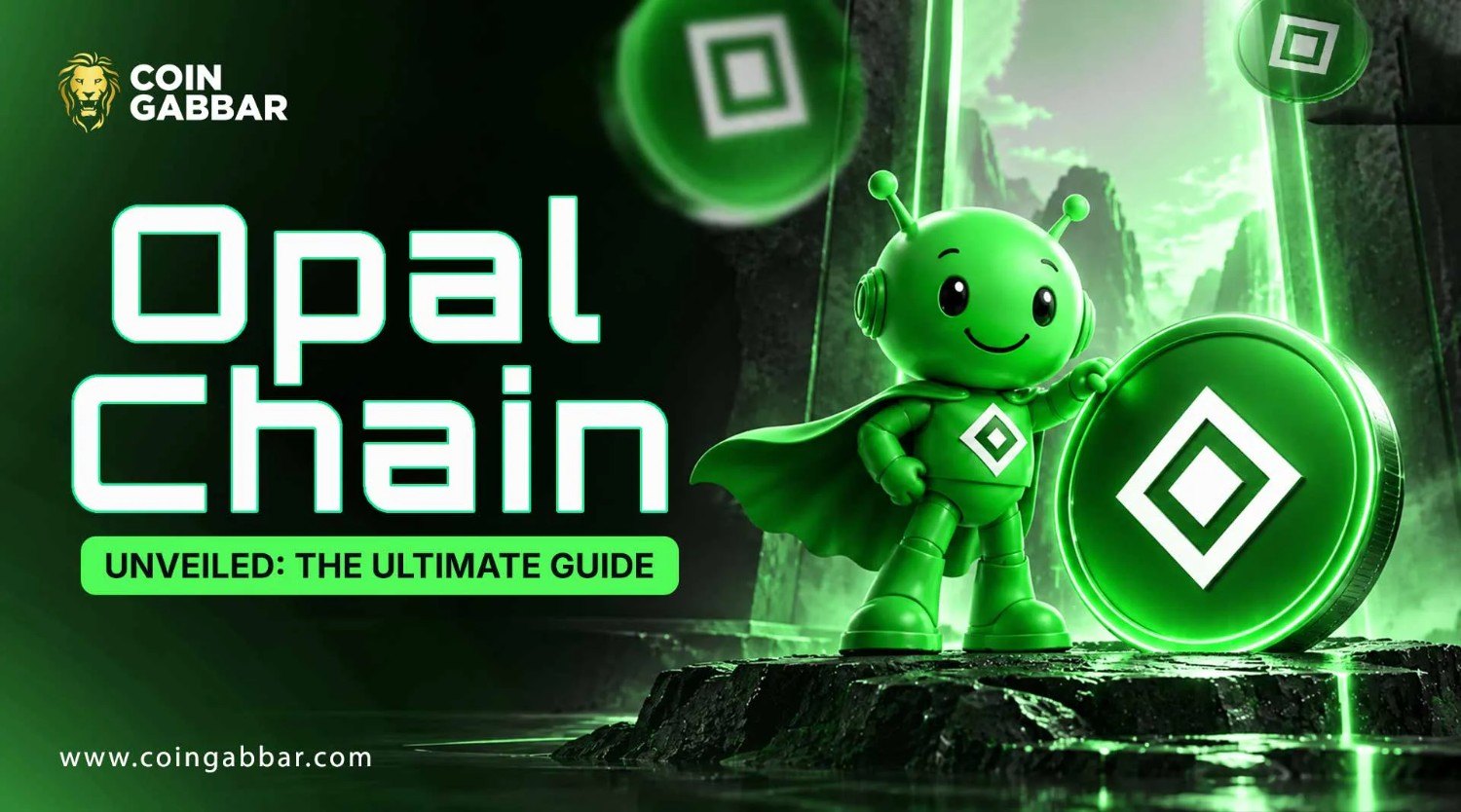
What Is Opal Chain? A Complete Guide to How It Works
Ever wondered what is Opal Chain and why mobile crypto users keep talking about it? Short version: it's a blockchain project that lets people mine a coin called OPAL straight from their phone, no expensive rig needed.
This guide covers what's confirmed, what's still up in the air, and what to watch before getting involved.
Key Takeaways
OPAL has a fixed supply of 153 million coins; no printing more later.
The project runs on a "Burn-to-Earn" model, burning tokens every 10 days.
As of July 2026, the Telegram Mini App had launched, but token distribution and any exchange listing were still pending.
No independent security audit has been published for Opal Chain yet.
It's often compared to Pi Network, since both use the mine-first, distribute-later approach.
So, What Is Opal Chain?
What is Opal Chain, in plain terms? Per its own official documentation, Opal Chain calls itself a mobile-first blockchain built around fast transactions and phone-based mining.
Its token is OPAL, and everything official lives at mineopal.org, plus a Telegram channel, an X account, and an app on Google Play.
One thing worth being clear about: what is Opal Chain? It positions itself as its own Layer 1 chain with a built-in mining app, not something riding on top of Ethereum or Solana. That distinction matters when judging how decentralized or secure it really is.
The Idea Behind It
Understanding what is Opal Chain important, but it starts with the problem it says it's solving. Regular mining usually means pricey hardware and a hefty power bill, locking a lot of people out.
Opal Chain's answer: use the phone you already own. Pair that with a burn mechanism meant to manage supply, and the project also leans on everyday use cases like online payments, freelance settlements, and merchant tools, not just speculation.
How Does It Work?
Once the basics of what is Opal Chain are clear, the "how" is the next natural question. The project’s official documentation describes a proof-of-stake setup with Byzantine fault tolerance, a Layer 1 core plus modular rollups, and sharding for scalability.
Those are the project's own claims, and no independent source has verified real network performance yet, so treat the specs as unproven.
For everyday users, it's simpler: open the app, mine roughly 1 OPAL every 12 hours, and let the burn schedule run in the background.
Benefits, As the Project Sees Them
Part of answering what is Opal Chain means is looking at what it claims to offer:
Easy entry: mining happens through an app, not a rig.
Lower energy use than traditional proof-of-work mining.
Naturally scarce, due to the limited amount of tokens, as well as the token-burning system.
Conceptual framework: tools for merchants and freelancers, rather than merely for staking.
Global reach, with community programs aimed beyond crypto hubs.
These are stated goals, not proven results.
Token Utility
A big piece of what is Opal Chain comes down to what the OPAL token is actually for. OPAL is meant to work as a mining reward, a burn-to-earn tool tied to USDT payouts, a payment token for the ecosystem's planned use cases, part of the Opal Pad launchpad, and eventually a governance token once DAO voting arrives.
Tokenomics and Token Allocation
No breakdown of what is Opal Chain is complete without the numbers, straight from the project's own documentation:
Total supply: 153,000,000 OPAL, fixed.
Burn frequency: every 10 days.
Burn rate: about 15% of newly mined tokens per event, roughly 45% monthly.
Stated price impact: each burn is designed to nudge the price floor up by $0.0015, starting from $0.05. That's a design goal, not a promise.
Allocation:
Community Mining & Rewards: 53% (81,090,000 OPAL)
Ecosystem Growth: 21.2% (32,436,000 OPAL)
Advertising & Influencers: 18% (27,540,000 OPAL)
Team & Advisors: 7.8% (11,934,000 OPAL)
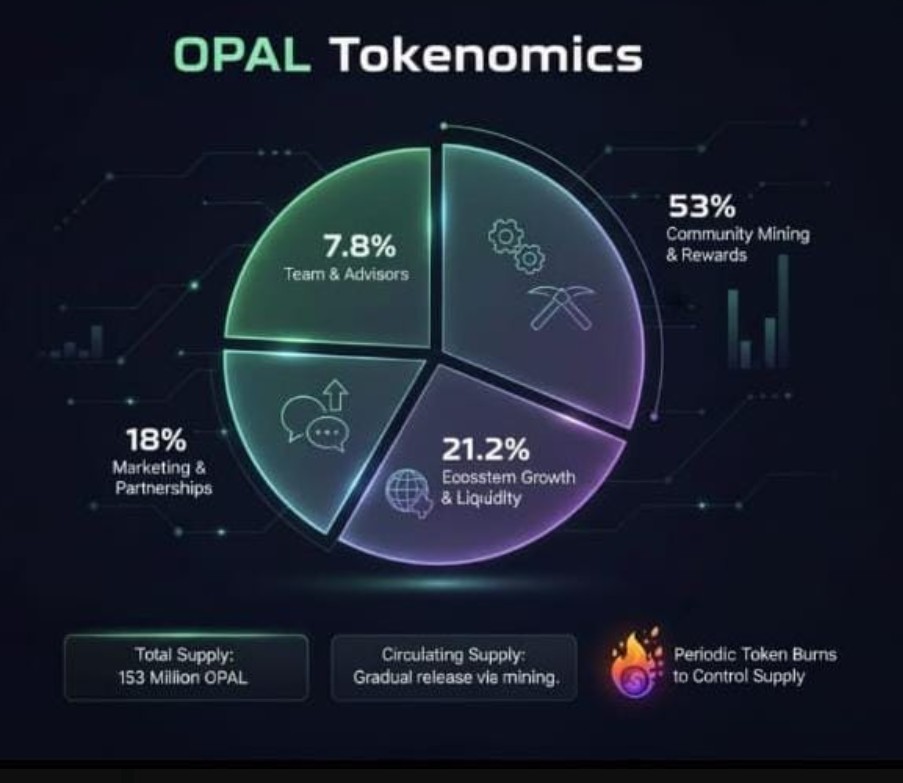
The team's cut is small next to the mining pool, which at least on paper favors everyday users over insiders.
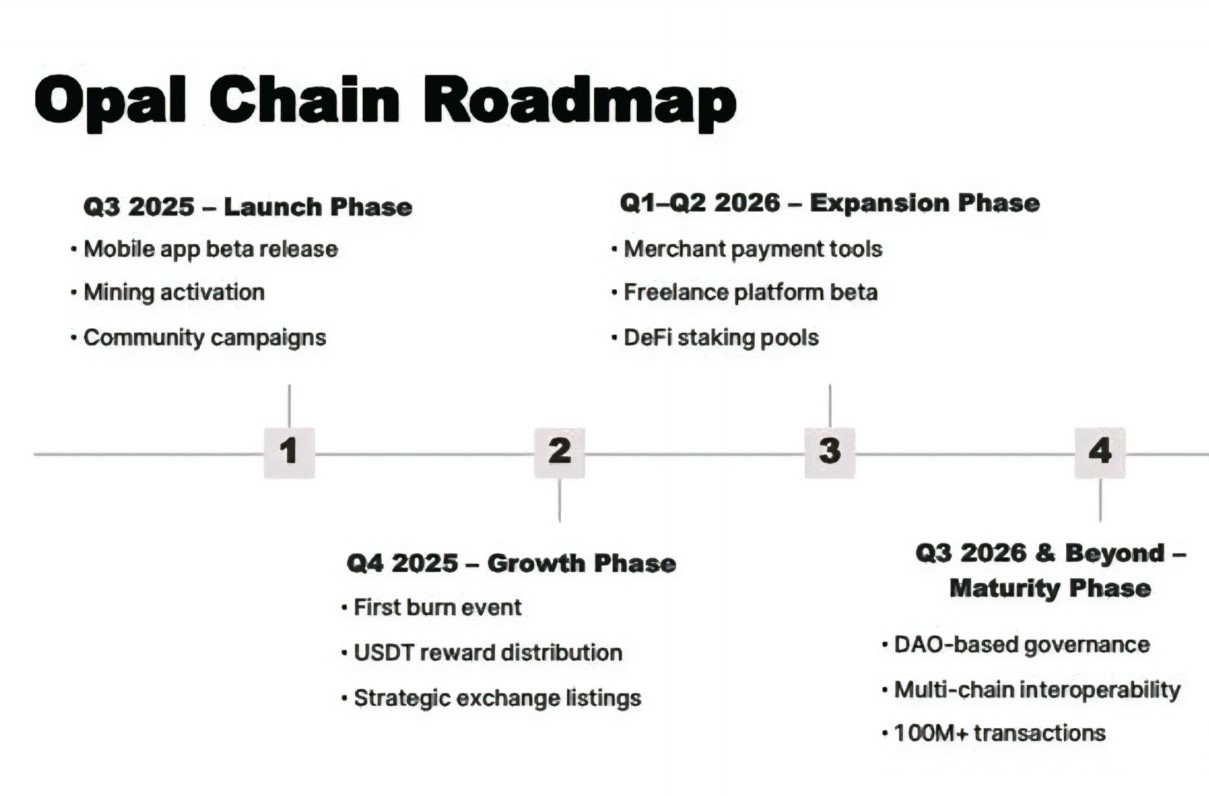
Roadmap, Step by Step
The roadmap is another angle on what is Opal Chain and where it says it's headed:
Q3 2025: app beta, mining goes live, community push.
2025 Q4: Burn Event One, USDT reward, exchange listings.
2026 Q1-Q2: Merchant Tools, Freelancer Platform Beta Launch, DeFi Staking.
2026 Q3 onwards: DAO Governance, Multi-Chain, and target of 100M+.
What's Actually Confirmed?
Knowing what is Opal Chain on paper is one thing; knowing where it actually stands is another. Independent reporting from July 1, 2026, said the mini app launched right on schedule, June 28.
Token distribution, though, was still just "coming soon," and the burn mechanism stays off until a DEX listing happens, which also hadn't been confirmed. Worth checking official channels for updates, since timelines shift often in mobile-mining projects.
Security and Audits
Any honest look at what is Opal Chain has to include its security status. No third-party audit report has surfaced publicly. T
The official documentation mentions "cryptographic audits and multi-sig," but without a named firm or public report behind it. Until that changes, treat OPAL as unaudited.
Why Is It Different From Other Chains?
Comparing projects is another way to understand what is Opal Chain. The mine-first, list-later approach draws obvious comparisons to Pi Network.
Opal Chain's twist is a hard 153 million cap and a heavier mining allocation. Whether that actually leads to a smoother rollout is still an open question, not a settled win.
Risks Worth Knowing
No fair answer to what is Opal Chain would skip the risks:
Execution risk: distribution and listing are both still pending.
Security risk: unaudited contracts mean unverified code.
Risk of Timeline: The app-to-token conversion issue does not have an official reason behind it.
Risk of Liquidity: As there is no listing, there is no liquidity to trade into.
Value Assumption: The price floor theory is founded on non-existent demand.
Conclusion
So, what is Opal Chain, in the bottom line? Opal Chain has a clear pitch and real published numbers, but the milestones that matter most, token distribution and an exchange listing, are still pending. The fixed supply and heavy mining allocation are worth noting, but they're untested until real trading begins.
Disclaimer
This is informational only, not financial advice. It's based on Opal Chain's and its public reporting as of the dates mentioned, neither fully independently verified. Crypto projects without an audit or confirmed listing carry real risk. Do your own research before making any decisions.