XRP vs Solana: Speed, Fees, Adoption and Blockchain Differences 2026

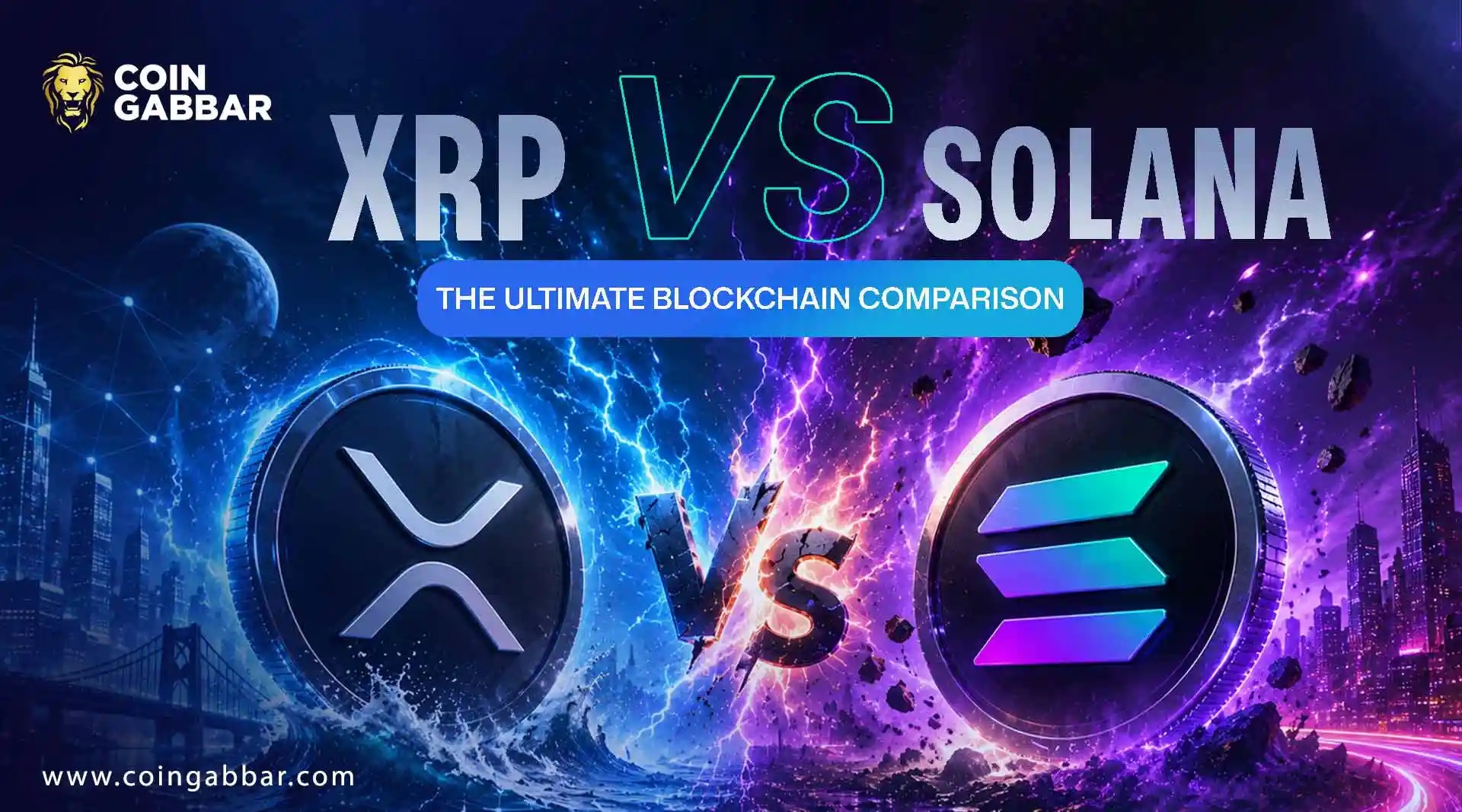
XRP vs Solana: Which Blockchain Performs Better in 2026?
XRP settles transactions in three to five seconds. Fees stay under a cent. Most people use it for cross-border payments.
Solana works differently. It settles in under a second. Its fees are just as low. Most people use it for decentralized apps, trading, and NFTs.
Neither one is "better" outright. They're built for different jobs. That's why this comparison breaks each factor down on its own, instead of picking one overall winner.
XRP vs Solana keeps coming up in crypto conversations for a simple reason: the two networks solve very different problems, even though people often lump them together. This piece breaks Ripple vs SOL down into the parts that actually matter — speed, cost, scalability, adoption, and the technical design behind each one. A data section at the end pulls the key metrics together in one place.
Methodology note: This comparison looks at both networks through five lenses: transaction speed, fee structure, consensus design, adoption patterns, and ecosystem activity. Numbers on speed, fees, and supply come straight from each network's own technical documentation. Some figures move fast active addresses, developer counts, total value locked. Those change daily, so check the sources listed at the end of this article for current numbers instead of treating anything here as fixed.
What Is XRP Ledger?
XRP Ledger, often just called XRP, is the blockchain behind Ripple XRP, built from the start with payments in mind. Instead of mining or traditional proof-of-stake, it uses a consensus protocol run by a network of independent validators who agree on transaction order without needing heavy computing power. That design is why $XRP Ledger has always leaned into speed and low cost, particularly for cross-border settlement tied to Ripple's payment business.
What Is Solana Network?
Solana network takes a different approach. It combines proof-of-stake consensus with Proof of History, which timestamps transactions before they're grouped into blocks. That combination lets SOL process a high volume of transactions quickly, and it's part of why the SOL ecosystem grew into a hub for decentralized apps, NFT trading, and DeFi platforms that need fast, cheap execution.
Which Is Faster? XRP vs Solana Speed Comparison
Ripple typically settles transactions in three to five seconds, with a commonly cited theoretical capacity around 1,500 transactions per second.
Solana advertises a much higher theoretical ceiling, sometimes cited in the tens of thousands of transactions per second, with sub-second block times under normal conditions.
In an XRP vs SOL speed comparison, SOL generally wins on raw throughput potential, while Ripple has a long record of consistent, predictable settlement without needing to hit peak capacity to perform well.
Which Has Lower Fees? XRP vs Solana Transaction Fees
Ripple transactions typically cost a fraction of a cent, with fees designed to stay minimal even during busy periods.
SOL transaction fees are also extremely low under normal conditions, though they can rise briefly during periods of heavy network congestion.
For anyone comparing Ripple vs Solana transaction fees specifically, both networks stay far cheaper than traditional banking transfers or congested older blockchains, which is part of why both get used for high-frequency activity.
XRP vs Solana Scalability
Scalability isn't just about how fast a network can go on paper it's about how it holds up under real demand.
XRP Ledger has generally maintained stable performance over the years, partly because payments don't create the same unpredictable spikes as NFT mints or trading frenzies. SOL has faced a handful of network outages and slowdowns in the past, usually tied to demand overwhelming validator infrastructure, though the network has rolled out ongoing upgrades aimed at improving stability.
That history matters for any $XRP vs SOL scalability discussion, since theoretical capacity and real-world reliability under stress aren't always the same thing. (Source: XRP Ledger official developer documentation).
Which Has More Adoption? XRP vs Solana Adoption Comparison
XRP's adoption leans toward institutional and payment-focused use cases:
Cross-border payment activity through Ripple's On-Demand Liquidity product, as documented in Ripple's own payments materials
Ongoing engagement with banks and payment providers exploring faster settlement rails
Alignment with ISO 20022 messaging standards used across traditional finance
SOL ecosystem adoption leans toward consumer and developer activity:
A large base of decentralized apps, including DeFi platforms and exchanges, documented across Solana's own ecosystem directory
NFT marketplaces and creator tools built directly on the network
Growing activity in gaming, DePIN projects, and consumer-facing crypto apps, tracked by independent blockchain analytics platforms. Source: Solana official developer documentation.
In an $XRP vs Solana adoption comparison, it's less about one network "winning" and more about which side of crypto each has actually become useful for. Readers wanting current figures on either side should check independent analytics platforms rather than project marketing alone.
XRP vs Solana Use Cases
XRP Ledger is generally the better fit for straightforward value transfer, remittances, and payment settlement, where predictability matters more than flexibility. SOL network is generally the better fit for building and running applications trading platforms, NFT projects, or consumer apps that need fast, cheap transactions at scale.
Which Is Better for Developers?
Solana has a bigger developer community overall. Its design supports smart contracts and a wide range of app types. In that sense, it's similar to Ethereum, but built for higher throughput.
XRP Ledger supports smart contracts too, through newer additions to its protocol. But its tooling and developer community stay smaller. They also focus more narrowly on payment-related apps.
So the split looks like this: developers building consumer apps, DeFi, or NFT projects tend to pick SOL. Developers building payment rails or settlement tools tend to pick $XRP Ledger.
XRP vs Solana Performance
Performance brings speed, fees, and reliability together into one picture.
XRP Ledger's performance is steady. It's built for payments, so it prioritizes consistency above all else.
Solana's performance aims higher. It's built for developers, so it prioritizes raw capability. That track record includes strong throughput, but also a few network stress events along the way.
Neither profile wins outright. They're just built for different jobs.
Data Comparison Table
Metric | XRP | SOL Network |
Consensus model | $XRP Consensus Protocol (federated) | Proof of Stake + Proof of History |
Typical settlement time | 3-5 seconds | Sub-second block times |
Typical transaction fee | Fraction of a cent | Fraction of a cent (can rise under congestion) |
Token supply structure | Fixed, capped at 100 billion XRP | No hard cap; inflationary issuance schedule |
Smart contract support | Added via newer protocol features (Hooks/sidechains) | Native, full smart contract support |
Network uptime history | No major network-wide outage since 2012 launch | Multiple documented outages, mainly 2021-2022, with reliability upgrades since |
Core focus | Cross-border payments, settlement | Apps, DeFi, NFTs, general-purpose activity |
Notable adoption | Banks, payment providers, Ripple partnerships | DeFi platforms, NFT markets, developer ecosystem |
For metrics that shift daily, such as active addresses, developer counts, and total value locked, check a live blockchain analytics platform or each project's official dashboard for current figures rather than a fixed snapshot.
XRP vs Solana Investment Comparison
Any XRP vs Solana investment comparison needs to start with a simple point: these are two assets tied to two different network purposes, and past performance on either side doesn't guarantee future results. XRP's value proposition is closely tied to payment adoption and regulatory developments around Ripple's business. Solana's value proposition is tied more closely to developer activity, app usage, and demand for its ecosystem. Both carry the volatility and risk typical of the broader crypto market, and neither should be treated as a guaranteed outcome based on network design alone.
Final Word
XRP vs Solana ultimately comes down to purpose. $XRP Ledger was built for fast, cheap, predictable payments, and it's found real traction in that lane through Ripple's institutional partnerships. Solana network was built for speed and flexibility at a broader scale, and it's become a home for developers and consumer apps that need both. Rather than asking which one is simply "better," it's more useful to ask which network's actual use case lines up with what you're trying to understand or evaluate.
Disclaimer
This article is for informational purposes only and does not constitute financial or investment advice. Cryptocurrency markets are volatile, and network comparisons should not be treated as investment recommendations. Always do your own research through official sources before making any investment decision.
Also read: