Bybit EU EMI License Approved: How MiCA Expands New Crypto Payments?

Bybit EU EMI License Approved in Austria to Expand Regulated Payments
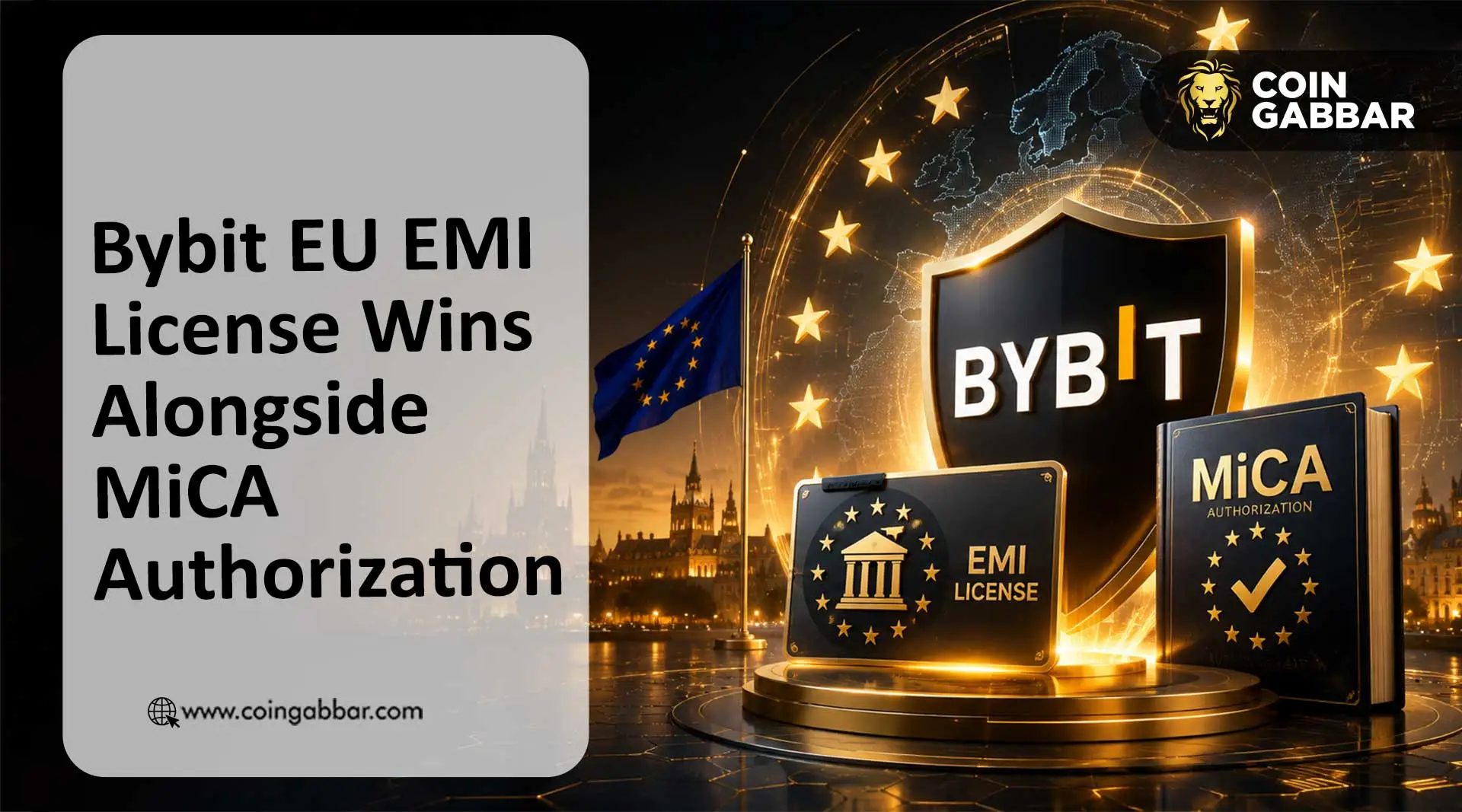
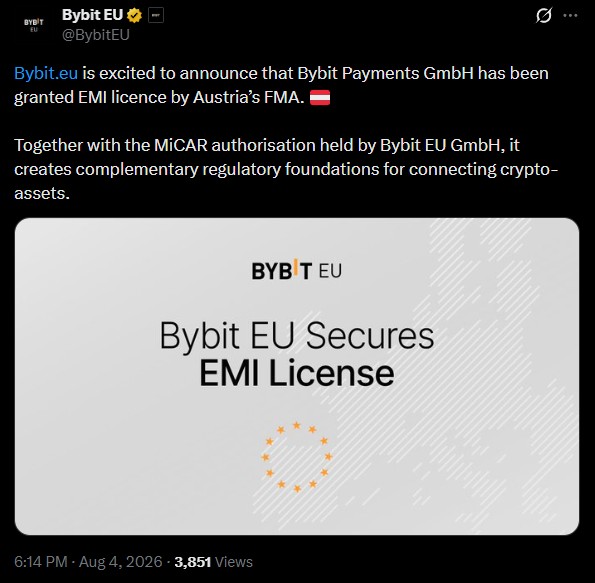
Bybit EU has confirmed that its payments arm, Bybit Payment GmbH, has been granted an Electronic Money Institution (EMI) license by Austria's Financial Market Authority (FMA).
The announcement, made on August 4, 2026, marks a fresh step in the exchange's push to build a fully regulated financial ecosystem in Europe. This matters because it moves beyond crypto trading into mainstream payment infrastructure, an area traditionally dominated by banks and fintech firms.
Combined with the MiCA authorization already held by Bybit EU GmbH, gives the group two separate but complementary regulatory foundations in Austria.
Together, they support a broader strategy of offering crypto and everyday financial services from a single, compliant platform aimed at European users and merchants.
What Is Bybit's New EMI License?
An Electronic Money Institution license permits a company to issue electronic money, hold customer funds, and process payments under strict EU consumer-protection rules, separate from banking licenses but still closely supervised.
Austria's Financial Market Authority, the country's financial regulator, oversees firms offering payment and e-money services within its jurisdiction, alongside crypto-asset providers. Bybit Payments GmbH is the entity that received this specific authorization, distinct from Bybit EU GmbH, which handles crypto-asset activities.
The key difference is scope: an EMI license governs fiat-based payment and e-money functions, while a crypto license, such as the MiCA authorization, governs digital-asset trading and custody.
Keeping these functions in separate legal entities helps Bybit meet regulatory obligations cleanly while still presenting a unified experience through the Bybit.eu platform.
What Services Will Bybit Offer Under the EMI License?
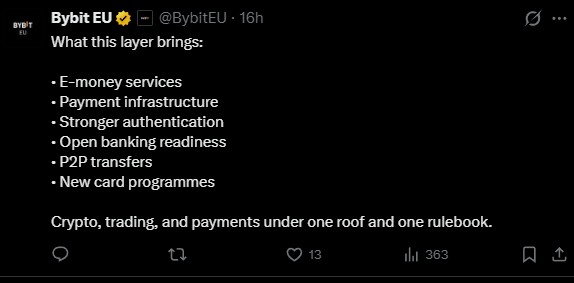
With the EMI licenses in place, Bybit Payments GmbH can roll out regulated electronic money services across the Bybit.eu platform. Planned capabilities include peer-to-peer payments for fast transfers between users, open banking connectivity for secure links to traditional bank accounts, and merchant payment tools that let businesses accept payments directly.
The license also paves the way for new bank card programs, likely debit or prepaid options tied to user accounts, along with stronger authentication features designed to improve transaction security.
For everyday users and businesses in Europe, this could mean faster transfers, more payment choices, and tighter integration between fiat and crypto balances, all under one licensed provider rather than juggling separate apps or third-party processors.
| Feature | What It Enables |
| EMI License | Regulated electronic money services |
| P2P Payments | Fast transfers between users |
| Open Banking | Secure banking connectivity |
| Merchant Payments | Payment acceptance for businesses |
| Card Programs | Debit/prepaid card offerings |
| Strong Authentication | Improved payment security |
| MiCA Authorization | Regulated crypto asset services |
How the EMI License Complements Bybit's MiCA Authorization
This EU GmbH has held MiCA authorization as a crypto-asset service provider since May 2025, allowing it to offer regulated crypto trading and custody across EU and EEA markets. The new EMI approval sits alongside that approval rather than replacing it, with Payments GmbH handling e-money and payment functions while EU GmbH continues managing crypto-asset services independently.
This split exists because EU rules require distinct permissions for different financial activities, even when the underlying platform feels unified to the end user. The result is a dual regulatory framework: one license for crypto, one for payments, both housed under Austrian oversight.
Structured this way, it can connect crypto holdings with traditional payment rails while staying compliant with each regulation's specific requirements.
Why This License Is Important for Bybit's European Expansion
Securing an EMI license pushes Bybit exchange further into regulated payment territory, a space that carries higher compliance demands but also greater legitimacy than typical crypto-only offerings.
It signals an effort to build genuine financial infrastructure in Europe rather than relying solely on exchange revenue. This groundwork could support future fintech products, from integrated wallets to merchant checkout tools, all operating under the same licensed umbrella.
For customers, a licensed EMI provider generally means stronger fund safeguarding and clearer regulatory recourse, which can boost trust in the platform. It also sharpens Bybit's competitive position against other crypto exchanges racing to secure European licenses, since combining MiCA and EMI approvals under one group is still relatively rare in the sector.
Product Launch Timeline and What Comes Next
The exchange has not announced an official launch date for the new payment services, nor has it detailed a specific European rollout schedule. Based on the announcement, services are expected to be introduced gradually rather than all at once, starting with core e-money infrastructure before expanding into P2P transfers, card programs, and merchant tools.
Future updates will likely clarify country-by-country availability and any onboarding requirements for existing Bybit.eu users.
| Date | Event |
| Earlier | Bybit EU GmbH receives MiCA authorization |
| August 4, 2026 | Bybit Payments GmbH obtains an EMI license from Austria's FMA |
| Next Phase | Development of e-money and payment infrastructure |
| Future | Launch of P2P payments, cards, merchant payment, and open banking services across Europe |
Industry Impact: What the EMI License Means for Crypto Payments
This move reflects a broader trend of crypto exchanges seeking traditional payment licenses to bridge digital assets with everyday finance. Regulators across Europe appear increasingly willing to grant such approvals, provided firms meet strict compliance standards.
As more exchanges pursue similar dual licensing, competition among European crypto platforms is likely to intensify, particularly around who can offer the most seamless blend of trading, spending, and banking features. Longer term, this points toward a future where digital and crypto services become less distinct, with regulated platforms acting as the connective layer between both worlds.
Conclusion
Bybit's latest news today adds a payments layer to a group that already holds MiCA authorization for crypto services. Together, the two approvals give EU GmbH complementary regulatory footing to serve European customers.
If executed well, this could bring European users faster payments, broader banking connectivity, and tighter crypto-fiat integration. For now, the specific launch timeline and rollout details remain unconfirmed, leaving the market to watch for Bybit's next official updates.
Disclaimer: This article is for informational purposes only and does not constitute financial, investment, or legal advice. Always conduct independent research before using any financial product.