Fed Meeting News: Kevin Warsh Plans Major Changes To FOMC Schedule

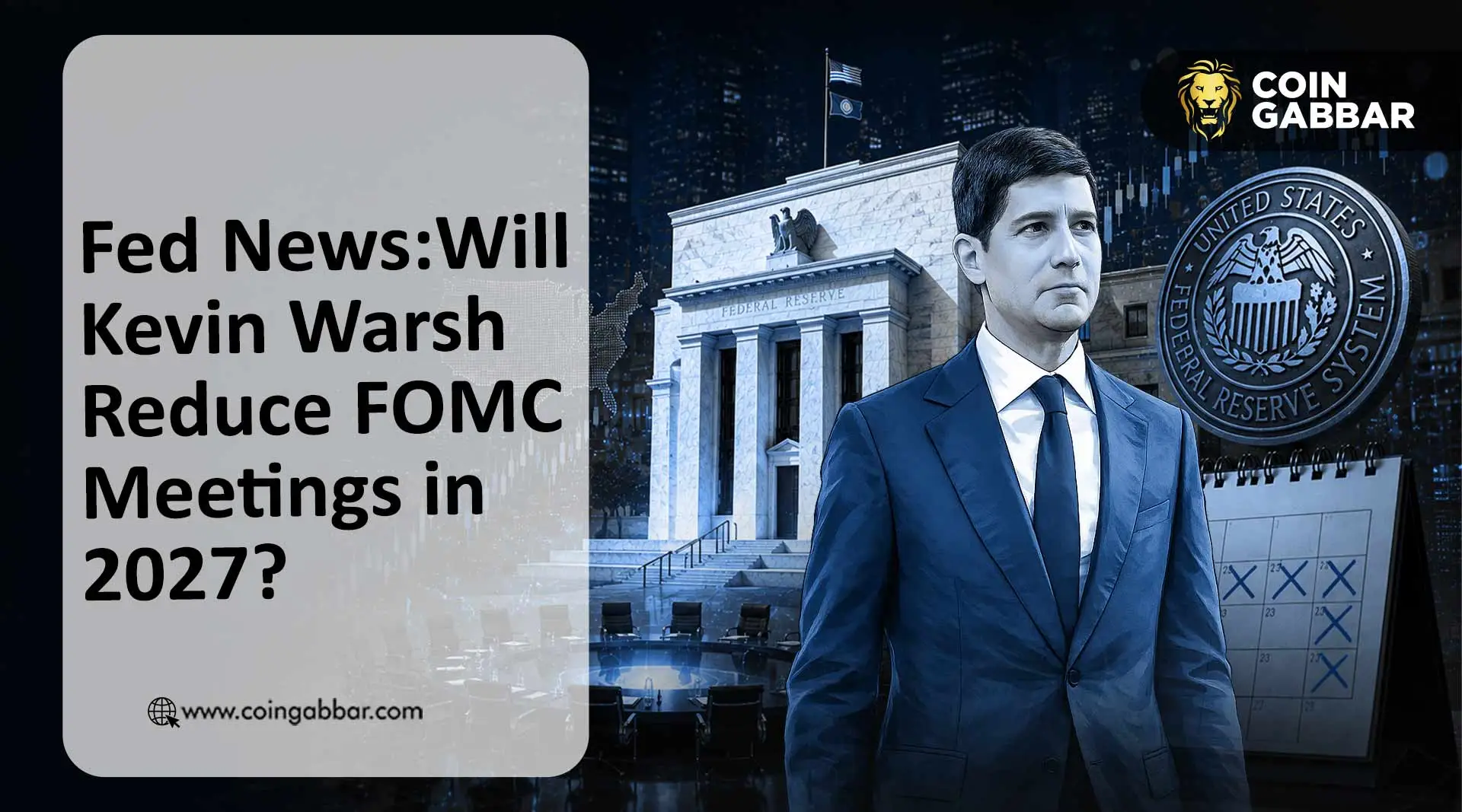
Fed Meeting News: Why Kevin Warsh Wants Fewer Annual FOMC Sessions?
Federal Reserve Chair Kevin Warsh is reportedly considering reducing the number of annual Federal Open Market Committee (FOMC) policy meetings, according to The New York Times.
The proposal, discussed during this week's FOMC meeting, would mark the biggest operational change in decades. Alongside fewer meetings, Warsh is also reviewing press conferences and broader reforms to the central bank's communication and policy framework.
What Did Kevin Warsh Propose at the Latest FOMC Meeting?
Sources familiar with the discussion say Warsh brought up the proposal during this week's FOMC meeting news cycle. The core idea: trim the number of regularly scheduled Fed rate meetings from the current eight-per-year cadence.
A Fed spokesperson declined to comment when asked about the report, and officials stress that nothing has been finalized. Right now, this remains an internal conversation rather than a formal Fed rate cut news announcement or policy change.
Warsh reportedly wants a revised meeting calendar sorted out before the Fed meeting today, equivalent in mid-September, even if implementation waits until later.
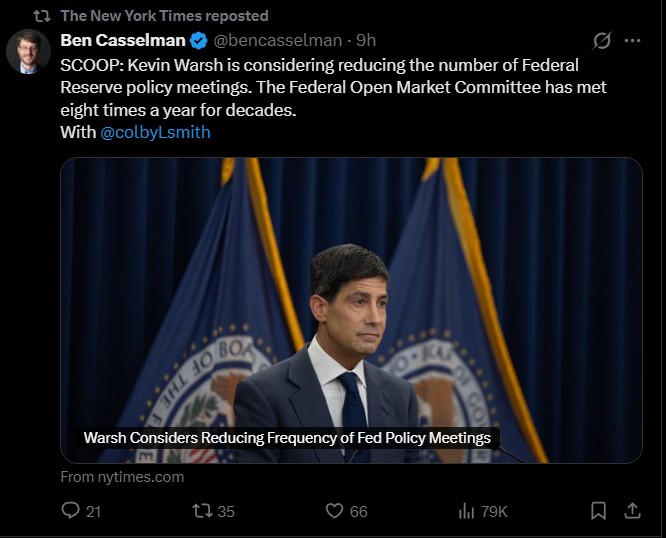
Source: Ben Casselman X Post
Proposed Fed Changes Under Kevin Warsh
| Proposal | Current Practice | Proposed Change |
| FOMC Meetings | 8 scheduled annually | Fewer under consideration |
| Press Conferences | After most rate decisions | Possible reduction |
| Policy Statements | Detailed post-meeting statements | Already shortened |
| Internal Review | Existing procedures | Five reform task forces created |
Why Would Reducing FOMC Meetings Be a Historic Change?
The Federal Reserve has stuck with its eight-meeting-a-year schedule since 1981, a structure put in place under former Chair Paul Volcker. Breaking from that pattern would mark the boldest move of Warsh's tenure so far.
Fewer sessions could mean less frequent policy guidance for investors trying to anticipate Federal Reserve interest rates, and it could complicate how markets read incoming rates signals between gatherings.
How Often Does the Federal Reserve Currently Meet?
Under existing rules, the Federal Open Market Committee holds eight scheduled two-day meetings annually, while federal law only requires a minimum of four.
Emergency sessions remain an option during crises, as seen during the pandemic. The Fed meeting date calendar for the rest of 2026 and all of 2027 has already been published, though each date stays tentative until confirmed at the meeting right before it.
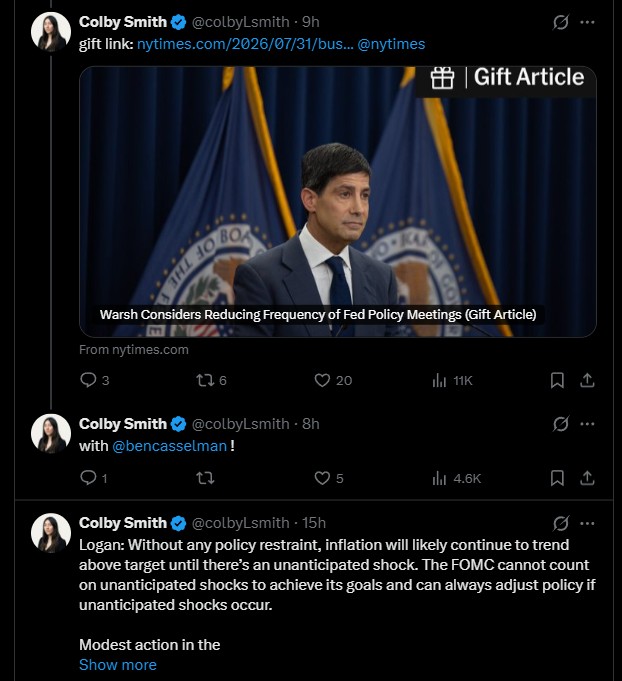
Source: ColbyLsmith X Post
Timeline: Evolution of FOMC Meeting Schedule
| Year | Event |
| 1956 | 19 policy meetings |
| 1978 | 12 scheduled plus emergency discussions |
| 1981 | Eight-meeting schedule introduced under Paul Volcker |
| 2020 | Emergency meetings held during COVID-19 crisis |
| May 2026 | Kevin Warsh became Federal Chair |
| July 2026 | Warsh reportedly proposed reducing annual meetings |
| September 2026 | Possible discussion on revised schedule |
What Other Federal Reserve Reforms Is Warsh Considering?
Beyond the meeting count, this Federal Reserve news cycle points to several other shifts. Warsh is reportedly weighing fewer press conferences following rate announcements, and post-meeting statements have already gotten noticeably shorter under his leadership.
He has also set up five working groups tasked with reviewing how the it operates. Warsh has described his broader approach at the central bank as "regime change."
Five Reform Areas Under Review
| Reform Area | Purpose |
| Monetary Policy Communication | Improve how the Federal Reserve explains decisions |
| Economic Data Usage | Review data sources used for policymaking |
| Balance Sheet | Assess asset management framework |
| Policy Operations | Improve decision-making processes |
| Institutional Procedures | Modernize internal governance |
How Could Fewer Meetings Affect Markets and Investors?
Traders watching for the next Fed rate cut news update may see fewer scheduled checkpoints if this plan moves forward. Less frequent meeting news updates could mean thinner forward guidance and more uncertainty in the gaps between sessions, which historically tends to nudge volatility higher.
Emergency meetings would still be on the table if a crisis demanded a fast response, but under normal conditions, Wall Street could get fewer official signals about where Fed rate cuts or hikes might be headed.
This week already saw an unusual three dissents on the committee, all favoring a rate hike over holding steady, a sign of just how divided views on inflation currently are.
What Happens Next?
No formal proposal has been approved, and the Federals has not confirmed any changes to its schedule. The September gathering could bring more clarity on where this goes. For now, the published 2026 and 2027 Fed meeting date calendars remain intact.
Anyone tracking Fed news, Federal Reserve meeting outcomes, or broader Fed interest rates trends should keep an eye on any formal communication from the central bank in the coming weeks, since even preliminary reform signals tend to move both bond and equity markets — and, occasionally, ripple into risk assets covered in the latest crypto news today.
Conclusion
Kevin Warsh's reported proposal to reduce the number of annual FOMC meetings represents one of the most significant operational reforms considered by the Federal Reserve in decades.
While no formal decision has been made, the move aligns with Warsh's broader effort to reshape the central bank's communication and policymaking process.
Investors will now look toward the September FOMC schedule for any official updates on whether these proposed changes move forward.
Disclaimer: This article is for informational purposes only and does not constitute financial, investment, or legal advice. Cryptocurrency and financial markets are volatile and involve risk. Always conduct your own research and consult a qualified professional before making any financial decisions.









