SecondFi Phishing Scam Alert: Fake Recovery Emails Target Users

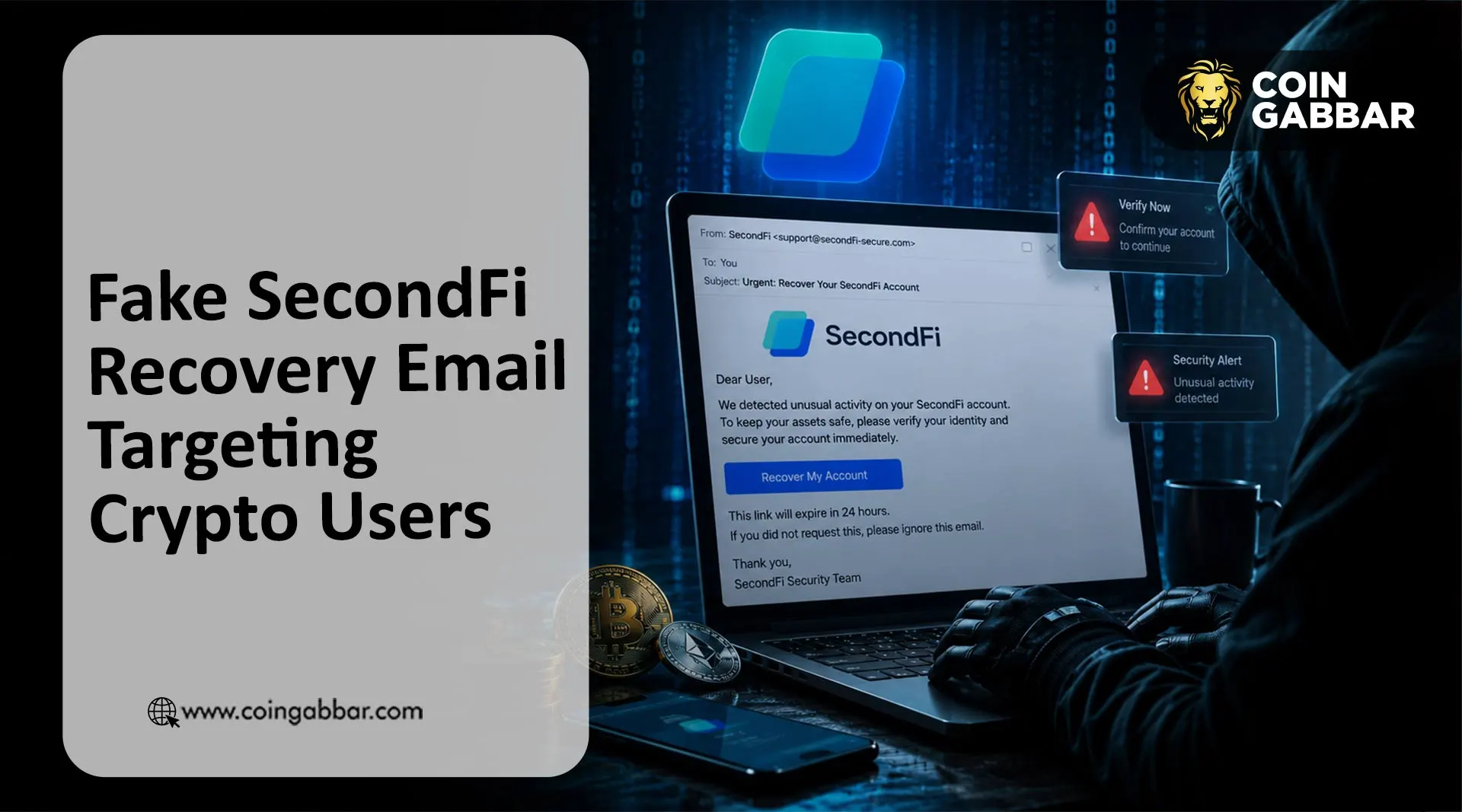
SecondFi Warns Useno recovery processrs of Fake Recovery Email Scams
SecondFi has issued a security alert warning users about a SecondFi phishing scam circulating through email. The message claims to be an official recovery notice but is designed to trick people into handing over control of their wallets.
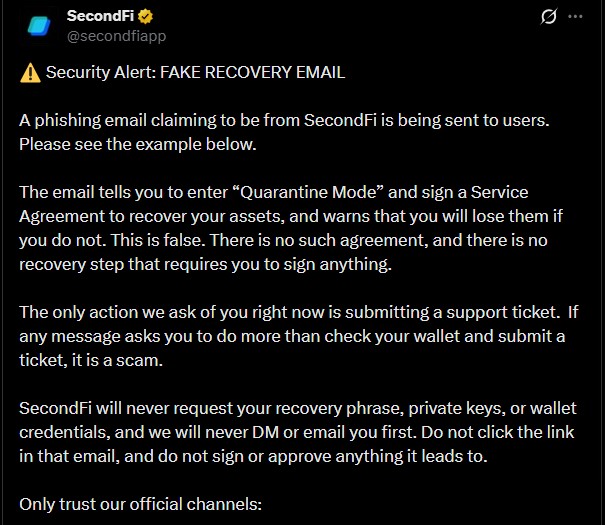
Source: X post
What the Fake Email Says
According to SecondFi, the phishing email tells recipients to enter a so-called "Quarantine Mode" and sign a Service Agreement in order to recover their assets, warning that funds will be lost if they don't act. SecondFi has confirmed this is entirely false. It's official wallet checker does not require transaction signing, and users should reject signing requests received through unsolicited emails.
How SecondFi Says Users Should Respond
SecondFi states the only legitimate action right now is submitting a support ticket. Any message asking for more than checking a wallet and filing a ticket should be treated as a scam. The company reiterated that it will never request a recovery phrase, private keys, or wallet credentials and will never message or email users first. It has urged people not to click the link in the fraudulent email or sign or approve anything it leads to.
The Hack Behind the Warning
This SecondFi phishing scam is emerging in the aftermath of a real security breach. SecondFi, the Cardano wallet platform formerly known as Yoroi, was hit by a wallet-generation vulnerability that exposed user funds.
SecondFi's own initial estimate placed losses at roughly 16 million ADA, while blockchain security firm SlowMist put the figure far higher, tracing more than 129 million ADA and other tokens through wallets linked to the attacker. That gap between the two estimates has left the full scale of the breach unresolved pending an independent audit.
Fallout Across the Market
The exploit added to a string of infrastructure-layer attacks that gained pace through 2026, following incidents like Humanity Protocol's private key breach and the Syscoin bridge exploit.
Cardano founder Charles Hoskinson acknowledged the incident directly, noting that while the dollar losses may look small next to other crypto hacks, that offers no comfort to users who may have lost their entire ADA holdings. With no reimbursement timeline announced, scammers appear to be exploiting the confusion and anxiety among affected users, which is likely what triggered this latest phishing scam warning.
Conclusion
SecondFi's alert is a reminder that hacks rarely end when the exploit itself is patched. The aftermath often becomes fertile ground for a second wave of scams targeting confused and frightened users. A pattern also seen in similar phishing scams that have hit other major platforms. Anyone who held funds on the platform should verify any communication only through SecondFi's official channels and avoid signing anything sent through email, no matter how urgent it sounds.
Disclaimer
This article is for educational and informational purposes only and should not be considered financial or investment advice. Always conduct your own research before making investment decisions.
Also read:


2 months ago
Bitcoin USDC Recovery That Delivers Results: The Smart Way to Recover Bitcoin and USDC META TECH RECOVERY PRO Hire A Hacker Review of META TECH RECOVERY PRO, a professional cyber intelligence expert, crypto recovery lawyers, and private investigators, is designed for individuals and organizations seeking a credible and structured response to cybersecurity incidents and complex digital-asset losses. This service integrates threat-informed investigative methodology with legal and compliance-focused expertise, enabling clients to address both the technical root causes and the procedural requirements that often determine whether recovery efforts succeed.CONTACT THEM VIA https://metatechrecoverypro.com, Telegram:@metatechrecoveryproteam. W/S +1 (469) 692 8049. support@metatechrecoverypro.com META TECH RECOVERY PRO leverages advanced cyber intelligence capabilities to assist with incident analysis, attribution support, and evidence preservation. In practical terms, this may include forensic imaging guidance, digital artifact collection, timeline reconstruction, and the identification of indicators of compromise that can support law-enforcement engagement and potential civil or criminal proceedings. By emphasizing proper documentation and chain-of-custody practices, the approach helps ensure that recovered data and investigative findings remain usable in legal contexts. In addition to technical support, the inclusion of crypto recovery lawyers strengthens the engagement by translating investigative outputs into actionable legal strategies. Such strategies may involve reviewing available claims, advising on jurisdiction-specific procedures, preparing formal filings, supporting subpoenas or discovery requests where applicable, and assisting with coordination across stakeholders. This legal integration is particularly relevant for crypto-related incidents, where recovery often depends on the ability to connect on-chain activity, wallet behavior, and exchange interactions to identifiable parties through lawful processes. The involvement of private investigators further enhances coverage by enabling structured background inquiries and targeted verification of leads. Real-world recovery cases frequently require more than technical analysis; they may involve tracing communication patterns, validating identities, and confirming connections among accounts, devices, and entities associated with the loss. When combined with cyber intelligence and legal oversight, these investigative activities can improve the likelihood of locating responsible parties and recovering assets or damages. From a risk-management perspective, clients also benefit from a professional, process-driven framework rather than improvised actions that could compromise evidence or worsen outcomes. For example, delays in reporting, unauthorized access attempts, or changes to affected systems can reduce the clarity of forensic findings. A coordinated workflow that prioritizes containment, evidence integrity, and lawful escalation can therefore be critical to achieving measurable results. Overall, the Hire A Hacker Review of META TECH RECOVERY PRO presents a comprehensive option for those requiring a specialized blend of cyber intelligence, crypto recovery legal expertise, and private investigation services. By aligning technical investigations with legal strategy and real-world casework, the service supports clients in pursuing responsible recovery pathways while maintaining compliance and strengthening the evidentiary foundation for subsequent action.

2 months ago
Bitcoin USDC Recovery That Delivers Results: The Smart Way to Recover Bitcoin and USDC META TECH RECOVERY PRO Hire A Hacker Review of META TECH RECOVERY PRO, a professional cyber intelligence expert, crypto recovery lawyers, and private investigators, is designed for individuals and organizations seeking a credible and structured response to cybersecurity incidents and complex digital-asset losses. This service integrates threat-informed investigative methodology with legal and compliance-focused expertise, enabling clients to address both the technical root causes and the procedural requirements that often determine whether recovery efforts succeed.CONTACT THEM VIA https://metatechrecoverypro.com, Telegram:@metatechrecoveryproteam. W/S +1 (469) 692 8049. support@metatechrecoverypro.com META TECH RECOVERY PRO leverages advanced cyber intelligence capabilities to assist with incident analysis, attribution support, and evidence preservation. In practical terms, this may include forensic imaging guidance, digital artifact collection, timeline reconstruction, and the identification of indicators of compromise that can support law-enforcement engagement and potential civil or criminal proceedings. By emphasizing proper documentation and chain-of-custody practices, the approach helps ensure that recovered data and investigative findings remain usable in legal contexts. In addition to technical support, the inclusion of crypto recovery lawyers strengthens the engagement by translating investigative outputs into actionable legal strategies. Such strategies may involve reviewing available claims, advising on jurisdiction-specific procedures, preparing formal filings, supporting subpoenas or discovery requests where applicable, and assisting with coordination across stakeholders. This legal integration is particularly relevant for crypto-related incidents, where recovery often depends on the ability to connect on-chain activity, wallet behavior, and exchange interactions to identifiable parties through lawful processes. The involvement of private investigators further enhances coverage by enabling structured background inquiries and targeted verification of leads. Real-world recovery cases frequently require more than technical analysis; they may involve tracing communication patterns, validating identities, and confirming connections among accounts, devices, and entities associated with the loss. When combined with cyber intelligence and legal oversight, these investigative activities can improve the likelihood of locating responsible parties and recovering assets or damages. From a risk-management perspective, clients also benefit from a professional, process-driven framework rather than improvised actions that could compromise evidence or worsen outcomes. For example, delays in reporting, unauthorized access attempts, or changes to affected systems can reduce the clarity of forensic findings. A coordinated workflow that prioritizes containment, evidence integrity, and lawful escalation can therefore be critical to achieving measurable results. Overall, the Hire A Hacker Review of META TECH RECOVERY PRO presents a comprehensive option for those requiring a specialized blend of cyber intelligence, crypto recovery legal expertise, and private investigation services. By aligning technical investigations with legal strategy and real-world casework, the service supports clients in pursuing responsible recovery pathways while maintaining compliance and strengthening the evidentiary foundation for subsequent action.
2 months ago
Lost Bitcoin, Ethereum, USDT, or other cryptocurrency to a scam? DIGITAL LIGHT SOLUTION provides professional cryptocurrency investigation and blockchain tracing services for victims of online fraud, fake investment platforms, Romance Crypto Scams, and unauthorized wallet transactions. At DIGITAL LIGHT SOLUTION, our experienced specialists use advanced blockchain analysis to investigate suspicious transactions and help clients understand the options available for pursuing their cases. If you have transaction records, wallet addresses, screenshots, or proof of payment, don't delay. Every detail can be valuable during an investigation. It's not too late to get your money back. Support team available 24/7. Email:digitallightsolution@qualityservice. com and Telegram ——digitallightsolution






