Strategy Bitcoin Purchase Resume Hits 845K While MSCI Plan Rejected


Strategy Bitcoin Purchase: 4,603 BTC, MSCI Fight, and the Road Ahead
Strategy or MicroStrategy has returned to buying Bitcoin. The latest Strategy Bitcoin purchase added 4,603 $BTC for roughly $370 million between August 24 and 30, 2026, ending a pause that had lasted about ten weeks.
Total holding now stands at 845,050 $BTC, still the largest corporate BTC stash on record and a headline that dominated bitcoin news feeds this week.

Michael Saylor confirmed the numbers directly, reinforcing his long-running Bitcoin-focused plan of buying dips and holding through volatility. He also flagged a $29 million increase in USD cash and a $152 million buyback of STRC preferred stock, alongside net leverage sitting at 0.0 percent as of August 30.
Strategy Bitcoin Purchase Details: 4,603 BTC and the Balance Sheet
This latest Bitcoin purchase averaged about $80,318 per coin, funded mainly through at-the-market sales of roughly 4.53 million Class A shares, which raised about $602.8 million in net proceeds. That money was split several ways:
$369.7 million went toward buying Bitcoins
$151.8 million repurchased about 1.56 million shares of STRC preferred stock
$50.7 million covered STRC dividend payments
Roughly $30 million topped up the USD Cash account
Aggregate Strategy Bitcoin holding now costs the company about $63.73 billion, working out to an average price near $75,412 per coin. That is well below where BTC trades today, keeping the position in solid unrealized profit.
Michael Saylor Bitcoin Strategy: New Moves After BTC Selling in 2026
The buying pause was not random. Back on June 29, 2026, MicroStrategy adopted a Digital Credit Capital Framework, raising the STRC preferred dividend rate and setting up a formal BTC Monetization Program. That gave the company room to sell Bitcoins selectively if it needed cash for preferred obligations.
Between late June and mid-August, Strategy Bitcoin selling reached about 6,948 $BTC for roughly $432 million, mostly in the high $50,000s to low $60,000s range. Holdings dropped from a peak near 847,363 $BTC into the low 840,000s before this latest round of buying pushed the total back up.
By September 1, after this token purchase and the earlier repair work, the balance sheet looked far sturdier:
USD Reserve: $5.10 billion
USD Cash: $1.61 billion
Combined USD assets: $6.71 billion
USD duration: 4.0 years
$BTC credit metric: 56 basis points, based on a $77,558 $BTC price assumption
Net leverage: 0.0 percent
Not everyone cheered the move. Peter Schiff criticized the timing of this Saylor $BTC purchase, arguing that Strategy sold Bitcoins under $60,000 earlier in the year only to buy back above $80,000, while issuing new shares that dilute existing holders.
Bitcoin Price Today and How It Shapes This Strategy BTC Purchase
BTC price today sits at $78,709.64, up 1.01 percent over 24 hours. A few figures put that move in context:
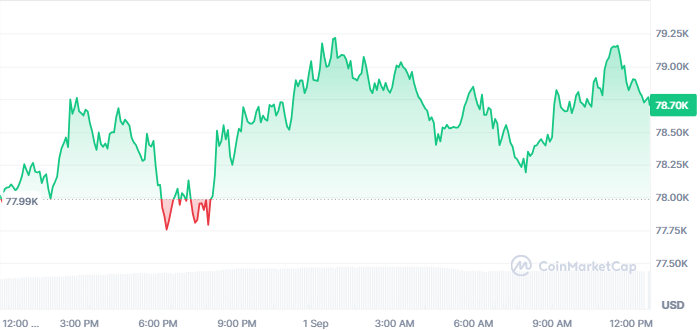
Source: CoinMarketCap Official
Market cap: $1.58 trillion, up about 1 percent
24-hour trading volume: $29.95 billion, up 25.26 percent
Fully diluted value: $1.65 trillion
Circulating supply: 20.07 million $BTC against a 21 million max supply
Strategy's 845,050 $BTC holding works out to roughly 4 percent of that entire circulating supply, a scale no other public company comes close to matching. Anyone following crypto news today can see why this single company moves markets on its own.
Strategy Reject MSCI Plan Over Non-Operating Company Exclusion Test
Alongside the buying news, MicroStrategy is fighting a separate battle with index provider MSCI, a fight that runs parallel to this recent purchase story.
The firm is running a public consultation on rules that would strip "non-operating companies" from major benchmarks, including the widely tracked ACWI IMI index.
The screening test looks at operating assets, expense intensity, operating cash flow, fair-value swings, and capital dependence, not the type of asset a company holds.Mid-2026 simulations flagged Strategy alongside Japan's Metaplanet and uranium holder Yellow Cake.
Saylor pushed back sharply, writing that "MSCI should be a mirror of the market, not an arbiter of it."

Strategy's formal letter argues the proposed terms are undefined under GAAP, IFRS, or securities law, and that the company already reports its BTC activity as an operating segment.
The stakes are real but not existential. MSCI-tracking funds hold only about 3.1 percent of MicroStrategy's basic shares, though estimates suggest forced index removal could still trigger $1.8 to $2 billion in selling pressure. Feedback closes September 30, MSCI is due to announce its decision October 16, and any changes would take effect around December 1.
What Comes Next
Two dates matter most from here. MSCI's feedback window closes September 30, with a decision due October 16 and any index changes taking effect around December 1. On the BTC side, holding above the high $70,000s would keep this latest Strategy Bitcoin purchase in profit and support further buying. Neither outcome is settled, and this is not financial advice.
Disclaimer: This article is for informational purposes only and does not constitute financial or investment advice. Crypto markets carry significant risk. Always do your own research before making any investment decisions.
Also read:






