Trump $1 Coin Launches: Price, Design and Legal Questions

Trump $1 Coin: Why Does a $1 Coin Sell for More Than $1?
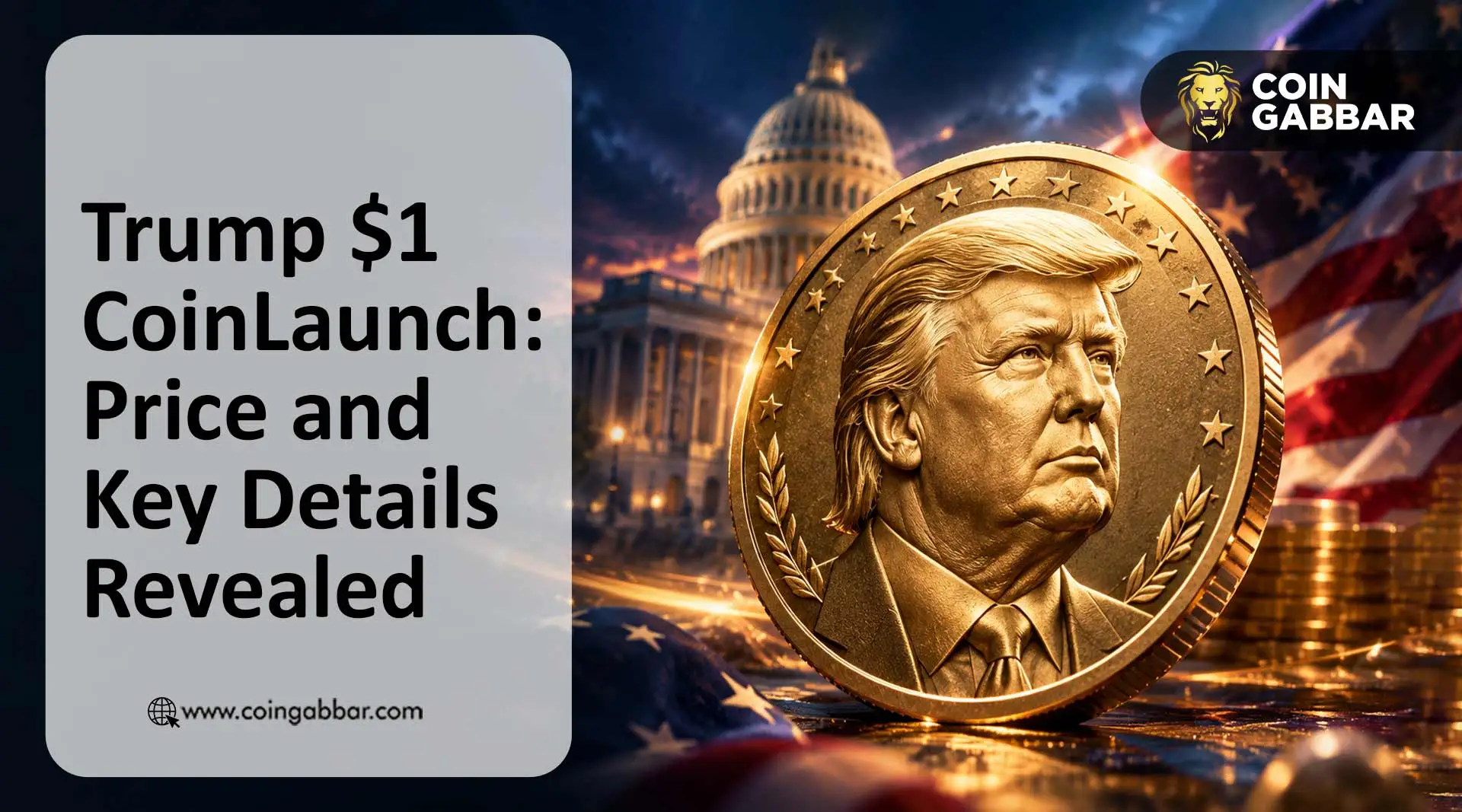
The Trump $1 coin is now officially in circulation. The US Mint confirmed on September 2 that the "2026 President Donald J. Trump $1 Coin" had entered circulation, with public sales opening the same day at 12 PM ET. It marks the first time in roughly a century that a sitting US president has appeared on a currency intended for everyday circulation.
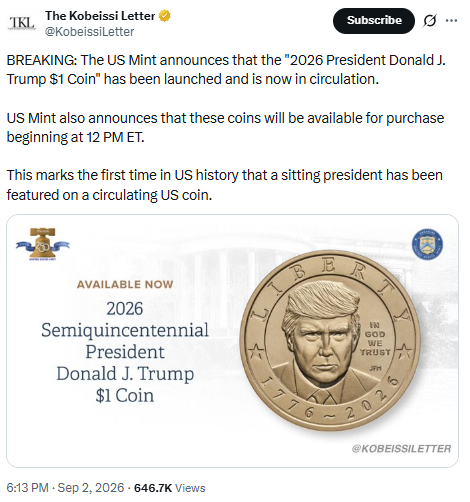 Source: X (formerly Twitter)
What the Trump $1 Coin Actually Looks Like Today
Per the US Mint's own description, the $1 piece carries specific design elements on each side:
Obverse: a portrait of the President, the word "LIBERTY," and the years "1776–2026"
Reverse: an illustration of the presidential seal with "250" inscribed at the center
Composition: 88.5% copper, with the remainder made of zinc, manganese, and nickel
Despite its golden color, the release contains no actual gold; the Mint describes it as having a "gold-like finish"
The new dollar is legal tender, meaning it can technically be used for everyday purchases the same as any other dollar, even though it's being marketed and sold primarily as a collectible.
How Much Does the new Dollar Actually Cost
Despite carrying a $1 face value, the item is being sold well above that price. US Mint pricing at launch:
Format | Price |
Single piece | $1.55 to $2.44 |
Roll of 25 coins | $61.00 |
Bag of 100 coins | $154.50 |
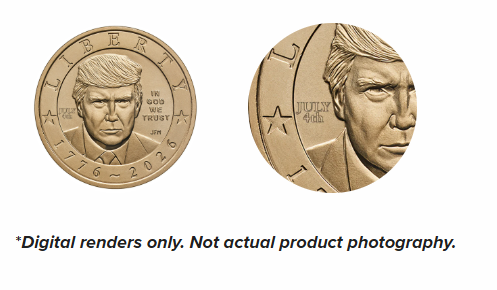
The Mint also confirmed that 250,000 coins struck specifically on July 4 carry a special "July 4th" privy mark, randomly distributed among the rolls and bags sold to the public. Within hours of the noon sale opening, coins were reported as out of stock on the Mint's own website.
Is the Trump $1 Coin Actually Legal to Mint Now
This is where the Trump $1 currency becomes more than a collectibles story. US federal law, dating to an 1866 statute passed after a Treasury official put his own face on currency, states that only a deceased individual's portrait may appear on US currency and securities.
The Treasury's legal basis rests on a more recent law:
The Circulating Collectible Coin Redesign Act of 2020, signed during Trump's first term, authorized the Treasury to mint $1 coins with designs marking the nation's semiquincentennial
That law specifically bars a living person's portrait only on the reverse side of such coins
Trump's portrait appears on the obverse, or front, of the new dollar, which the Treasury argues brings it into compliance
Notably, the Citizens Coinage Advisory Committee, the nonpartisan body Congress created to review designs, declined to review the Trump $1 currency design at all, arguing that featuring a sitting president on currency conflicted with the country's founding principles.
Why Critics Are Pushing Back on the Trump Coin
Opposition to the coin predates its launch. Democratic Senators Catherine Cortez Masto and Jeff Merkley introduced legislation last year aimed at blocking a sitting president's face from appearing on US coins; that bill did not pass. Following the coin's release, Cortez Masto said plainly: "The Trump dollar piece is completely contrary to America's democratic values. It's unacceptable that Secretary Bessent and the Mint proceeded with the plan to produce and sell it."
The Treasury has pointed to one historical precedent: a 1926 half-dollar featuring then-President Calvin Coolidge alongside George Washington, minted for the nation's 150th anniversary. Critics note an important distinction, that the 1926 coin was explicitly commemorative and never intended for general circulation, unlike the new dollar.
The dollar piece also arrives alongside other Trump-branded initiatives from his second term, including a proposed $250 bill, a 24-karat gold commemorative currency, and naming efforts tied to the Kennedy Center and the US Institute of Peace.
Conclusion
The Trump $1 coin is now real, in circulation, and on sale, but its legal footing rests on a narrow reading of a 2020 law rather than a settled question. The coin's design, pricing, and rollout are confirmed facts from the US Mint. Whether it should exist at all remains a live political and legal argument, one unlikely to be settled anytime soon.
Disclaimer
This article is based on official statements from the US Mint and US Treasury, along with public statements from members of Congress, as of September 3, 2026. Pricing and availability are subject to change and were accurate as of the time of writing. This article is for informational purposes only and does not constitute financial or investment advice regarding collectible purchases.






