XRP News Today: Why Is XRP Suddenly Surging Ahead?

XRP News Today Why Is XRP Beating Both Bitcoin and Ethereum Right Now?
Something worth paying attention to happened in the last 24 hours: this token didn't just rise; it rose faster than both Bitcoin and Ethereum on the same day.
That kind of outperformance tends to get people asking whether something bigger is building underneath the surface, and today's XRP News Today roundup has three separate data points that hint the answer might be yes.
XRP Price Snapshot: Outpacing the Two Biggest Names in Crypto
According to CoinMarketCap's live pricing, the token was trading at $1.44 in this stretch of XRP News Today coverage, up 6.99% over the past 24 hours.
For comparison, Bitcoin gained 4.81% and Ethereum rose 5.16% in the same window.
| Metric | Value |
| Price | $1.44 |
| 24h Change | +6.99% |
| Market Cap | $90.89B |
| FDV | $144.86B |
| 24h Volume | $4.61B (+70.18%) |
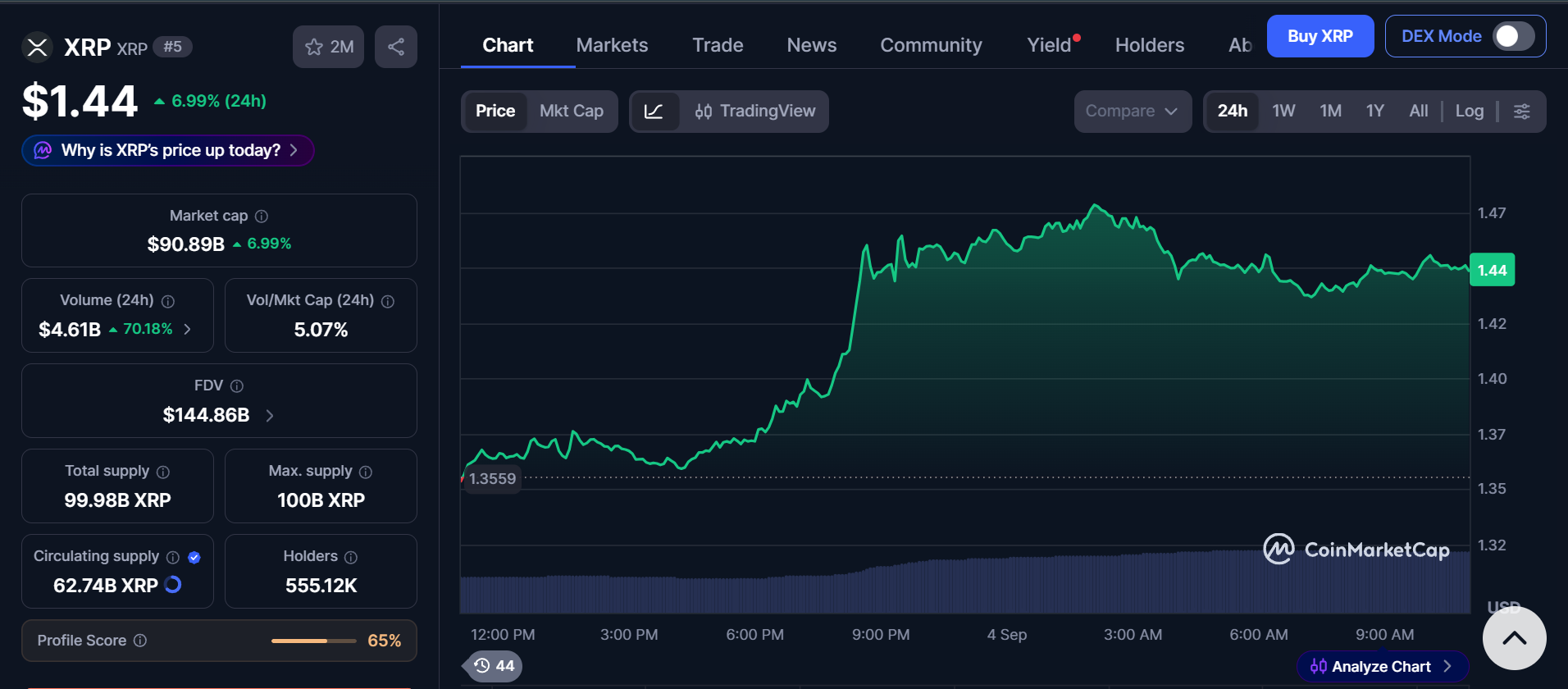
Note: Cryptocurrency prices are highly volatile. Price and market data shown here is a snapshot at the time of writing and can change quickly—always verify current figures before making financial decisions.
Source: CoinMarketCap live data
That 70% jump in trading volume alongside the price move suggests this wasn't a thin, low-liquidity spike, real money was actively changing hands.
A Quiet Technical Feature Is Doing More Work Than Most Realize
Away from the price chart, there's a structural detail worth understanding, and it's central to why liquidity on this network behaves the way it does.
According to official documentation on XRPL.org, the ledger's decentralized exchange uses a feature called auto-bridging, which lets two unrelated tokens route through the native asset as a middle step whenever that path offers a better rate than trading directly.
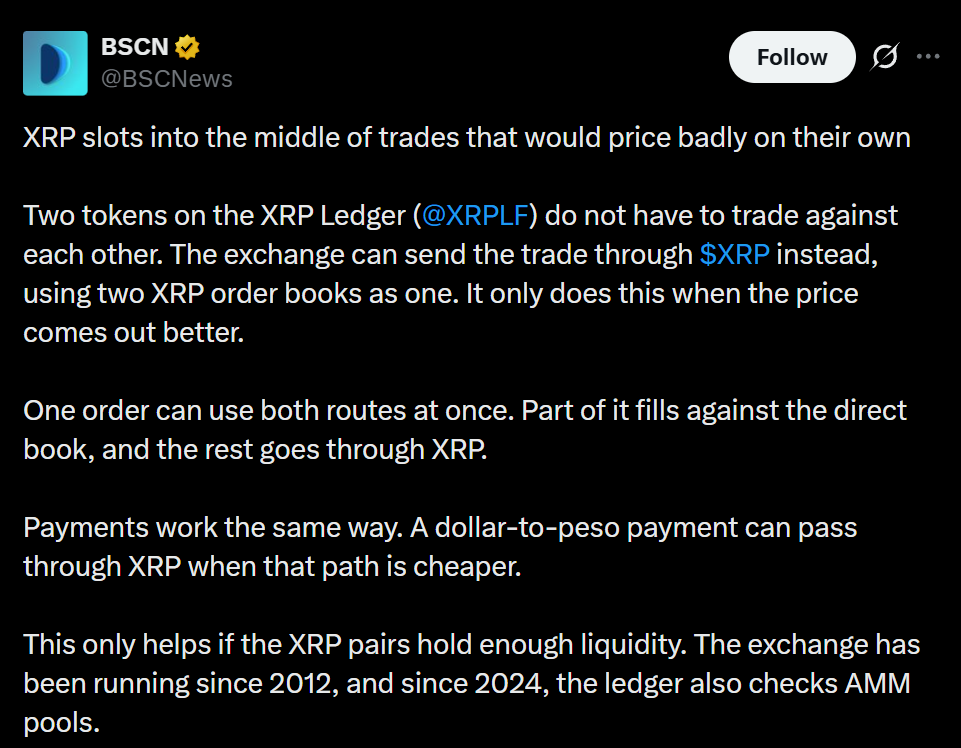
Here's how it plays out in practice, per the same source:
-
If a direct market between two currencies is thin, the exchange can combine a small direct order with a better composite rate built from two pairs routed through the native token.
-
One single trade can use both routes at once, filling part of the order directly and the rest through the bridge.
-
Cross-currency payments can benefit the same way when a path through the native asset turns out cheaper than a direct route.
-
This has been part of the exchange since 2012, and since 2024, the network's automated market maker pools get checked as well.
The catch, as XRPL.org notes, is that this only helps when those bridging pairs are holding enough liquidity to make the route worthwhile in the first place.
Dollar-Backed Money on the Ledger Just Crossed $1.1 Billion
A separate thread points to genuine on-chain growth rather than just price speculation.
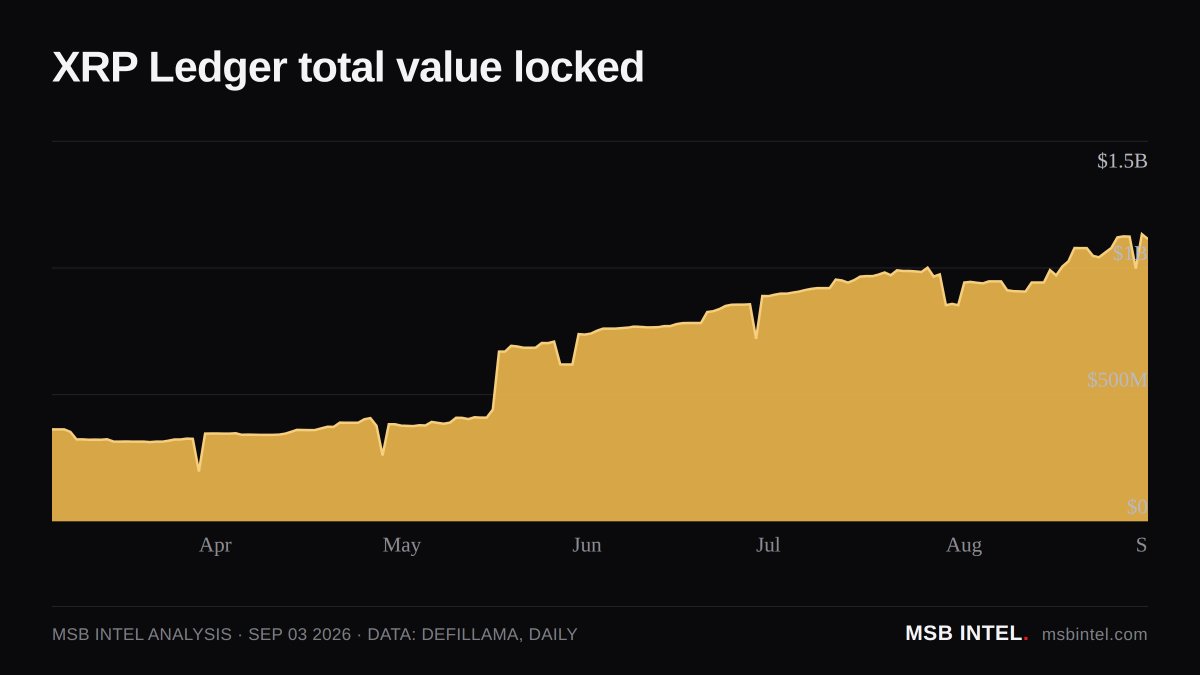
Stablecoins issued on the ledger now total roughly $1.1 billion, according to a DefiLlama's tracking data, up 18.2% over the past 30 days.
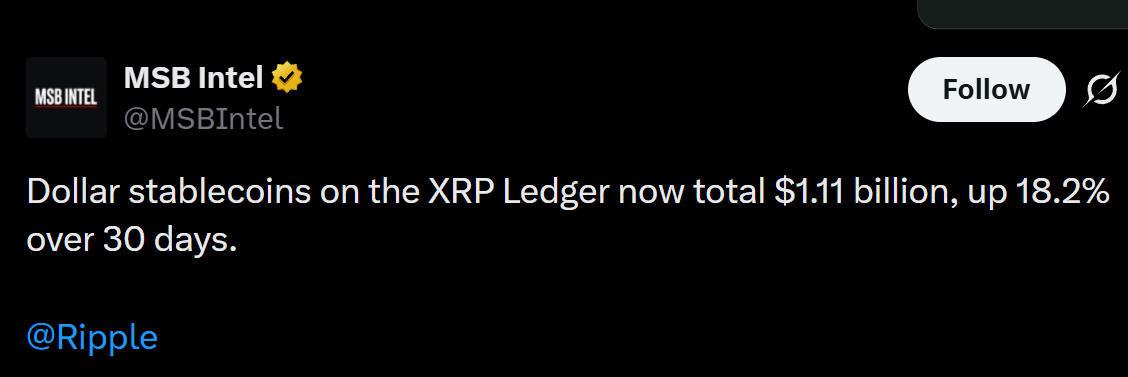
Source: MSB Intel
Ripple's own dollar-pegged token accounts for the large majority of that figure.
Growing stablecoin supply matters because it reflects dollars actually being parked and used on the network for settlement, not just speculative token trading, a different and arguably more durable kind of adoption signal.
Half a Billion Tokens Have Quietly Left Binance
The third data point in today's XRP News Today lineup comes from exchange reserve tracking.
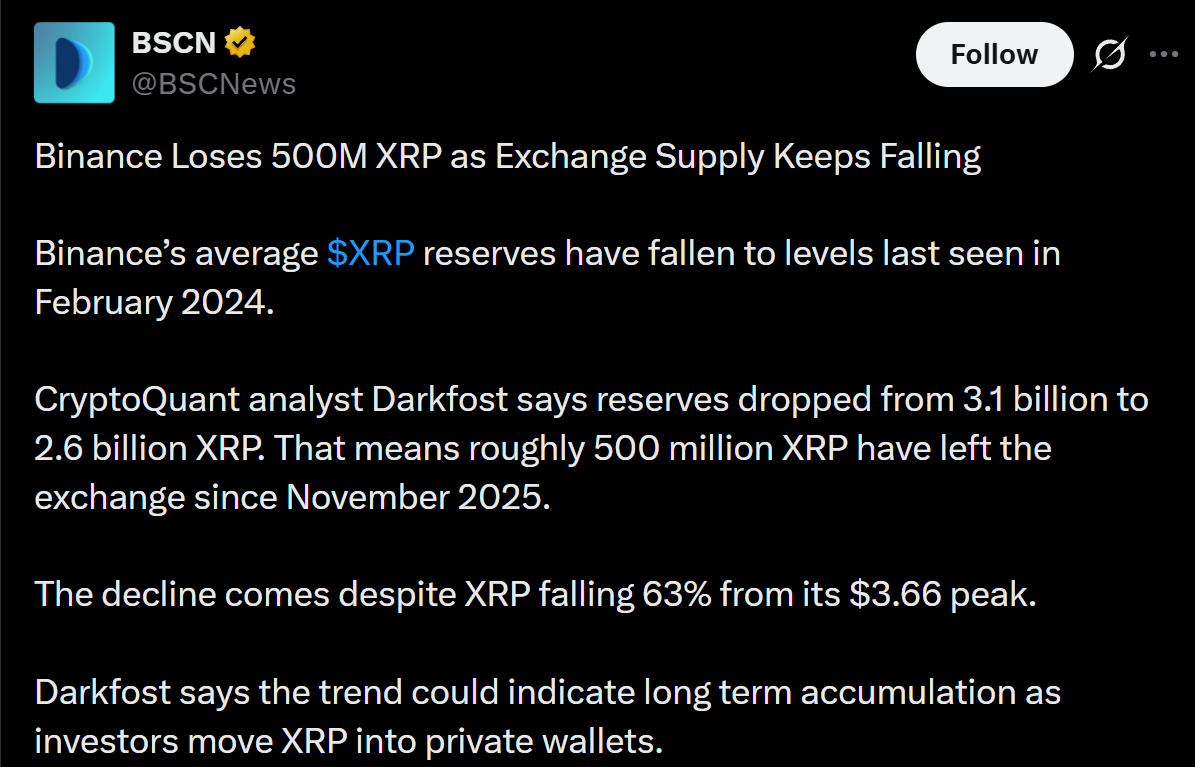
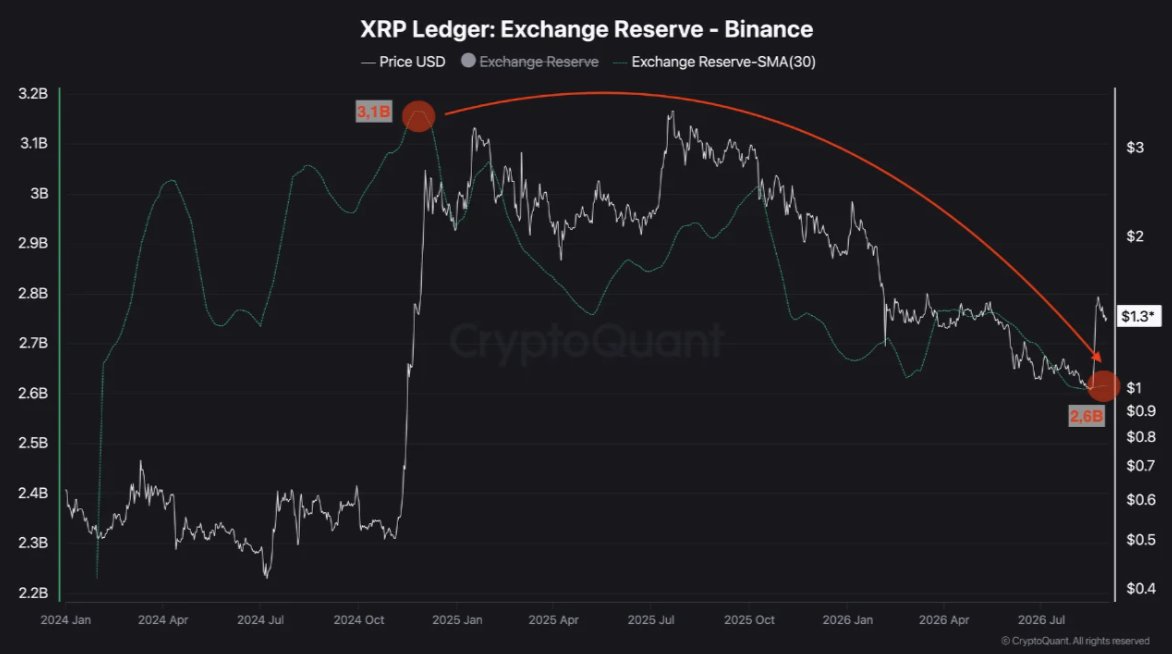
Binance's average reserves for the token have fallen from about 3.1 billion in November 2025 down to roughly 2.6 billion now, a level last seen in February 2024, referencing CryptoQuant's full analysis.
Source: BSCNews post
That's roughly 500 million tokens that have moved off the exchange since November 2025, even while the price itself fell sharply from its 2025 peak before recovering.
Source: Exchange Reserve
Darkfost's own comment, shared separately on X, called this "a relatively positive signal for XRP," while cautioning that the effect is more meaningful over the long run than as a short-term price trigger.
What These Signals Add Up To
None of these three stories guarantees where the price goes next, and this isn't a forecast.
But taken together, this round of XRP News Today shows a technical feature that's quietly supported liquidity for over a decade, stablecoin supply climbing at double-digit monthly rates, and steady outflows from the largest exchange, all pointing toward a network with more real activity underneath it than a single day's price chart can show.
Conclusion
Today's XRP News Today story isn't just that the token outran Bitcoin and Ethereum over 24 hours; it's that three separate, verifiable data points—auto-bridging liquidity, stablecoin growth, and shrinking exchange reserves—are lining up at the same time.
Whether that combination turns into sustained outperformance is something worth watching in the weeks ahead rather than assuming.
Disclaimer
This content covers financial markets and is for general information only. It is not financial, investment, trading, or legal advice. Crypto assets are volatile and can lose value fast. Always do your own research. Speak with a licensed financial advisor before making investment decisions.






