Crypto Is Out of Patience for Tokens Without Revenue

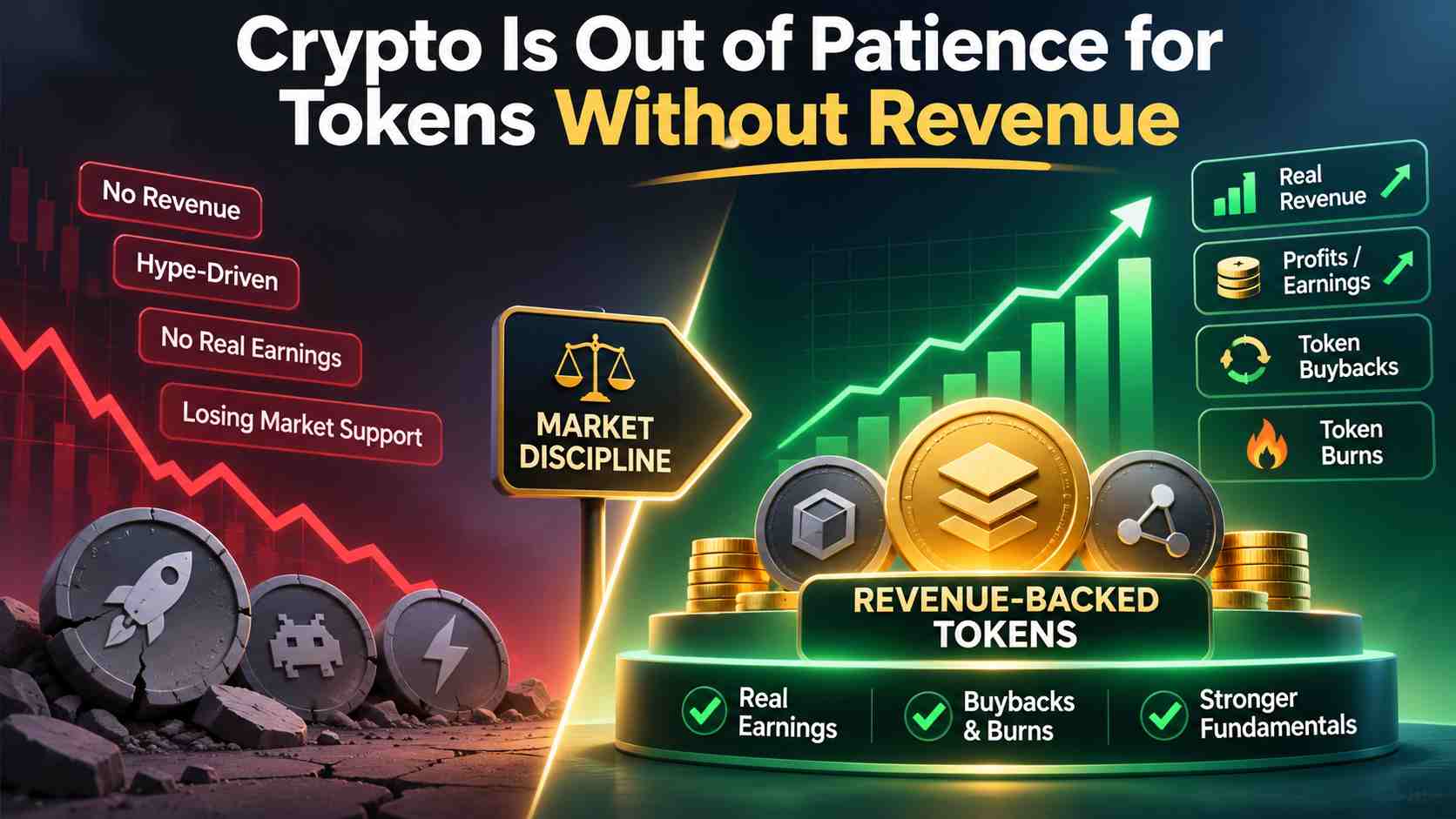
A hot crypto market can make any tokenomics model look convincing. When prices are climbing, users arrive, trading volumes increase and narratives can carry valuations beyond the real activity taking place underneath.
The last few weeks have been the opposite, bringing the market to trial by fire as Bitcoin has fallen roughly 21% over the past 30 days, and its recent six-week losing streak was its longest since February. The downturn has hit smaller tokens particularly hard as speculative capital has pulled back.
Why Crypto Token Revenue Matters More Than Speculative Hype
With the selloff well underway and fear spreading like wildfire, the old-fashioned metric of revenue is getting attention. Bitwise CIO Matt Hougan has described the shift as crypto developing “revenue fever,” with protocols increasingly capturing fees and using part of the proceeds for token buybacks and burns. As the industry has begged to be taken seriously, its moment has come with the growing focus on whether token value can be connected to measurable economic activity.
Not all projects are suffering with this new goalpost being revenue, such as Hyperliquid. The platform generated around $71.7 million in protocol revenue over the past month. Trading fees flow into mechanisms that purchase HYPE, creating a link between activity on the exchange and demand for its token.
That has translated into buying. Hyperliquid has acquired roughly $1.42 billion worth of HYPE since the end of 2024, including more than $70 million over the last month.
Pump.fun has built a more direct model. 50% of platform revenue goes toward buying PUMP on the open market and permanently burning it. More than $500 million has been deployed through the program, while the platform continues to generate revenue from its token-launch and trading infrastructure.
The model is appearing outside businesses that were born entirely onchain.
Gaming platform 1win launched $1WIN earlier this month after a public sale that attracted more than $61 million in commitments. 1win has operated since 2016 and its gaming and entertainment business generates revenue independently of the token, serving 100 million registered players across international markets.
Under its model, open-market buybacks are funded using revenue from the gaming business rather than a reserve created during the token sale. Separately, 10% of $1WIN spent through eligible platform products is permanently burned, while maximum supply is fixed at one billion tokens with no additional minting after TGE. Its token has fared substantially better than the rest of the market in the last month, up nearly 50% since TGE as the rest of the market has bled.
Three very different businesses essentially have the same target, but go about it completely differently. Hyperliquid generates fees from trading. Pump.fun earns revenue from token launches and trading infrastructure. 1win generates revenue through gaming.
In each case, activity is being used to create recurring purchases of the native token.
As speculative liquidity dries up, crypto is discovering that fundamentals have their uses.The market decides what any of those tokens are worth. But crypto asked to be taken as seriously as traditional businesses, and it received. So now the hype stories are seeing the final nail in the coffin and the less exciting details like revenue make or break a project.