Cysic Bridge Exploit: 10M Tokens Forged, 7.2M Burned What’s Next?

Cysic Bridge Exploit: 10M Tokens Minted, 7.2M Burned, 2.8M Frozen
Cysic has finally explained what went wrong. On 2 November 2026, the foundation published a six-part post-mortem on the Cysic bridge exploit,
which let an attacker mint 10,000,002 new tokens on BNB Smart Chain on 17 October.
Cross-chain service is working again, and the foundation has burned 7.2 million tokens, but it is clear that burning is not the same as recovering stolen money.
What Happened on 17 October
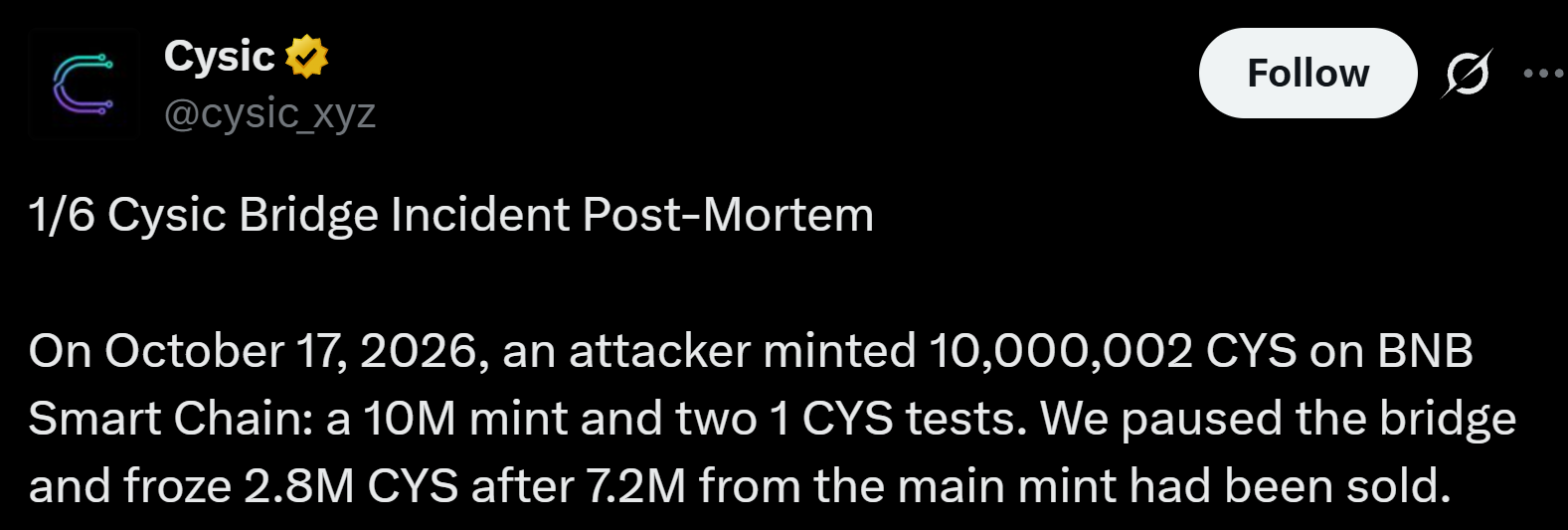
The foundation says the attacker minted 10,000,002 tokens on BNB Smart Chain: a main mint of 10 million plus two test mints of 1 token each.
Source: Cysic Post
The team paused the system and froze 2.8 million coins, but 7.2 million from the main mint had already been sold.
Source: Cysic Post on X
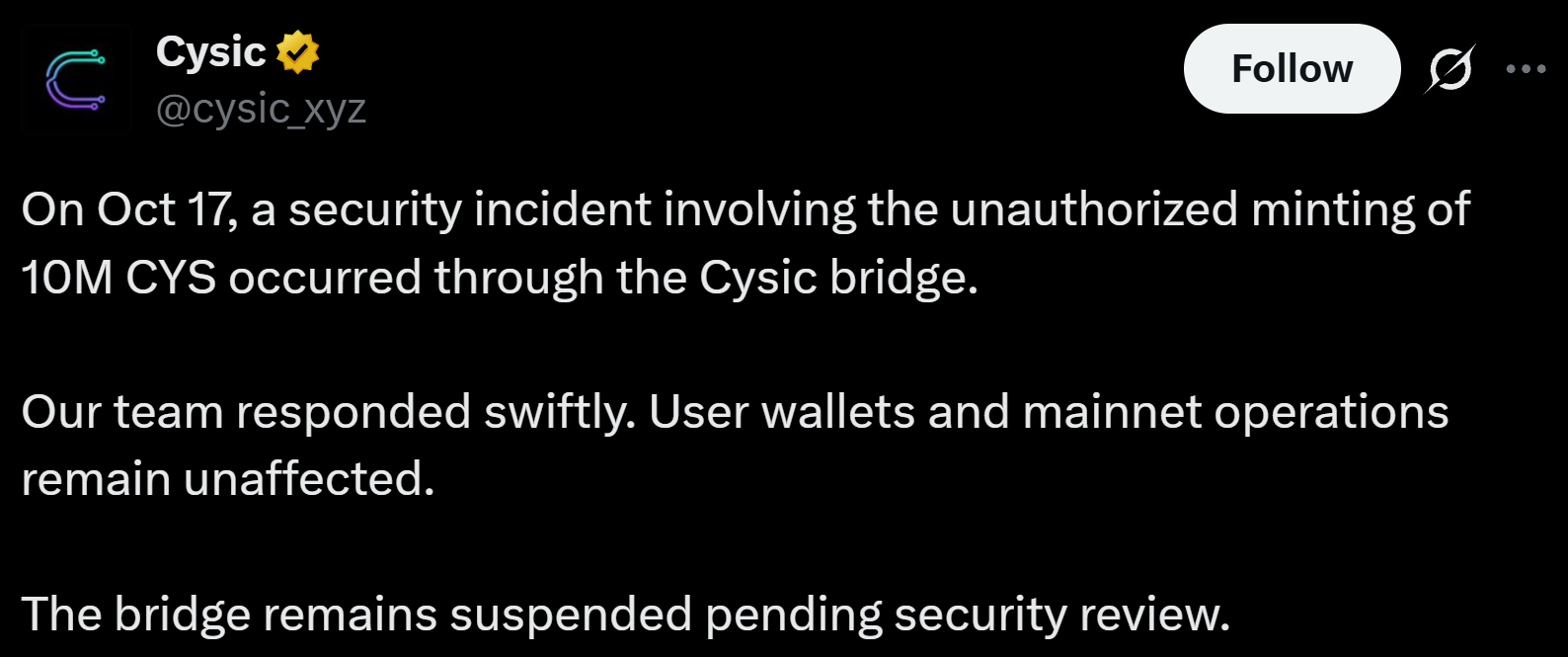
An earlier statement from 18 October stressed that user wallets and mainnet operations remained unaffected and that service would stay suspended during a security review.
| Item | Amount |
| Total minted | 10,000,002 |
| Main mint | 10,000,000 |
| Test mints | 2 (one token each) |
| Sold before the freeze | 7,200,000 |
| Frozen | 2,800,000 |
The full public explanation arrived 16 days after the attack, by our count. By our own addition, the sold and frozen amounts equal the 10 million main mint exactly.
Minting simply means creating new coins, and a legitimate mint should always match a real deposit somewhere else.
Here, nothing matched, which is why the new coins were unbacked.
How the Attacker Got In
A bridge moves value between blockchains. When tokens are locked on one network, the system creates matching coins elsewhere.
That system depends on records saying a deposit really happened, so protecting those records is critical.
According to the second part of the thread, the attacker reached the database behind the system through a business service that was not protected well enough.
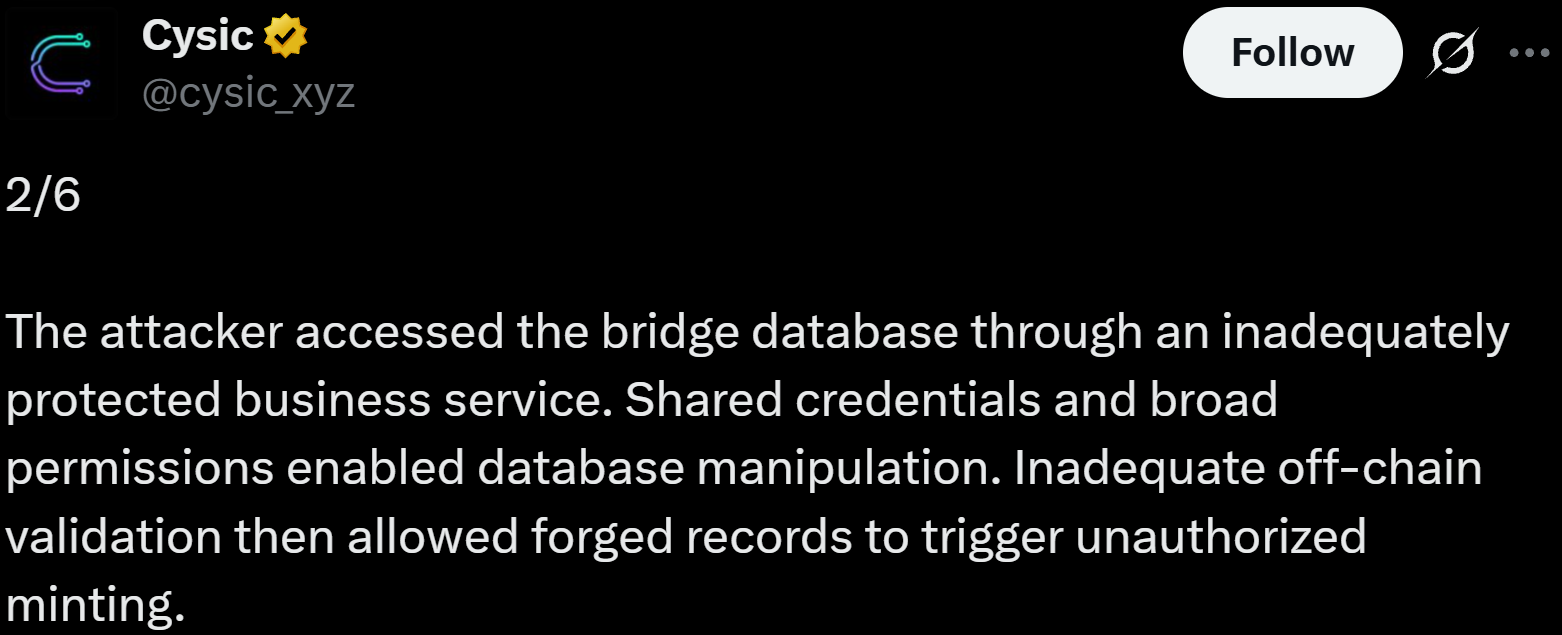
Shared credentials and broad permissions then allowed the database to be manipulated.
Finally, weak off-chain checks meant that forged records were accepted as real and triggered unauthorized minting.
Shared credentials mean one stolen password can open many doors, and broad permissions mean a hacked service can do far more than its job requires.
In simple terms, the attacker did not break the blockchain itself. They convinced its back office that a deposit had occurred when it had not.
What Cysic Changed
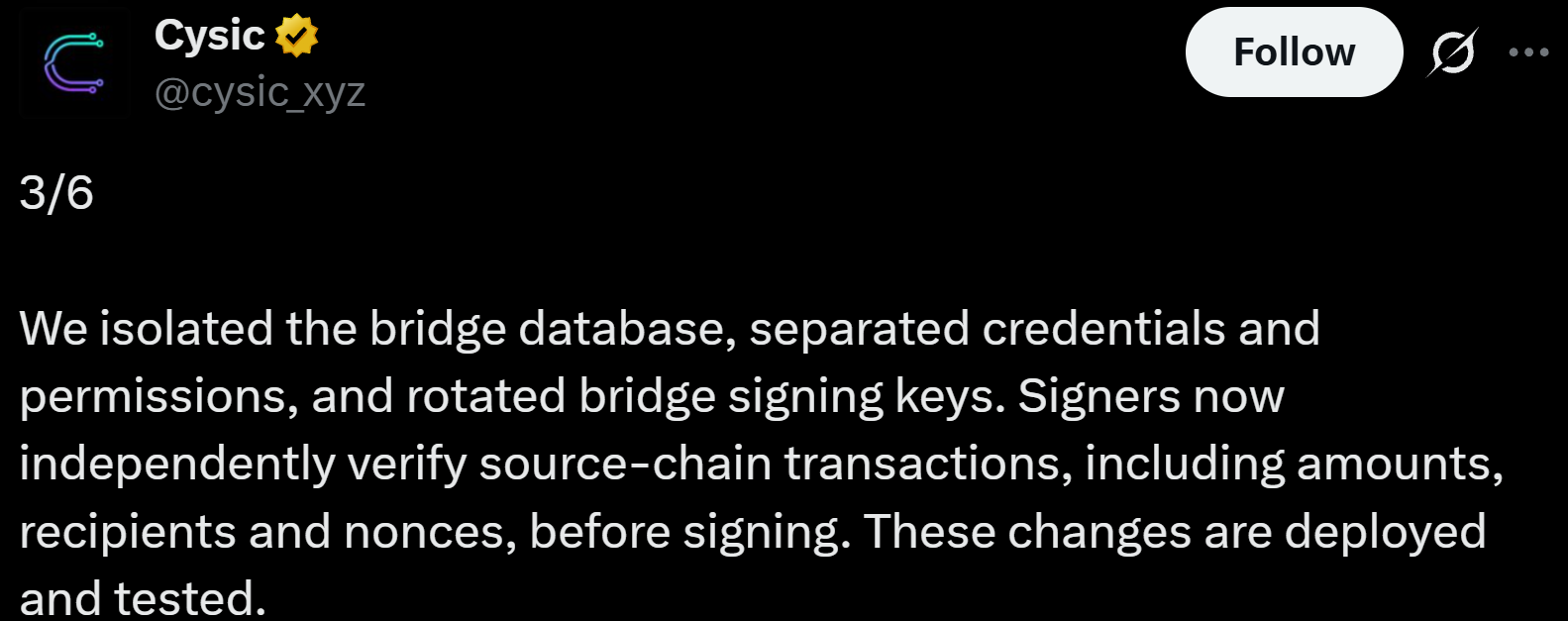
The third part lists the fixes, which the team says are deployed and tested:
-
The database was isolated from other systems
-
Credentials and permissions were separated
-
Signing keys were rotated
-
Signers now independently verify source-network transactions, including amounts, recipients and nonces, before signing
The last change matters most.
Source: Official Cysic
Before, forged records could slip through. Now each signer must check the original transaction itself, so one compromised database should no longer be enough to approve a mint.
Rotating keys matters because old keys may have been exposed, so replacing them closes that risk.
Because the Cysic bridge exploit began at the database, the fixes start there. These claims come from the foundation and have not been independently audited in anything we could open.
Service Restored and 7.2 Million Tokens Burned
By 28 October, bridge transfers had resumed, with delivery from Cysic to BNB Smart Chain verified on-chain.
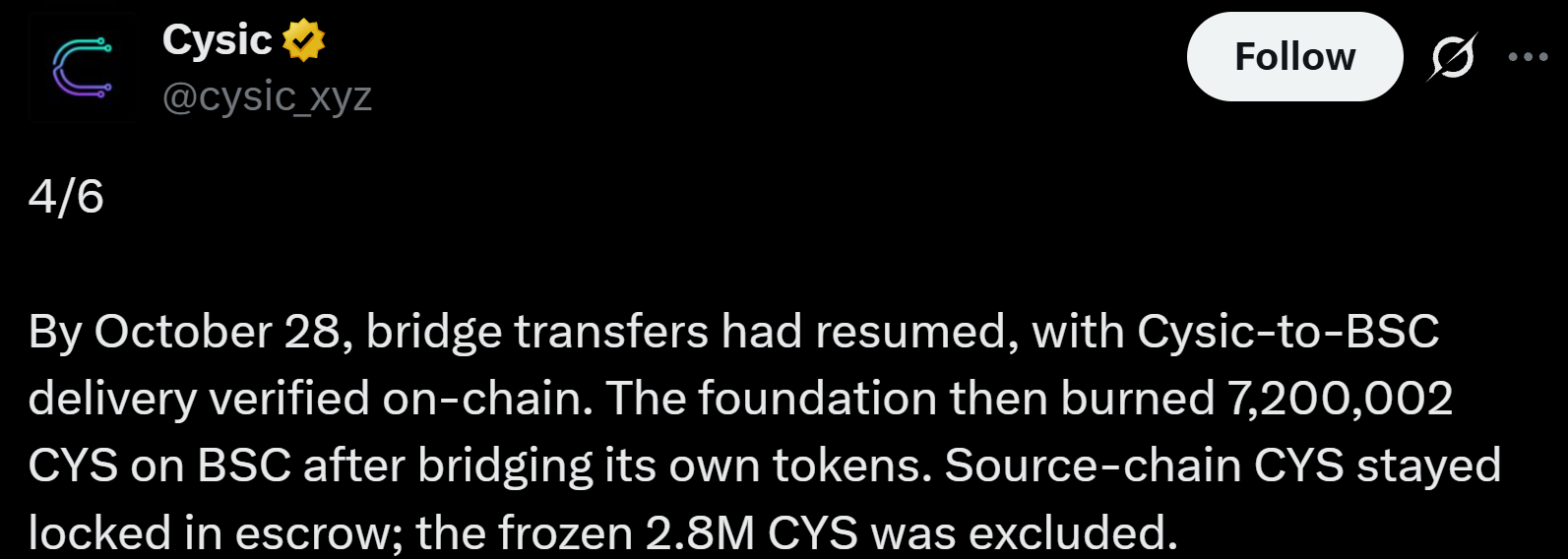
By our count, service returned 11 days after the attack. The foundation then bridged its own tokens and burned 7,200,002 on BNB Smart Chain.
The originals on the source network stayed locked in escrow, a locked vault that holds the original coins backing the copies on the other network, and the frozen 2.8 million were excluded.
The fifth part lists two burn transactions as proof:
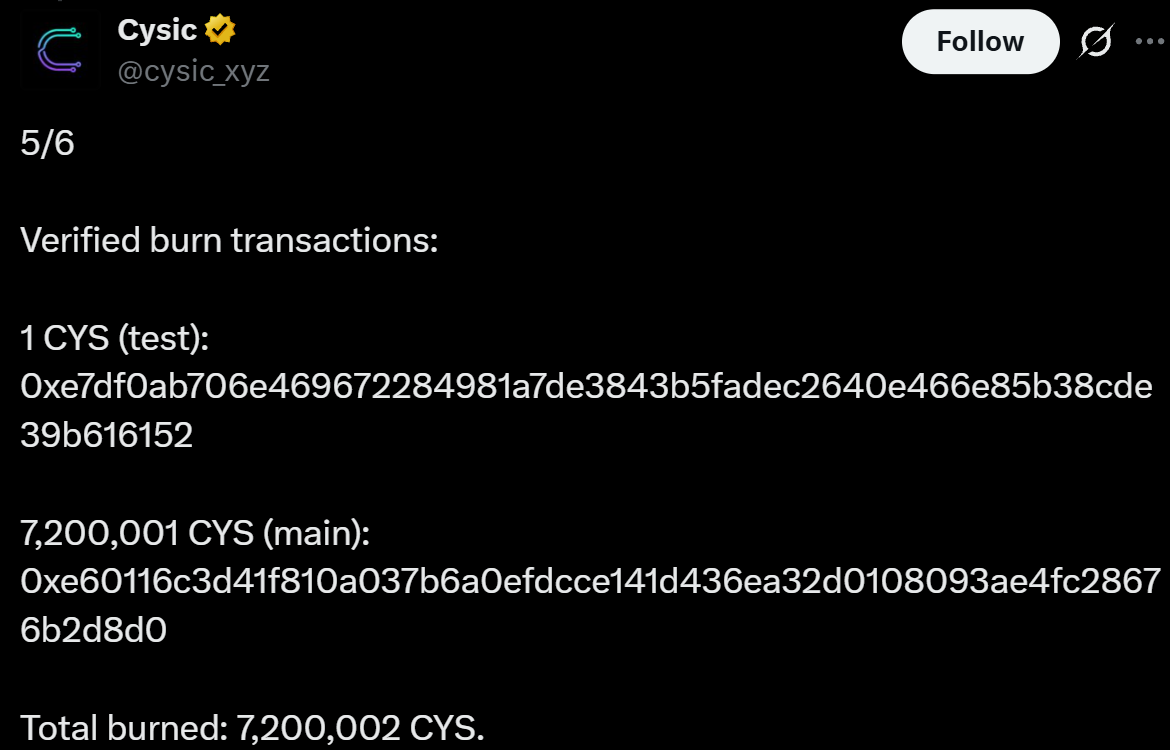
Our reading, not the foundation’s: because 10,000,002 were minted and 7,200,002 burned, the leftover unbacked supply is 2,800,000, which matches the frozen balance.
That would mean the backing now lines up again, apart from tokens locked in the frozen address. We could not open the on-chain pages, so the hashes should be checked on a block explorer.
Accountability and What Is Still Unknown
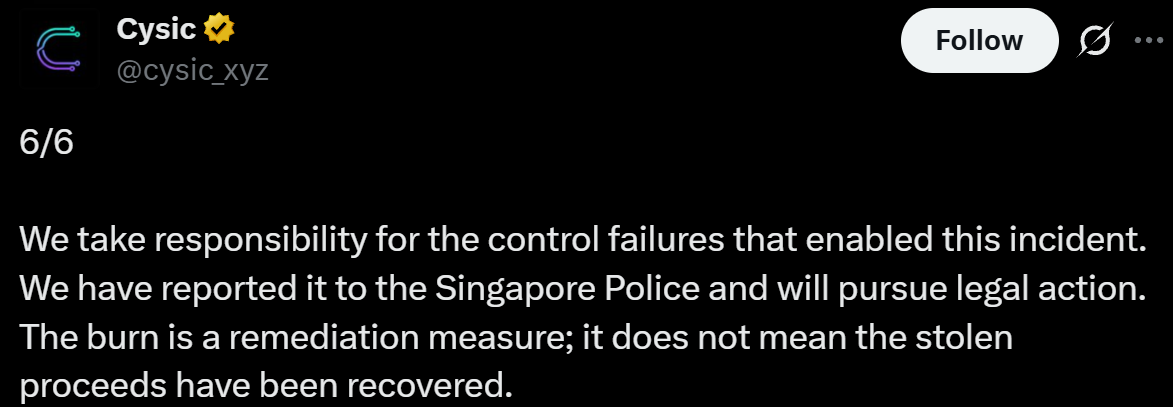
The foundation takes responsibility for the control failures, says it reported the case to the Singapore Police and plans legal action.
Source: Cysicxyz Post
It also states that the burn is a remediation step and does not mean the stolen proceeds have been recovered. The thread mentions no arrests and no recovered funds so far.
That caveat is the key to reading this story. Burning reduces supply, but the attacker had already sold 7.2 million tokens, so those coins reached the market. The post-mortem does not say how large the final dollar loss was.
Whatever the final cause turns out to be, the Cysic bridge exploit shows why backend security deserves as much attention as smart contracts.
What readers can do now:
-
Follow only the foundation’s verified accounts for updates
-
Ignore unofficial links, airdrops, or “recovery” offers
-
Check burn transactions on a block explorer yourself
-
Do not treat a burn as a guarantee about price
Conclusion
The Cysic bridge exploit is a clear lesson in how a weak back-end system can undo strong blockchain security.
The foundation has restored service, hardened its signing process, and offset the sold supply, yet recovery of stolen funds is still unproven.
Holders and users should rely on official channels, verify the burn transactions themselves and remember that this article is not financial advice.
Disclaimer
This article is for educational and informational purposes only and is not financial or investment advice. Crypto assets are high risk, their prices can be very volatile, and you can lose some or all of your money. Always do your own research and consider speaking with a licensed financial advisor before making investment decisions.






