Remittix Presale Raise Tops $33.1M: 21 Days Left Before RTX TGE 2026

Remittix Presale and US Midterms: Could Election Results Affect RTX?
The Remittix presale has raised $33,168,775.16, leaving about $2.83 million before its $36 million cap, according to the sale tracker. The countdown to the RTX TGE now sits at 21 days. Remittix crypto news also lands on US election day, when voters decide who writes the next crypto rules.

Source: Official Website
Can a nearly full sale and a political reset sit comfortably together? Now the question is whether the first date shapes the RTX November listing on the second?
Remittix Presale Today: RTX Price and Funding Gap
The RTX presale is now aiming for its final $36 million hard cap after completing the first $32 million milestone, which revealed the Remittix launch date. Current figures as of November 3:
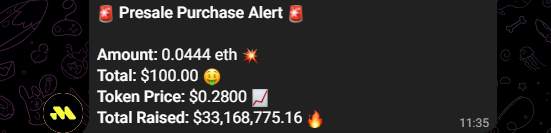
Source: Official Purchase Alerts
RTX price today: $0.2800, the early sale price
Total raised: $33,168,775.16
Left to the cap: about $2.83 million
Hard cap: $36 million
Countdown: 21 days, 3 hours
Remittix funding is near 92% of the cap. A crowded stage shows demand, but it says nothing about where the token will trade. A market price forms only after trading opens, a point earlier crypto presale news also stressed.
RTX TGE Date: What the November 24 Listing Plan Covers
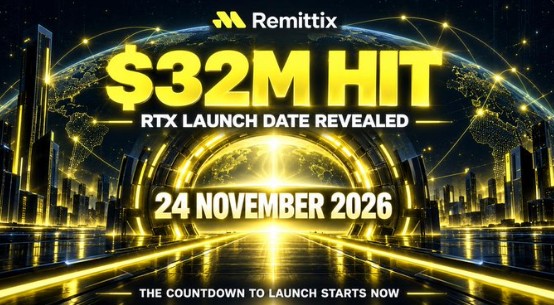
The project targets November 24, 2026 for the token generation event, when tokens are created and handed out, per an official X post. The Remittix launch date comes with these terms:
Supply: 1.5 billion $RTX, with 300 million burned at launch
Presale share: 750 million $RTX, or 50% of supply
Claims: open five days after launch, with no vesting
Venues: Uniswap as first DEX and LBank as first CEX
No exchange contracts are confirmed, so the $RTX November listing is only partly settled. Remittix listing 2026 plans still depend on those confirmations.
US Midterm Elections Today: Why Presale Buyers Face Added Rules Risk
Americans vote today on all 435 House seats and 35 Senate seats, as the election briefing explains. The vote changes no rules by itself, and it does not touch the RTX November listing directly. US residents are barred from buying $RTX anyway. The link is market mood.
The CLARITY Act stalled in the Senate in September, and the SEC and CFTC are short on commissioners. Analysts say Democratic control could bring tougher oversight, while Republican control could favor industry. Those are possibilities, not forecasts.
Bitcoin history adds nerves: analyst Ted Pillows noted on X that BTC fell about 51% after the 2018 midterms and 25% after 2022. That pattern does not prove cause and effect.
Still, a weak crypto market could put pressure on $RTX launch price, as newly listed tokens often struggle when investors sentiments and demand remain low.
Remittix Latest News: PayFi, Earn Testing and Audit Limits to Know
The whitepaper calls $RTX the native asset across PayFi, Markets and Earn. Status, per the project documents, is self-reported:
PayFi: 41 new fiat currencies added, still in limited testing
Wallet: non-custodial, live on iOS with 10,000+ downloads
Markets: live, with $50M+ in reported cumulative volume
Earn: testing since October 27, with a target yield up to 22%, not a promise
Access is the catch. The restriction rules bar residents of the United States, United Kingdom, Canada and China, plus sanctioned places such as Iran and North Korea. VPNs are banned, and the payment service needs government ID and proof of address.
A CertiK review from December 2025 found no critical, major or medium issues in the token contract. It flagged one centralization concern over privileged roles, and it does not cover the payments platform.
Supply is the other flag. No vesting also means selling pressure is possible once trading opens.
The next 21 days will test three things: PayFi reaching real holders, an exchange contract, and a launch on schedule. A closed sale proves demand. Delivery will decide whether it lasts.
Disclaimer: This article is for informational purposes only and does not constitute financial or investment advice. Crypto markets carry significant risk. Always do your own research before making any investment decisions.






