Democrats Control Congress: 2026 Midterm Upset Puts Trump on Notice

Democrats Control Congress: 2026 Midterm Results and What's Next in US
Voters went to the polls on November 3, 2026, and Democrats control Congress after a night that reshaped Washington.
News organizations have projected Democratic wins in both the House and the Senate, taking both chambers from the Republican Party.

Source: Post On X
The Results: A Democratic Win in Both Chambers
AP’s live updates and full results page carry the running vote counts. Election Day was November 3, and early on November 4 some close races were still undecided, so final seat totals may change.
The projected outcome is a Democratic majority in each chamber, which would end unified Republican control of Congress.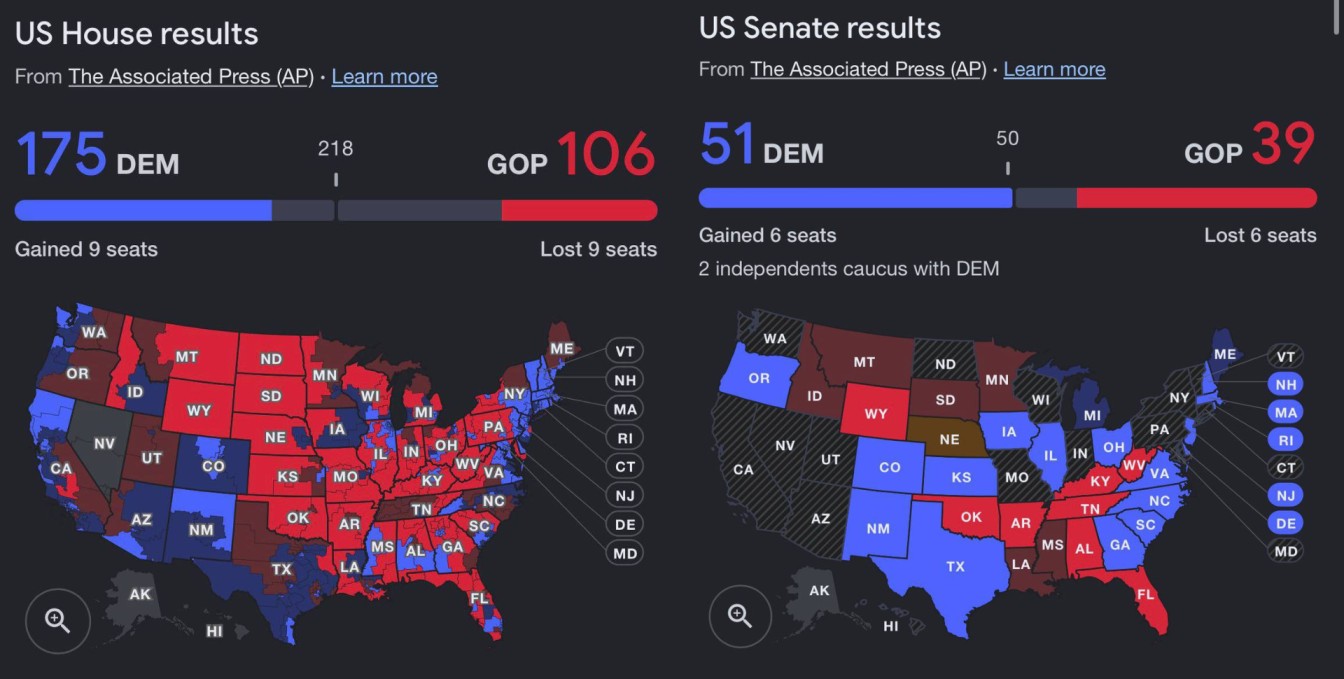 The Senate figure is 51 rather than 50 because a 50-50 split lets the vice president break ties, and JD Vance, a Republican, holds that job.
A projection means a news organization has judged that the remaining vote cannot change the outcome.
It is not the same as an official count, and states will certify official results over the coming weeks.
Senate Flips: From Texas to Maine
Republicans held 53 of the 100 seats before the vote, so Democrats needed a net gain of four.
Each flip adds one Democratic seat and removes one Republican seat, which is why four flips were enough to cross the line.
AP also keeps a dedicated Senate results page. Election-night reports show wins in several Republican-held seats:
-
Texas: Democrat James Talarico defeated Attorney General Ken Paxton.
-
Ohio, Iowa and Kansas: all three seats moved to Democratic hands.
-
North Carolina and South Carolina: both Republican seats flipped.
-
Maine: Republican Sen. Susan Collins lost her seat.
-
Georgia: Democratic Sen. Jon Ossoff won re-election.
These flips are why Democrats control Congress as a whole, not just the House. Georgia matters because it protected a seat the party already held.
A few races, including Michigan, were still too close to call at last check.
Why Voters Shifted: Prices, Healthcare and the Iran War
Analysts point to high prices and the war in Iran as leading reasons for voter anger.
A midterm election falls halfway through a presidential term, and the president’s party usually loses seats.
The president was not on the ballot, so the result is best read as a change in the party balance in Congress, not a vote on his own seat. Vote totals alone cannot prove a single cause.
House Democratic leader Hakeem Jeffries has named four priorities for the new majority:
| Priority | Goal |
| Medicaid | Reverse cuts |
| Health insurance | Extend Affordable Care Act credits |
| Tariffs | Restore Congress’s say |
| Iran | Stop the war |
The president’s term runs until January 2029, so the White House keeps its veto power.
What Democratic Majorities Could Mean for Trump’s Agenda
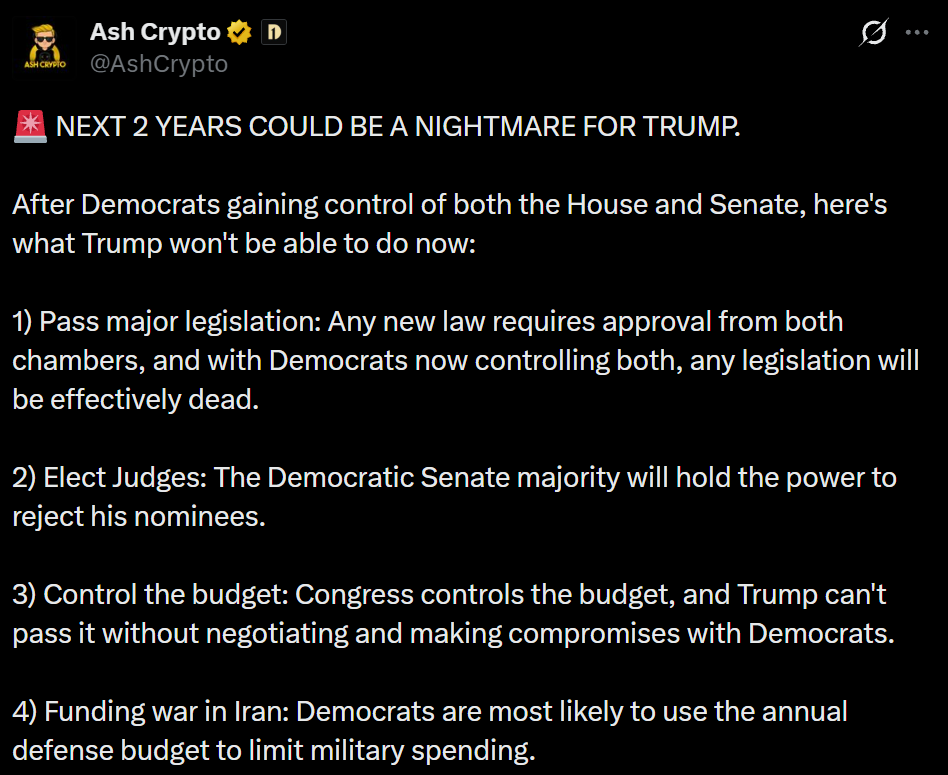
The next two years could be very hard for President Trump.
Source: X Post
It argues that, with Democrats leading both chambers, he will struggle to pass laws, confirm judges, and control the budget and fund the war in Iran.
The post also says Trump and JD Vance face a risk of impeachment and deeper investigations into their investments.
This is one commentator’s view, not an official statement. The table below compares each claim with how Congress works.
| Claim in the post | What the rules say |
| Major legislation will be “effectively dead." | Every bill needs both chambers and the president’s signature. Democrats can block Republican bills, but the president can also veto Democratic ones. A veto override needs two-thirds of both chambers. |
| Trump can no longer “elect” judges. | The president nominates judges, and the Senate confirms them. A Democratic majority can slow or reject nominees. |
| Trump cannot control the budget. | Congress passes spending bills, so any deal needs votes from both parties. If no deal is reached, a government shutdown becomes possible. |
| Democrats will use the defense budget to limit the Iran war. | Congress funds the military through annual defense and spending bills, so it has that tool. Whether Democrats will use it is a prediction, not a confirmed plan. Jeffries has named stopping the war as one of his four priorities. |
| Impeachment and investigations are now a risk. | The House can impeach with a simple majority. Removal needs two-thirds of the Senate, which is far above the 51 seats projected in this article. Committee chairs can also issue subpoenas. |
What a Democratic Takeover Can Do
The new Congress is seated in January. From then on, the majority party chooses committee chairs, sets the floor schedule, and gains subpoena power to investigate the administration.
Jeffries is in line to become Speaker, and Chuck Schumer would return as majority leader in the upper chamber if his caucus backs him.
| Power | What it means |
| Committee chairs | Lead hearings and investigations |
| Subpoena power | Demand documents and testimony |
| Floor schedule | Decide which bills get votes. |
| Nominations | Shape how nominees move forward. |
In short, Democrats control Congress but not the White House, so any bill still needs the president’s signature, and a veto can be overridden only by two-thirds of both chambers.
What to watch in the first weeks:
-
Leadership elections, including the vote for Speaker.
-
The first committee hearings and any subpoenas.
-
Redistricting, which Jeffries has said will remain a fight in the new Congress.
Conclusion
The midterms moved both chambers away from Republican control, and Democrats control Congress as the final counts are confirmed.
Final counts, certification, and the first votes of the new session will show how far the new majority can go.
This article is for information only, so check AP and official government pages for the latest counts.
Disclaimer
This article is for educational and informational purposes only and is not financial or investment advice. Crypto assets are high risk, their prices can be very volatile, and you can lose some or all of your money. Always do your own research and consider speaking with a licensed financial advisor before making investment decisions.






