Dogecoin Payment Guide: Start Accepting DOGE Today

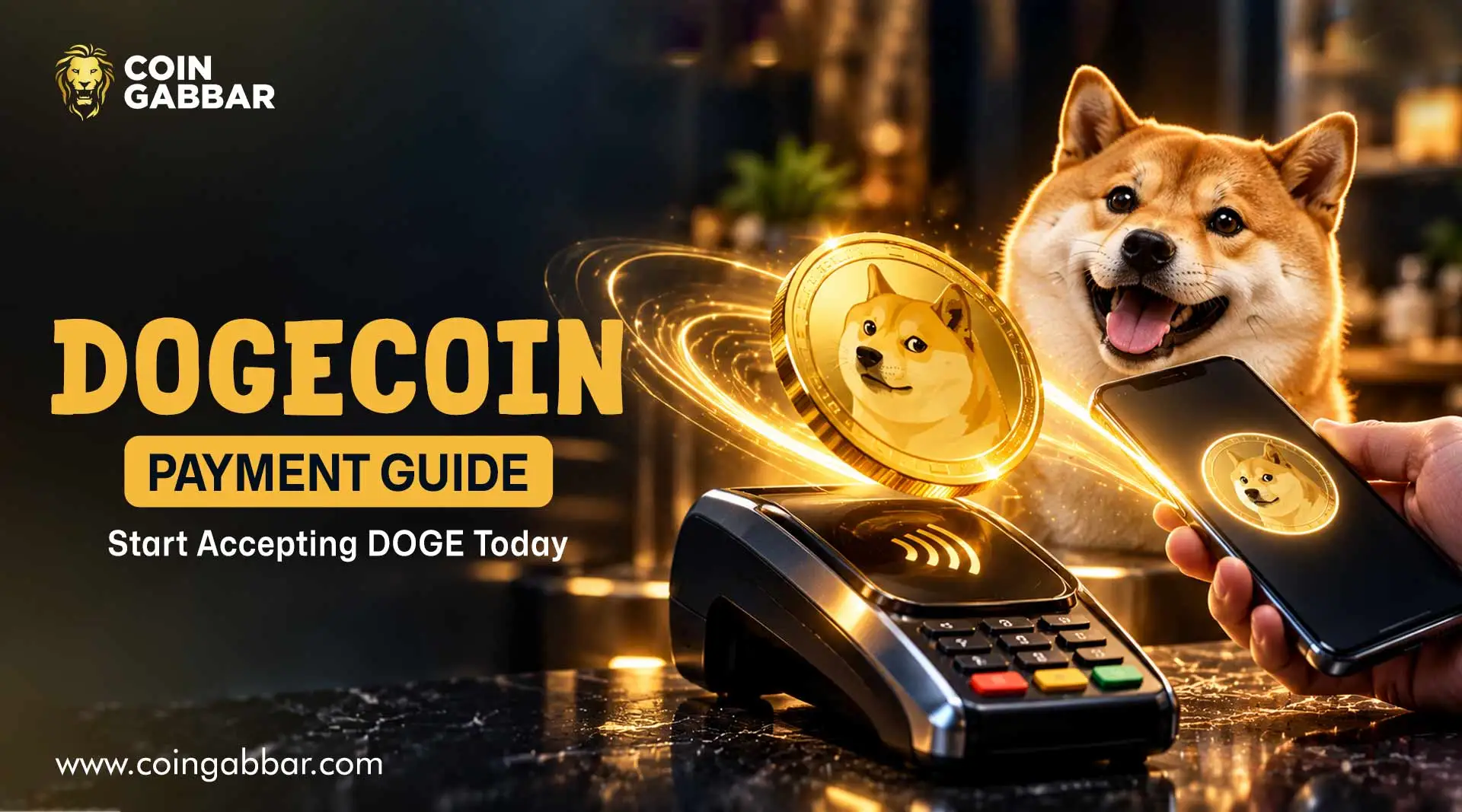
Dogecoin Payment Guide: How Businesses Accept DOGE
A coin that began as a joke now shows up at checkout pages. For a business, though, a Dogecoin payment raises practical questions: how does the money arrive, how fast, and what happens if the price moves? This guide walks through the options.
Businesses can accept a Dogecoin payment in three main ways: a wallet with a QR code, a payment gateway that plugs into an online store, or a custom setup using a Dogecoin node. Gateways are the simplest for most online sellers.
What Accepting DOGE Means
At the most basic level, a business needs a wallet to receive any Dogecoin-payment. Behind the scenes, the network confirms each transfer through mining, and this guide to Dogecoin Proof of Work explains how that process works in simple terms.
The Dogecoin Foundation's Dogepedia guide says a store can print a QR code that customers scan with their phones, and online shops can use gateways with store integrations.
Status labels used below:
Confirmed: stated on an official or primary page
Reported: stated by secondary sources
Not verified: not checked for this article
Three Ways to Accept DOGE
Method | Best for | Main trade-off |
Wallet and QR code | Shops and small sellers | Manual tracking |
Payment gateway | Online stores | Fees and provider rules |
Own node with JSON-RPC | Developers | More work and upkeep |
The Dogepedia page lists Coinbase Commerce and BitPay as options for a Dogecoin payment setup, with Shopify, WooCommerce, and OpenCart integrations, and notes custom builds through Dogecoin Core's JSON-RPC interface. It adds that the Foundation is not affiliated with the companies it names.
Using a Payment Gateway
A gateway handles the checkout page, tracks each Dogecoin-payment, and can pay the merchant in crypto or local money.
Dogecoin NOWPayments, for example, describes its Dogecoin option as entering a wallet address in settings, then accepting payments.
Because that is a vendor's own page, treat it as reported marketing, not independent proof.
Questions to ask any provider about its Dogecoin payment tools:
Does it hold the funds (custodial) or send them straight to your wallet?
Which stores and plugins does it support?
What are the fees, and when does payout happen?
Does it ask the business for identity checks?
Fees and rules vary and change, so exact numbers are not verified here.
Speed and Confirmations
Dogecoin blocks arrive roughly every minute, so a Dogecoin-payment is usually quick to confirm. A merchant still needs to decide how many confirmations to wait for.
Small purchases may need only a few, while larger orders deserve more. For a simple look at sending and tracking DOGE, see Dogecoin Transaction Made Simple.
Price Swings
A customer might make a Dogecoin payment at one price, and the merchant might sell hours later at another. Two common answers:
Convert to local currency right away through the gateway
Keep a small DOGE balance on purpose and set a clear policy
Supply plays a part in how people think about long-term value, and this guide to Dogecoin supply explains why DOGE has no maximum limit.
Some merchants also glance at a Dogecoin price prediction, but forecasts are opinions, so a sensible payment policy shouldn't depend on them.
Accounting and Tax
Receiving a Dogecoin-payment is still revenue. Businesses should record the value in local currency at the time of payment and keep records of every DOGE transaction.
Rules differ by country, so an accountant should confirm how to report them. This article doesn't give tax advice.
A Dogecoin Payment Example
Imagine a small online print shop that adds a Dogecoin payment option through a gateway plugin. Customers pick DOGE at checkout, scan a QR code, and wait for a confirmation.
The shop converts proceeds to local currency each week. This is a made-up scenario, not a real business.
What the Evidence Shows
Claim | Source | |
QR codes and gateways work for DOGE | Dogepedia | |
Dogecoin Core offers JSON-RPC access | Dogepedia | |
Blocks take about one minute | Secondary explainer | |
Gateway fees and speeds | Vendor pages |
Risks and Limitations
Prices can swing sharply between sale and settlement
Custodial gateways hold funds until payout
Fake checkout pages and wrong-address scams exist
Refunds are manual, since blockchain payments can't be reversed
Tax and licensing rules differ by country
Security Checklist of Dogecoin Payment
For every Dogecoin-payment setup:
Use official plugins and verified gateway accounts
Double-check receiving addresses before printing a QR code
Turn on two-factor authentication
Keep a written refund policy
Conclusion
A Dogecoin payment option can attract new customers, but it works best with a clear plan for confirmations, price changes, and records. Start small, pick one method, and confirm current details with official sources before going live.
To keep up with the coin itself, see Dogecoin News today for current developments.
The Future of Dogecoin: A Longer View of Its Technology, Adoption, and Challenges.
Disclaimer: This article provides general educational information about Dogecoin payments. It isn't financial, investment, legal, or tax advice and doesn't recommend buying, selling, or holding any asset. Crypto payments carry risk, and losses are possible.








.webp)




