Ethereum PoW ETHW Mining Economics After the Price Drop

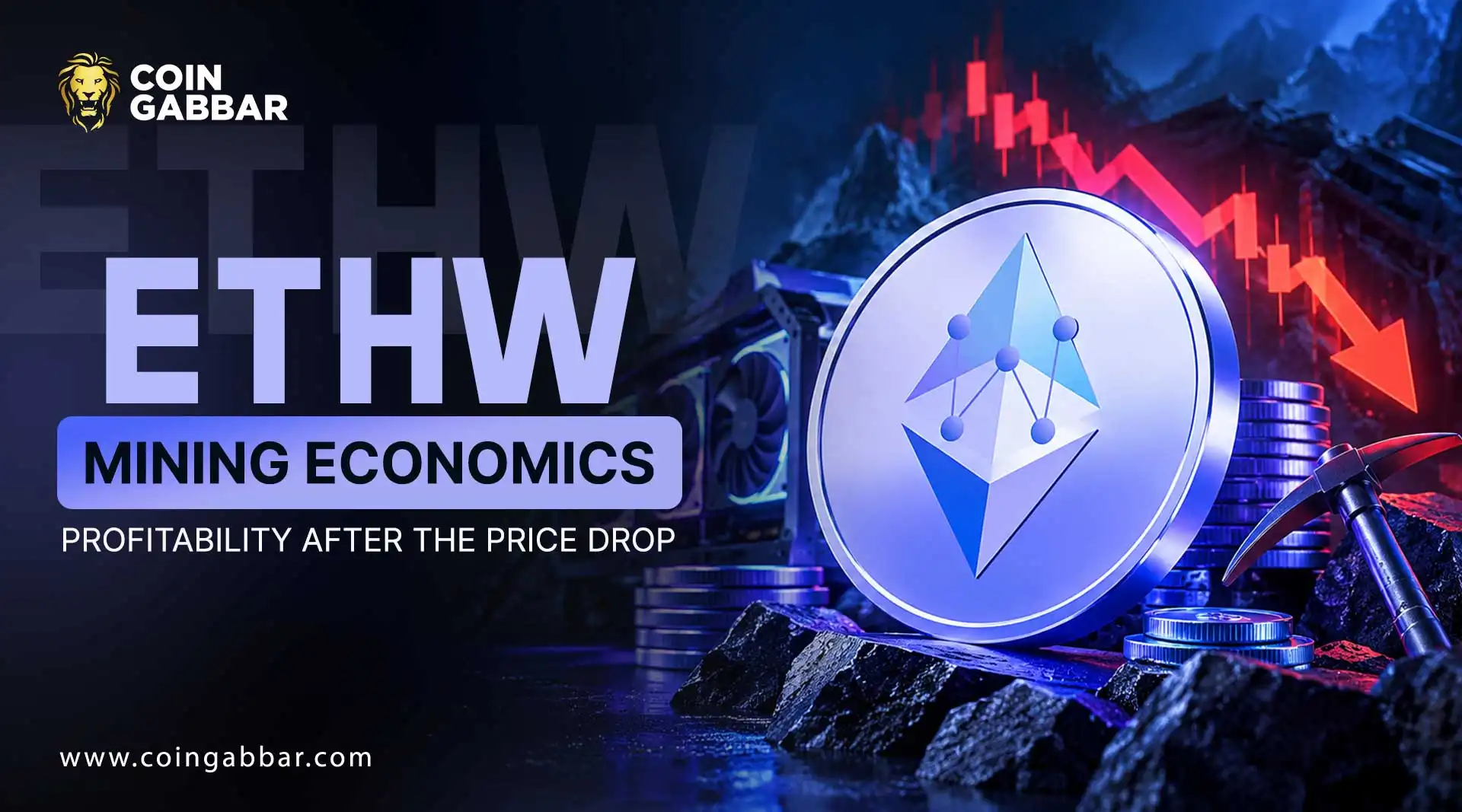
Why a Falling ETHW Price Does Not Always Mean Every Miner Loses
ETHW Mining Economics comes down to one question. Does a day’s coin cover the cost of running the rig?
A lower price shrinks the dollar value of every reward. The reward itself stays the same, and not every miner feels the hit equally. Power cost and hardware efficiency decide who stays in profit. This guide uses mining data checked on 30 October 2026.
What Is Ethereum PoW, and Why Does It Still Use Proof of Work?
Ethereum switched to proof of stake in September 2022, and mining on the main chain stopped with that change.
Not every miner moved along, though. Ethereum PoW carried on as a separate network and kept proof of work, so miners still compete to add new blocks.
That’s the short answer to why it still uses mining: it never made the switch. Anyone who wants to run a node can start with the full node setup guide in the project’s documentation.
How Does Ethash Mining Work on the Ethereum PoW Blockchain Now?
Ethash is the algorithm EthereumPoW inherited. It needs plenty of video memory for a growing dataset.
Mining software tries numbers until one beats the difficulty target. The first winner publishes the block and takes the reward. The Ethereum mining documentation covers the process in detail.
Nodes check and relay those blocks. Beginners can start with how Ethereum nodes work.
How Much Do ETHW Block Rewards Pay When the Market Price Falls?
The data lists an ETHW block reward of 2 ETHW and a target block time near 13 seconds, with observed averages around 13.2. That means roughly 13,000 ETHW enter circulation daily, though real issuance shifts with actual block times.
Ethereum PoW mining rewards stay fixed in coin terms, so an ETHW price drop only cuts their dollar value. Tracked prices over the past month ran from about $0.22 to $0.30. Halve the price and daily network revenue halves too.
Can GPU and ASIC Miners Still Earn Anything From ETHW Today?
Ethash was never changed to block specialized chips. ASIC mining machines built for it can mine ETHW, and they use less power per hash than graphics cards.
GPU mining still works, but older, power-hungry cards feel the squeeze first. A mid-range card at about 41 MH/s and 110 W earns roughly 0.2 ETHW a day, worth around five cents.
How Do Network Hash Rate and Mining Difficulty Change Payouts?
Hash rate is the total mining power on the network. For ETHW, it is about 2.8 TH/s right now. Difficulty is how hard it is to find the next block, and it stands near 36T.
Say some miners switch off their machines. The network’s hash rate drops, and blocks slow down for a while.
Difficulty then comes down to bring block times back to normal. A miner who stays online with the same rig now owns a bigger slice of the total, so each block found by that rig is worth more.
Proof of work only stays safe while enough miners keep running. The PoW and PoS differences show why this matters so much.
How Much Do Electricity Costs and Pool Fees Cut Daily Returns?
Power is the biggest cost behind crypto mining returns. A 1 kW rig uses 24 kWh a day, so each extra cent per kWh adds 24 cents to the daily bill.
Home miners on high tariffs often lose first, while surplus or very cheap power helps rigs last longer.
Mining pool fees look small. Listed ETHW pools charge from under 1% to about 2.5%, and 1% is common. Payout rules and minimums vary too, so each pool needs a check.
How Can Miners Calculate an ETHW Break-Even Point Before Buying?
ETHW Mining Economics becomes clear with one formula. Rig hash rate divided by network hash rate, using the same unit, gives the rig’s share. Multiply that share by about 13,000 ETHW and by price. Then subtract the pool fee and the power bill.
The example uses a 180 MH/s rig drawing 390 W, a 2.8 TH/s network, and a 1% pool fee. That rig holds about 0.0064% of the network and earns roughly 0.84 ETHW a day. The power bill assumes $0.10 per kWh.
ETHW price | Daily revenue after fee | Daily power bill | Break-even power rate |
$0.30 | $0.25 | $0.94 | $0.027/kWh |
$0.26 | $0.22 | $0.94 | $0.023/kWh |
$0.20 | $0.17 | $0.94 | $0.018/kWh |
This is an expected value estimate, not a payout promise. It assumes nonstop uptime and stable network conditions. Cooling, downtime, stale shares, and hardware wear cost extra.
Only very cheap power covers the bill here, which matches public profitability calculators. Rigs with more hash per watt have a higher break-even rate.
What Risks Could Turn ETHW Mining From Profitable to Costly?
If a lot of new ASIC machines start mining ETHW, the network gets harder to mine. Each miner then earns a smaller piece of the same rewards.
ETHW is a small market. Selling a big pile of mined coins at once can push the price down, so the miner may get less than the price shown on screen.
A small hash rate can make attacks on a proof-of-work chain cheaper.
Cloud mining offers promising fixed daily returns, which is a common scam sign.
Mined coins need a safe home, and a secure Ethereum wallet guide covers the basics.
Expert Take: What Should Miners Watch Before Switching On a Rig?
Electricity price is one of the biggest factors for small miners. ETHW price, difficulty, hardware efficiency, and pool payouts also shape ETHW mining profitability.
The main concern is thin margins, since one more drop could erase what profit remains. The biggest unknown is how many GPU and ASIC miners stay online.
Estimates should use the latest price, hash rate, difficulty, and measured power draw. Newcomers can check the crypto dictionary for unfamiliar terms.
Conclusion: What Lower ETHW Prices Really Mean for Home Miners
A lower price shrinks the dollar value of rewards but does not end mining on its own. ETHW Mining Economics still depends on power cost, hardware efficiency, pool fees, and network share.
Efficient machines on cheap electricity may stay profitable. Anyone weighing a switch can first read about Ethereum mining and staking, then run the break-even math with live numbers.
Disclaimer: This article is for information only and is not financial advice. Mining and crypto prices carry high risk, and rewards are not guaranteed. Readers should check live data and do their own research before buying hardware.