India’s First Tokenized Corporate Bond: The REC Issue – Explained

What Happened With the REC Bond Issue?
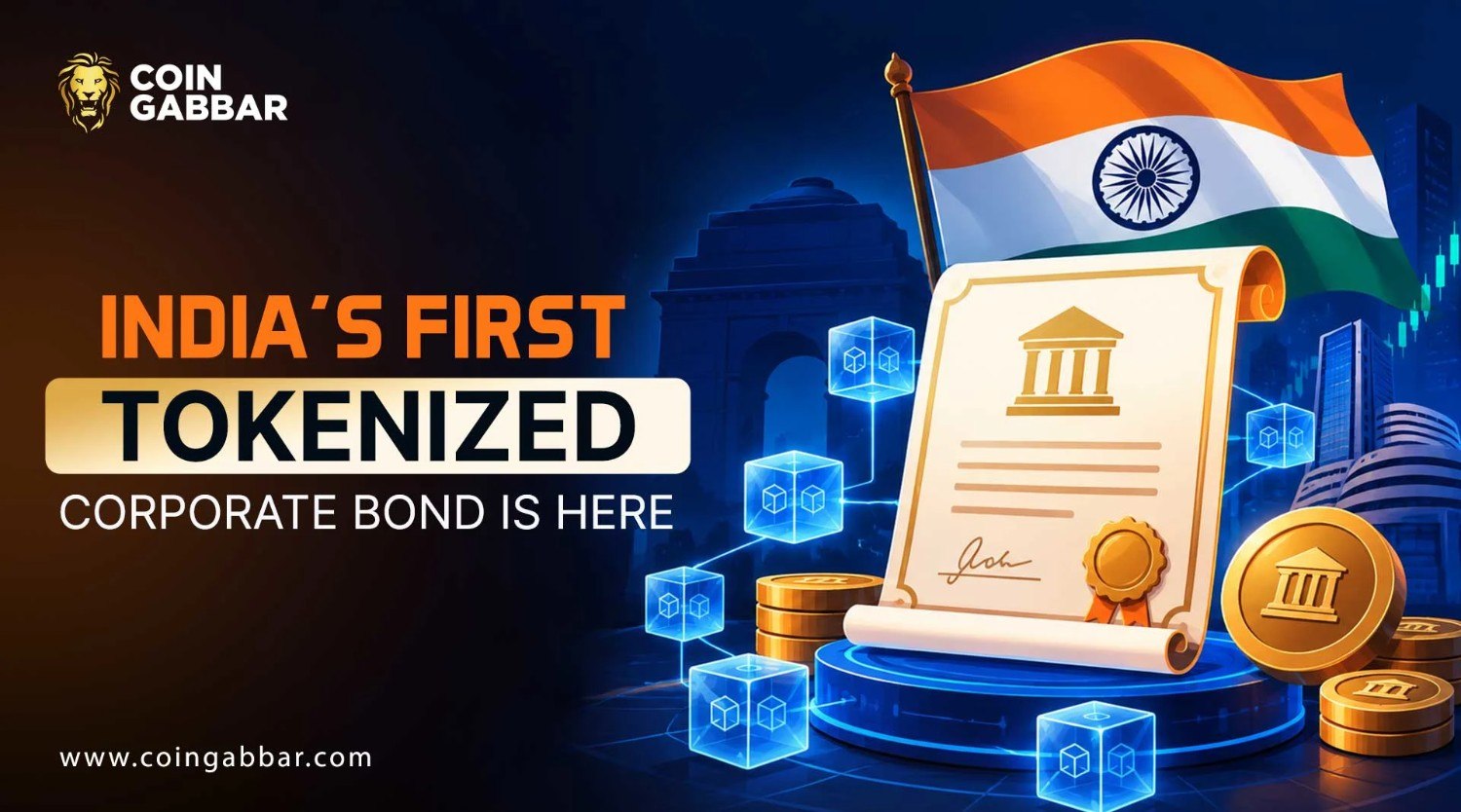
On September 7, 2026, REC raised ₹500 crore through India's first tokenized corporate bond. REC is a state-owned power sector lender. The sale ran as a pilot under a regulatory sandbox set up by the Securities and Exchange Board of India (SEBI).
A sandbox is a controlled test where regulators allow new ideas on a small scale. The bond was sold, recorded, and settled on a shared digital ledger. That's why the deal keeps showing up in India crypto news and in any talk about the India tokenized bond space.
This article covers the terms, the technology, the rules behind it, the benefits, and the risks.
What Are the Key Details of the REC Issue?
REC kept the pilot small on purpose. The main terms are below.
Detail | Information |
Issuer | REC Limited, a state-owned power sector lender |
Issue size | ₹500 crore (₹100 crore base plus ₹400 crore green shoe) |
Bids received | About ₹796 crore |
Coupon | 7.30% per annum |
Tenor | 1 year 9 months |
Bidding platform | NSE Electronic Bidding Platform |
Listing | NSE and BSE |
Settlement | Same-day pay-in, allotment, and listing |
A green shoe lets an issuer accept more bids than the base size. $REC used the full extra ₹400 crore.
REC called the response almost eight times the base size. But the issue closed at ₹500 crore, so the real cover was about 1.6 times. Still healthy. Just less dramatic.
How Does a Tokenized Bond Work?
A tokenized bond is a normal debt security. Its ownership record sits on a shared digital ledger as a token. It isn't a cryptocurrency.
The $REC pilot worked in four steps:
Banks and institutions placed bids on the NSE electronic bidding platform.
Each buyer needed two digital accounts: a wholesale digital currency wallet from a bank and a new electronic wallet for securities.
Payment moved in the Reserve Bank of India's wholesale digital rupee. The bond token moved at the same moment.
Allotment and listing on NSE and BSE finished the same day.
This method is called atomic delivery versus payment. Both sides of the trade complete together, or neither does. Turns out, that one feature removes most of the waiting that slows down older bond trades.
Think of a house sale where the buyer's money and the seller's papers change hands at the same instant. Nobody waits for the other side, and nobody carries the risk that one side never delivers.
How Is It Different From a Normal Bond Sale?
In a normal sale, trade, payment, and delivery run through separate systems. That leaves a time gap. Every party then spends effort matching records.
In the REC pilot, all parties saw one shared record. Payment, allotment, and listing finished in one day, so the usual wait vanished.
The bond itself didn't change. REC still issued a regular corporate bond with a fixed 7.30% coupon. Existing investor protection rules still applied.
Which Rules Support the Pilot?
SEBI chairman Tuhin Kanta Pandey announced the plan on May 26, 2026. He described a limited rollout over six to nine months. $REC moved in September, well inside that window.
The project, called Demat 2.0, was formally launched on September 10 at Global Fintech Fest in Mumbai. RBI Governor Sanjay Malhotra and Pandey were present.
SEBI, RBI, NPCI, depositories, and stock exchanges all took part. Larsen & Toubro then issued its own ₹500 crore bond two days after REC, according to NSE. The combined total reached ₹1,000 crore.
Who Can Invest in the REC Bond?
Only a select group of institutions can join for now. Banks, financial institutions, mutual funds, and depositories took part in the $REC issue.
Market reports named HDFC Bank and ICICI Bank among roughly 20 buyers. Retail investors can't join. Large buyers make sense for a first test. Smaller errors cost less when only experienced institutions handle the process. No date for wider access has been confirmed, and the regulator hasn't announced any change to the rules yet.
What Are the Benefits and Risks of a Tokenized Corporate Bond?
The benefits come first:
Faster settlement and lower risk while a trade is in progress.
One shared record for issuers, buyers, and market bodies.
Less matching work, which may cut costs.
A base for smaller bond sizes later, if regulators agree.
The risks deserve equal attention:
The pilot is miniature and operates inside a sandbox; therefore, outcomes may not extend beyond this jurisdiction.
The trading of the results among the investors is quite novel.
A failure in technology could interfere with the transaction settlement.
State control of the REC doesn’t mean that government guarantees are valid.
What Does the Data Say About the REC Issue?
Three numbers matter most: ₹500 crore raised, a book 1.6 times the accepted amount, and a 7.30% coupon for 1 year 9 months.
At first glance, this reads like a technology story. It's really a story about market plumbing. Settlement design matters more than the coupon.
The stronger signal is who showed up. Large banks and mutual funds were ready to test the model. The weaker signal is size, since ₹500 crore is tiny next to the full corporate bond market.
Will trading after the issue run as smoothly as the sale itself?
Nobody knows yet. The pilot hasn't tested it, and the India tokenized bond experiment can't claim full success without that proof. So the fair reading is simple: a proof of concept that worked, not a market shift.
What Comes Next for India's Bond Market?
Three things are worth watching: new issuers, wider investor access, and a formal rulebook. SEBI calls the rollout limited, so growth depends on pilot results.
Readers of India crypto news should note one point. This model uses a permissioned ledger and central bank money. Public crypto tokens work very differently.
Other big issuers may study the REC and L&T results closely. Cost savings, speed, and stability will decide whether more firms pick a tokenized corporate bond over the old route. That choice is still open.
Final Take
REC proved that a regulated tokenized corporate bond can be issued, settled, and listed on a ledger in a single day. Liquidity, scale, and the final rules all remain uncertain for now, and that matters.
Readers should check REC, SEBI, RBI, and NSE disclosures before drawing conclusions about any tokenized corporate bond.
Disclaimer
This article is for information only and isn't financial, investment, or legal advice. Tokenized bonds and digital securities carry risks, including loss of capital, so readers should verify details with official sources and consult a licensed adviser before acting.