How to Accept Crypto Payments in a Telegram Bot: Complete Guide 2026

Telegram has become one of the fastest-growing platforms for digital communities, subscriptions, online services, and Web3 businesses. With increasing adoption of digital assets, businesses can now accept crypto payments directly inside Telegram bots through automated payment systems.
A dedicated Telegram crypto payment gateway allows businesses to connect blockchain networks, wallets, and bot-based services. This helps users complete transactions without leaving Telegram while businesses can automate payment verification, subscription access, and digital product delivery.
Why Crypto Payments Fit Telegram Bots Naturally
Telegram has become a popular platform among traders, Web3 communities, and digital businesses. Many users already hold and use cryptocurrencydaily, making Telegram a suitable environment for crypto-based transactions.
Traditional payment methods often require users to leave the platform, complete additional verification steps, or use limited payment options. Crypto payments reduce this friction by allowing users to send funds directly from their wallets while Telegram bots handle automated confirmation.
Businesses exploring blockchain-based payment solutions should understand how blockchain technology supports transaction verification, automation, and decentralized payment infrastructure.
How Crypto Payments Work Inside a Telegram Bot
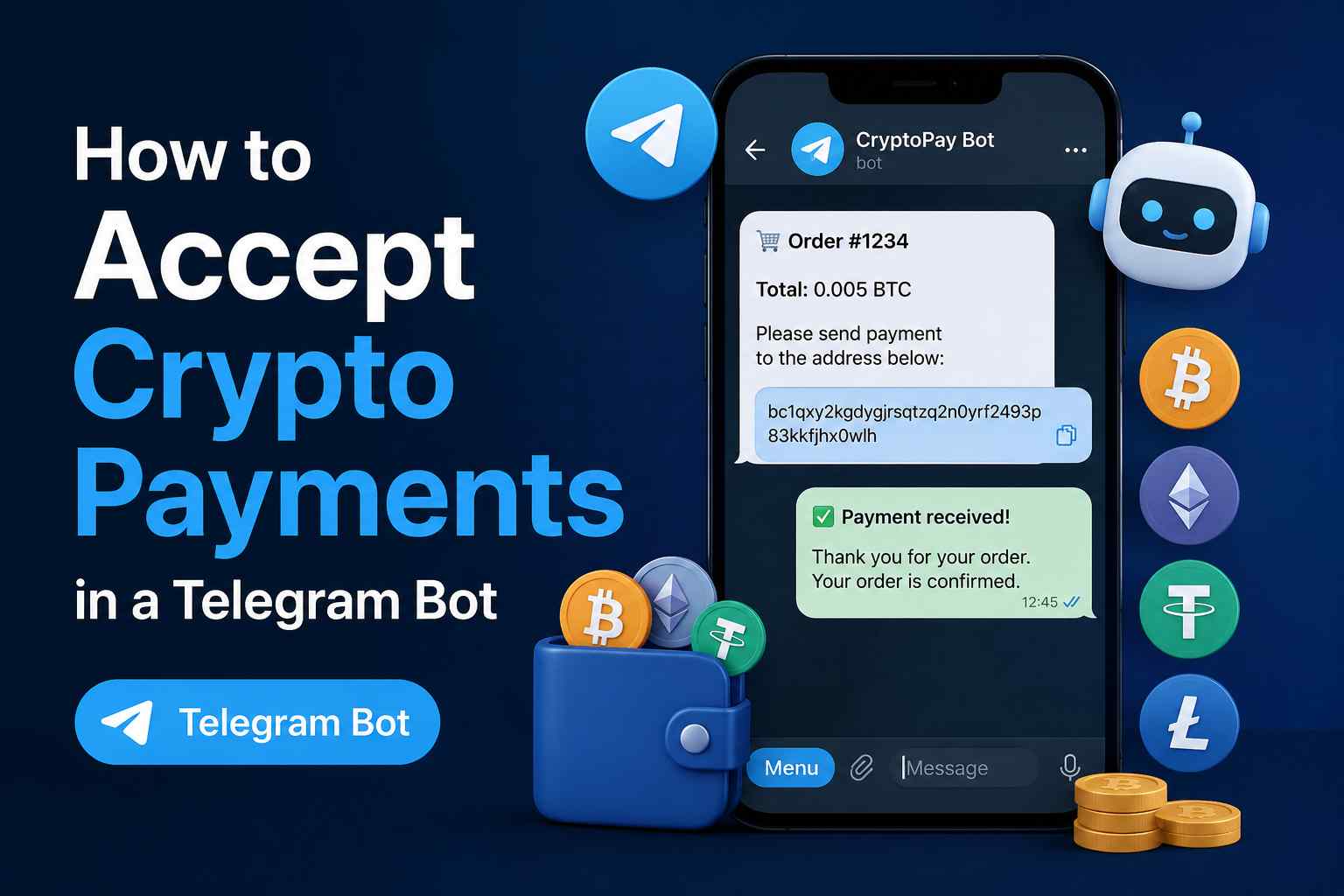
Accepting crypto payments in a Telegram bot usually involves several automated steps:
- User payment request: The customer selects an option such as "Subscribe", "Buy", or "Unlock" inside the Telegram bot.
- Payment invoice generation: The system creates a unique payment address or invoice connected with the user's order details.
- Wallet transaction: The user sends cryptocurrency from their preferred wallet using the provided payment information.
- Blockchain confirmation: The payment system monitors blockchain activity and verifies the transaction status.
- Automatic bot response: After confirmation, the Telegram bot provides access to services, subscriptions, or digital products.
Benefits of Accepting Crypto Payments in Telegram Bots
Integrating cryptocurrency payments into Telegram bots can provide several benefits for businesses, creators, and online communities.
- Global payment access: Users from different regions can send digital payments without depending on traditional banking systems.
- Faster settlement: Blockchain networks can process transactions efficiently depending on the selected asset and network.
- Lower payment friction: Users can complete transactions directly through their existing crypto wallets.
- Automated payment management: Bots can verify transactions and provide services without manual approval.
- Better Web3 experience: Crypto-native audiences can use payment methods that match their digital ecosystem.
Which Cryptocurrencies Can Be Used for Telegram Bot Payments?
The available payment options depend on the crypto payment provider and business requirements. Common cryptocurrencies used for digital payments include:
- USDT stablecoin payments
- USDC payments
- Bitcoin payments
- Ethereum payments
- TON ecosystem payments
Stablecoins are often preferred because they help reduce the impact of short-term cryptocurrency price changes during transactions.
Important Factors Before Adding Crypto Payments to Telegram Bots
Manage Cryptocurrency Price Volatility
Cryptocurrency prices can change quickly. Businesses should use payment systems that calculate transaction values at checkout and provide accurate payment details before users complete transactions.
Create a Smooth Payment Experience
A good Telegram payment flow should clearly show transaction status, including pending payments, blockchain confirmations, and completed transactions.
Support Multiple Blockchain Networks
Different users prefer different networks because transaction fees and confirmation times can vary. Supporting multiple assets can improve accessibility and reduce payment barriers.
Follow Security Best Practices
Businesses should verify wallet addresses, protect payment information, and use reliable infrastructure when accepting cryptocurrency payments through Telegram bots.
How Businesses Can Integrate Telegram Crypto Payments Easily
Building a complete crypto payment system requires blockchain monitoring, wallet management, transaction tracking, and webhook integration. For many businesses, creating this infrastructure from scratch can require significant technical resources.
Most Telegram-based businesses use existing payment gateways that handle payment generation, blockchain confirmations, wallet tracking, and automated notifications.
This allows developers to focus on improving the user experience instead of managing complex blockchain infrastructure.
The Future of Crypto Payments in Telegram Bots
As digital commerce continues moving toward chat-based platforms, Telegram bots are becoming an important channel for subscriptions, digital products, and Web3 services.
Businesses that integrate crypto payments directly into Telegram experiences can create smoother checkout processes and improve automation for users.
The growth of the Web3 ecosystem is also increasing demand for faster, transparent, and decentralized payment solutions across online platforms.
Conclusion
Accepting crypto payments in a Telegram bot allows businesses to provide faster and more flexible payment options for digital communities. By combining Telegram automation with blockchain payment systems, businesses can simplify transactions and improve user experiences.
For more updates about cryptocurrency trends, blockchain developments, and Web3 innovations, explore our latest crypto blogs covering the latest industry insights.
Disclaimer: Cryptocurrency payments involve digital assets that may experience price fluctuations. Users should verify transaction details and conduct their own research before using any crypto payment service.