The Evolution of the NBAs Defensive Strategies: Zone vs. Man-to-Man

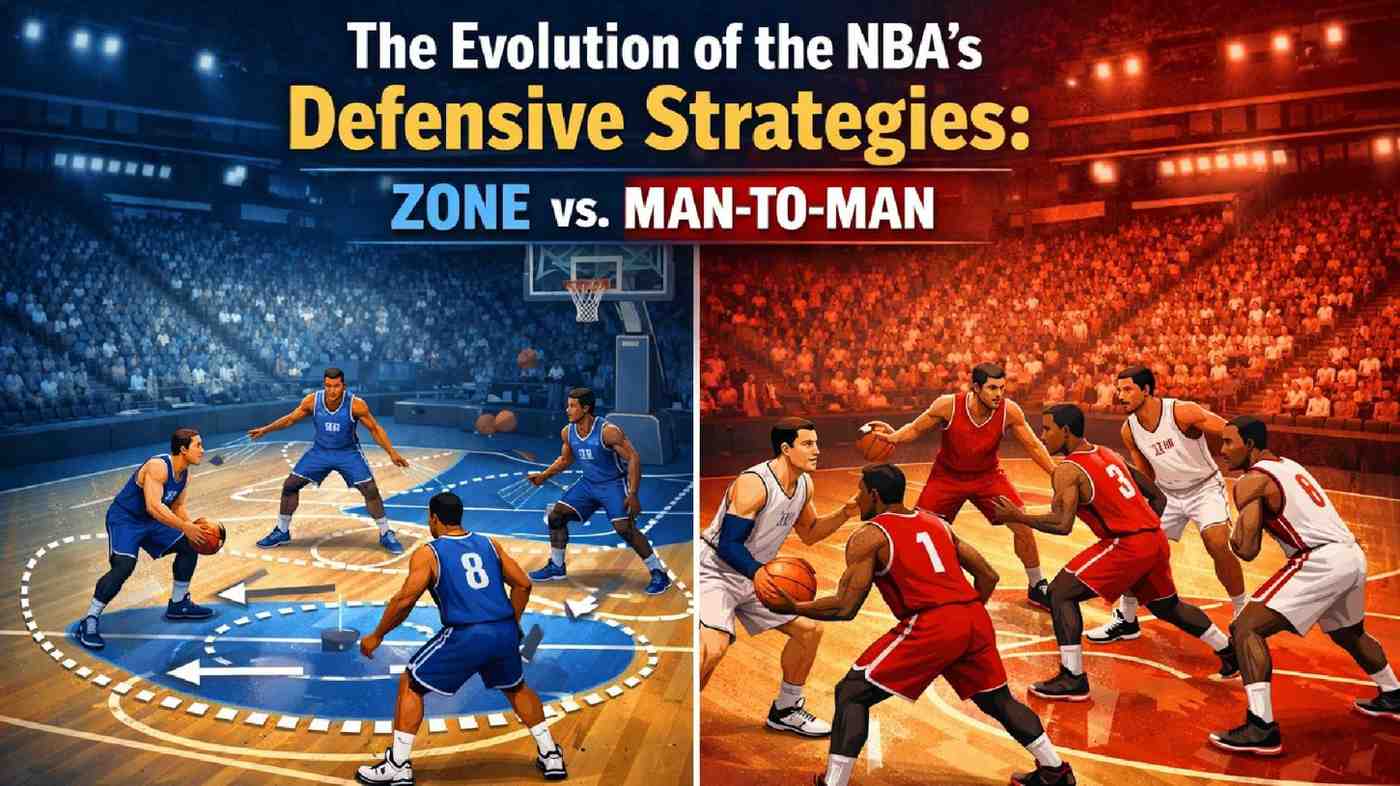
How NBAs Defensive Strategies Changed Over Time
NBAs Defensive Strategies have seen a revolutionary transformation—shifting from classic man-to-man defense to advanced zone schemes and hybrid models that prioritize adaptability, speed, and intelligence. This evolution has redefined how teams counter the league’s explosive offenses. Today, coaches rely on real-time analytics, data-driven decisions, and fluid defensive systems to outmaneuver opponents. As player roles have evolved and league rules have changed, defensive systems have become more unpredictable and sophisticated. From gritty one-on-one battles to seamless team coordination, NBA’s defensive strategies now reflect a perfect blend of tradition, innovation, and tactical brilliance.
Early Era: Man-to-Man Defense as the Foundation
In the early days of the NBA, man-to-man defense reigned supreme. This system emphasized individual responsibility, athleticism, and mental discipline. Defenders were expected to guard their matchup tightly, battling through screens and contesting every shot. Legends like George Gervin and Elvin Hayes thrived in an era where one-on-one duels defined crypto games. Defensive stoppers were celebrated for their toughness and grit, anchoring teams with pure effort and basketball IQ.
Zone Defense Revolutionized Team Strategy
The legalization of zone defense in 2001 marked a significant shift in NBA’s defensive strategies. Rather than following specific players, defenders began covering designated zones—slowing down isolation plays and protecting the paint more effectively.
Key advantages of zone defense:
Energy Efficiency – Requires less constant movement and physical strain
Spatial Control – Makes it harder for opponents to find easy lanes
Flexibility – Quickly adapts to in-game situations and rotations
Teams like the 2011 Dallas Mavericks proved how effective zone systems could be, especially against high-volume scorers.
Modern NBA: The Rise of Hybrid Defensive Systems
Today’s NBA defenses mix traditional and modern concepts. Hybrid systems combine man-to-man coverage with zone principles, allowing teams to adjust strategies mid-play. This unpredictable approach keeps offenses guessing and disrupts rhythm. Elite franchises like the Golden State Warriors and Miami Heat are pioneers of hybrid defense, seamlessly blending hustle, anticipation, and positional intelligence.
The Power of Switching in Modern Defense
Switching has become a cornerstone of contemporary NBA defense. By switching assignments on screens, teams eliminate mismatches and maintain tight coverage. The Boston Celtics, for instance, rely on long, versatile players to switch across all positions, creating chaos for opposing offenses.
Switching success depends on:
High Defensive IQ
Effective Communication
Trust Among Teammates
This method neutralizes isolation-heavy plays and maintains pressure across the court.
Zone-to-Man: In-Game Adjustments as Strategic Chess
Advanced teams often shift from zone to man-to-man within a single possession—a strategy that confuses offenses and forces poor decision-making. Erik Spoelstra’s Miami Heat master this technique, adjusting to matchups in real-time and controlling the game’s tempo with smart, reactive defensive plays.
Data-Driven Defense: The Analytics Era
Analytics have become a powerful tool in developing NBA’s defensive strategies. Coaches now use data to analyze player tendencies, opponent scoring zones, and rotation patterns.
Key metrics include:
Defensive Rating
Player Tracking
Shot Zone Charts
These insights allow teams to tailor game plans and make evidence-based decisions on how to guard the best scorers in the league.
Rule Changes That Transformed Defensive Play
Several rule changes have directly influenced the evolution of NBA defense:
2001 Defensive 3-Second Rule – Discouraged camping in the paint
2004 Hand-Check Ban – Reduced perimeter physicality, increasing speed
Freedom of Movement Initiatives – Encouraged smoother offensive play and smarter defensive positioning
These adjustments forced defenders to become quicker, more agile, and more disciplined—shifting the focus to teamwork over brute strength.
Conclusion: A New Era of Defensive Excellence
The rise of modern NBA’s Defensive Strategies marks a tactical renaissance in professional basketball. Gone are the days of solely physical, man-to-man battles. Today’s defenses are smart, flexible, and data-driven—capable of adapting in real time to the most explosive offenses. As the game continues to evolve, so too will the art of defense—making it just as exciting and impactful as any slam dunk or buzzer-beater.
Also read: