How to Verify Shiba Inu Tokens: Real vs Fake SHIB Explained

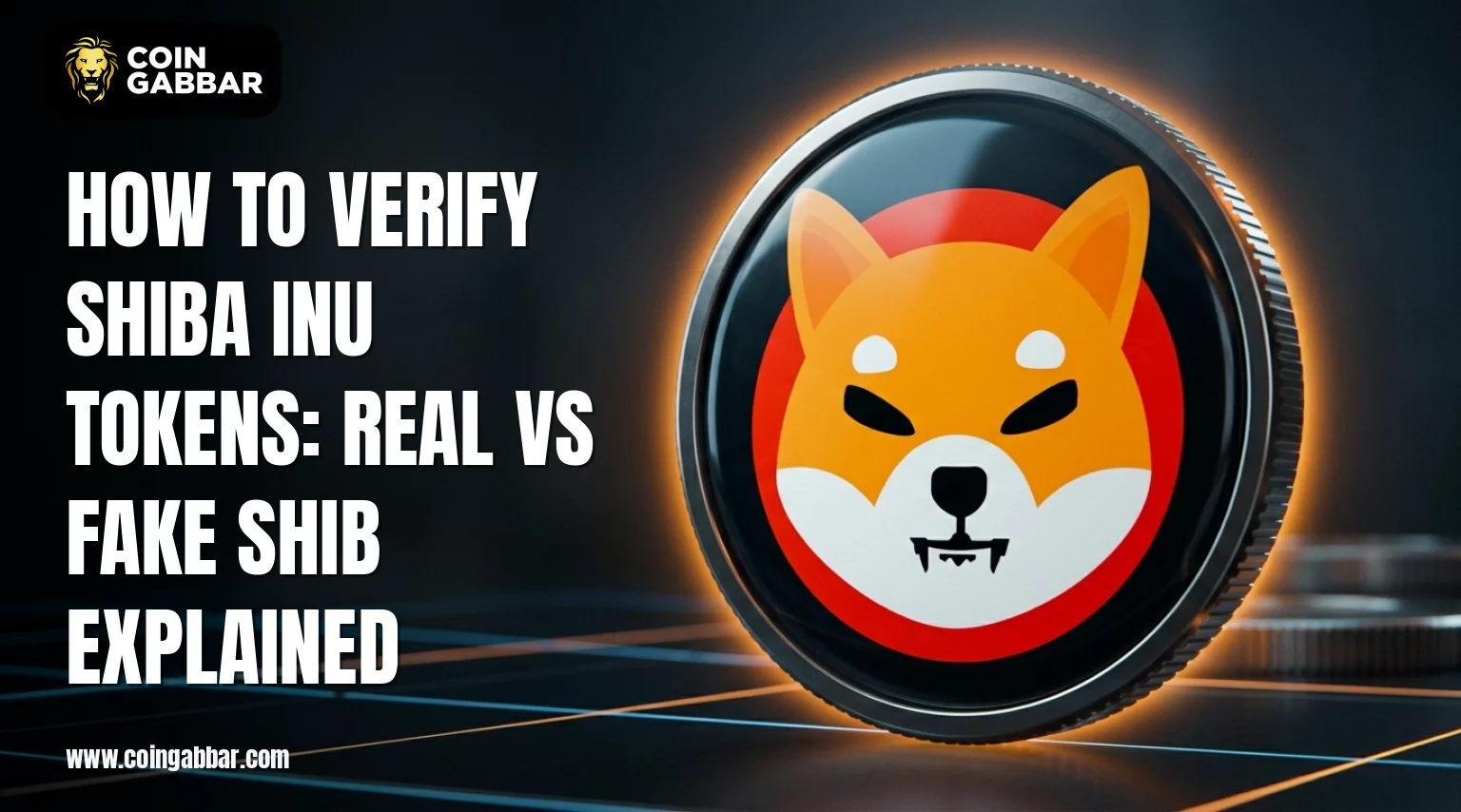
Shiba Inu (SHIB) is a popular meme token on Ethereum, built as an ERC-20 token. Its contract address is a unique code that identifies it on the blockchain, a bit like a serial number.
In simple terms, it's a digital coin that people can hold in a wallet, send to others, and use in supported apps.
A fake token copies the name and logo but carries a different address. Taking a few minutes to verify Shiba Inu tokens blocks the most common scams, and this guide shows how, with the latest 2026 alerts.
Why Scammers Copy SHIB
SHIB has one of the biggest and most active communities in the market, which makes it a handy disguise. A token with the SHIB name can be created in minutes, and the copy can show the same logo and ticker inside a wallet.
That's exactly why it pays to verify Shiba Inu tokens before trusting a screen. Names and logos cost nothing to copy. Only the contract address is unique, so every safe check starts there.
How to Verify Shiba Inu Tokens Using the Contract Address
Think of a contract address as a fingerprint, like every token on Ethereum has one, and no two can share it. That's what makes it the most reliable test of a real token.
The best places to find it are the official Shiba Inu website, Shib.io, and trusted trackers like CoinGecko and Etherscan. Messages, comments, and random posts don't qualify. Checking two independent sources adds another layer, and on Etherscan the real contract carries a verified badge.
In a wallet, a token's details page leads to an explorer page with the contract address, and that's the one that counts. The full string has to match, since scammers copy only the first and last few characters. If the address, the badge, or the token name looks off, skipping the token is safer.
Real vs Fake SHIB at a Glance
When a token looks suspicious, a side-by-side comparison helps sort real from fake:
| Check | Real SHIB | Fake token |
| Contract address | Matches exactly | Differs, sometimes by one character |
| Arrival | Bought on a trusted venue | Lands in a wallet uninvited |
| Token name | Plain text | Looks like a website address |
| Website | Official channels only | Lookalike domains |
| Promises | No random airdrops or giveaways | Free rewards and bonuses |
Putting it simply, a name and logo can lie, but a contract address can't. If a token fails even one of these checks, it isn't worth the risk, and walking away costs nothing.
Checking a Token in a Wallet, Step by Step
To verify Shiba Inu tokens in most wallets, a simple routine works:
-
Open the token's details and find its contract address.
-
Compare it with the official SHIB address, character by character.
-
Open the address on Etherscan and look for the verified badge.
-
Confirm the same address on a second source.
-
Ignore any link or message attached to the token.
Step 2 is where most people slip, as checking only the first and last few characters isn't enough, since fakes copy those on purpose.
Latest Scams Hitting Shiba Inu Holders in 2026
Scammers keep changing tactics, and recent cases show why it's worth the effort to verify Shiba Inu tokens and links before acting.
Fake SOU claim portals: The Shibarium bridge exploit in September 2025 drained over $4 million in assets. In response, the team launched the Shib Owes You (SOU) NFT for victims.
By February 2026, scammers had built fake claim pages that copied the official one. The team made it clear that the SOU NFT never arrives through an airdrop. Eligible users claim it on Shib.io, and typing the domain by hand beats clicking shared links.
Real tokens, bad message: Attackers send genuine SHIB to random wallets and attach a note urging the owner to visit a site and claim rewards. The token is real, the message is the trap, and the site is built to drain wallets.
Address spoofing: Scammers create addresses that match the first and last characters of ones a holder already uses. The lookalike sits among real transactions, and copying the wrong one sends funds straight to the thief.
Lookalike sites and fake airdrops: New domains with titles like "Shiba Inu Airdrop" keep popping up. One flagged in March 2026 had been registered only weeks earlier. Susbarium, the project's security alert channel, has also flagged a fake "shib-io" domain and says Shib.io is the only legitimate platform.
Impersonators and false rumors: Fake admins and moderators have shown up on Discord, Telegram, and X, copying real profiles down to the bio and picture.
The team says it never contacts anyone by direct message or asks for wallet syncing. False claims have also spread that LEASH moved to Solana, but it didn't. LEASH is still a simple ERC-20 token.
Security Habits That Protect a Wallet
Even after a careful check, daily habits matter. A hardware wallet suits long-term holdings. The seed phrase stays offline and is never shared, even with someone claiming to be support.
Susbarium sums up the safe reflex in three rules: don't engage, don't click, and don't connect. Bookmarking official sites beats searching each time.
Token approvals deserve a regular look too, and anything unfamiliar should be revoked. A separate wallet with a small balance is a smart place to test new apps. That way, one bad click can't reach the main funds.
What to Do If a Fake Token Shows Up
Don't click, swap, or sell through any link tied to the token. Leaving it alone is usually the safest move because if a wallet is already connected to a suspicious site, the remaining funds should move to a new wallet with a fresh seed phrase, and old approvals should be revoked right away.
Reporting the scam to the platform where it appeared helps others avoid it. Community alert channels like Susbarium also track new threats. "Recovery services" that make contact first deserve suspicion, since many are scams too. The best defense is still to verify Shiba Inu tokens before touching anything.
Final Thoughts
Scams around SHIB will keep evolving, but the core defense stays simple. Taking a minute to verify Shiba Inu tokens before buying, swapping, or clicking can prevent most losses.
Match the contract address, distrust surprise rewards, and keep the seed phrase private. Careful habits beat clever scammers every time.
Disclaimer: This article is for informational purposes only and does not constitute financial, investment, or trading advice. Readers should do their own research and consult a qualified professional before trading or investing in cryptocurrency.






.webp)