Future of Pi Network: From Community Network to Utility Ecosystem


Future of Pi Network and the Road Toward Wider Utility
What happens to a network that claims more than 60 million engaged users once daily mining stops being the main attraction? The future of Pi Network hinges on that question, and the project's official website now points toward apps, verified businesses, and node-based infrastructure.
Pi Network started as a phone-based mining app that asked users to check in once a day. As of October 2026, the project's own pages talk far more about developers, payments, and real-world use than about mining itself.
This article separates confirmed facts from project claims, then explains the risks to weigh while following the future of the Pi-Network.
How Did the Pi-Network Move From a Phone App to Mainnet?
According to the project's roadmap, the original whitepaper was published on March 14, 2019, which the team treats as the official launch. A testnet phase followed, and the enclosed mainnet went live in December 2021 behind a firewall that blocked outside connections.
That firewall kept the blockchain closed while users completed identity checks. The roadmap page now says it is a legacy version written before the Open Network and is no longer updated.
The project says it is still deciding how to publish future plans, so anyone tracking the future of Pi-Network has fewer official timelines to measure progress against.
Why Does the Future of Pi Network Depend on Utility?
A token that cannot be used for anything is only a balance on a screen. The project's developer pages describe a platform where builders create mobile web apps, add a JavaScript SDK, and accept payments without learning a blockchain-specific language.
The newest push is the vibe-code route. Pi-App Studio lets developers take an app built with AI coding tools, connect the Pi SDK, and optionally add Pi-payments, while the project promotes native discovery and staking features.
The table below summarizes the building blocks described on official pages and how much of each can be confirmed.
Building block | What official pages say | Confidence level |
Developer tools | Pi SDK, Pi-App Studio, AI-built app route | Tools described; real app usage not independently shown |
Verified businesses | KYB list names 12 exchanges and payment providers | Published list; scope of each tie-up unclear |
Node network | Pi-Node app with a mandatory v28 upgrade | Active work; decentralization still in progress |
Funding | Pi-Network Ventures, with $100 million, stated | Project claim |
Most items are infrastructure rather than finished products, so the future of Pi-Network still depends on whether developers ship apps people open daily. The $100 million figure for Pi Network Ventures is also a stated plan, and the ventures page does not name any funded companies.
How Do Pi Nodes Fit Into the Future of Pi Network?
Pi Node is desktop software that lets users run part of the blockchain from a laptop or computer. Nodes help validate transactions and reach consensus, meaning they agree on the order of new ledger entries.
The Pi Node software page says Pi-uses a consensus method based on the Stellar Consensus Protocol instead of proof of work. Small trusted groups called "quorum slices" form from security circles, the trust links mobile users build in the app.
The latest official notice says every Mainnet node must upgrade to protocol version v28, which shows active engineering work and confirms the network is still maturing.
What Role Does KYB Play in the Future of the Pi-Network?
KYB means know your business. It checks that a company holds the licenses its home country requires before that company can hold a Pi-Mainnet Wallet.
The official KYB page currently lists 12 names, including Kraken, OKX, Bitget, Gate, MEXC, and Banxa, plus several payment providers. The page calls them verified and integrated, but it does not explain what each integration covers, so the Pi Network exchange listings guide is the place to check trading details.
A partnership announcement is not the same as guaranteed adoption. A name on a verification list does not prove deep trading support or steady demand for-PI.
What Could Slow the Future of Pi Network Down?
Several risks sit between the future of Pi-Network and real adoption, and each one is visible in the official material itself.
The legacy roadmap is no longer maintained, so readers cannot easily tell which milestones the team still intends to deliver.
The 60 million engaged users figure is project-reported, and an older ventures page cites over 19 million identity-verified users, so neither is independently confirmed.
The legacy roadmap describes Pi-Powered Commerce mainly through surveys, events, and hackathons, and it does not publish payment volume.
The same roadmap warns that the Core Team cannot guarantee the safety of community-built apps listed in the browser.
The KYB page warns against businesses claiming a Mainnet wallet without verification, which points to scam exposure.
Is the Future of Pi Network Worth Watching Right Now?
A useful way to follow the future of Pi-Network is to track measurable signals instead of slogans. Three stand out: how many apps show repeat usage after launch, how far node participation spreads beyond Core Team control, and whether the KYB list grows with clear service details.
The node page describes progressive decentralization, so timelines may shift as testing continues. An analytical read is mixed: the infrastructure is real and the utility direction is consistent across several official pages, yet independent proof of everyday usage remains thin.
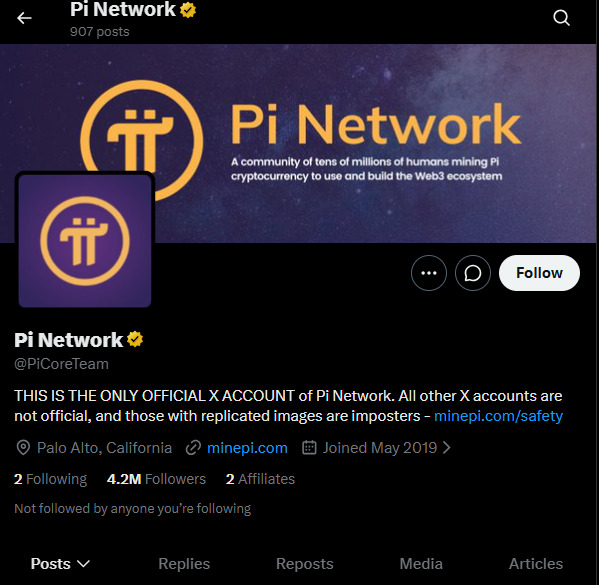
Market sentiment can be compared with the Pi-Network price outlook and the live Pi-Network coin overview. For primary-source updates, the Pi Core Team X account is a better starting point than secondhand summaries.
Final Thoughts on the Future of Pi Network
Pi Network is moving from a mining-first community app toward a platform built around developer tools, verified businesses, and node infrastructure. The most convincing parts are the node upgrade work, the KYB list, and the developer route through App Studio.
What remains uncertain is whether those pieces will produce daily, independently measurable use. Readers should check app activity, node growth, and official announcements next, rather than relying on price talk about the future of Pi-Network.
Disclaimer:
This article is for information only and is not financial advice. Crypto assets are volatile and high risk, so readers should research independently and consult a licensed adviser.








.webp)