Is Pepedo Legit? 7 Checks To Verify Before Buying The Presale Token

Is Pepedo Legit? 7 Key Checks For Network, Contract, Audit And Vesting
Every presale promises a big future, and few show their homework. If you're asking is Pepedo legit, start with what you can actually verify. I read the official Pepedo whitepaper and the site's public description, then compared them with an August 2026 review on Coingabbar. This Pepedo presale review runs through seven checks, so your due diligence doesn't rest on a countdown banner.
Key Takeaways
The whitepaper says BNB Smart Chain, but a third-party review reports Ethereum on the tokenomics page.
The whitepaper calls its tokenomics a planning model, and its security items say what the project "should" publish.
No audit report, contract address or named team appeared in the sources I reviewed.
What Is Pepedo ($PDO)?
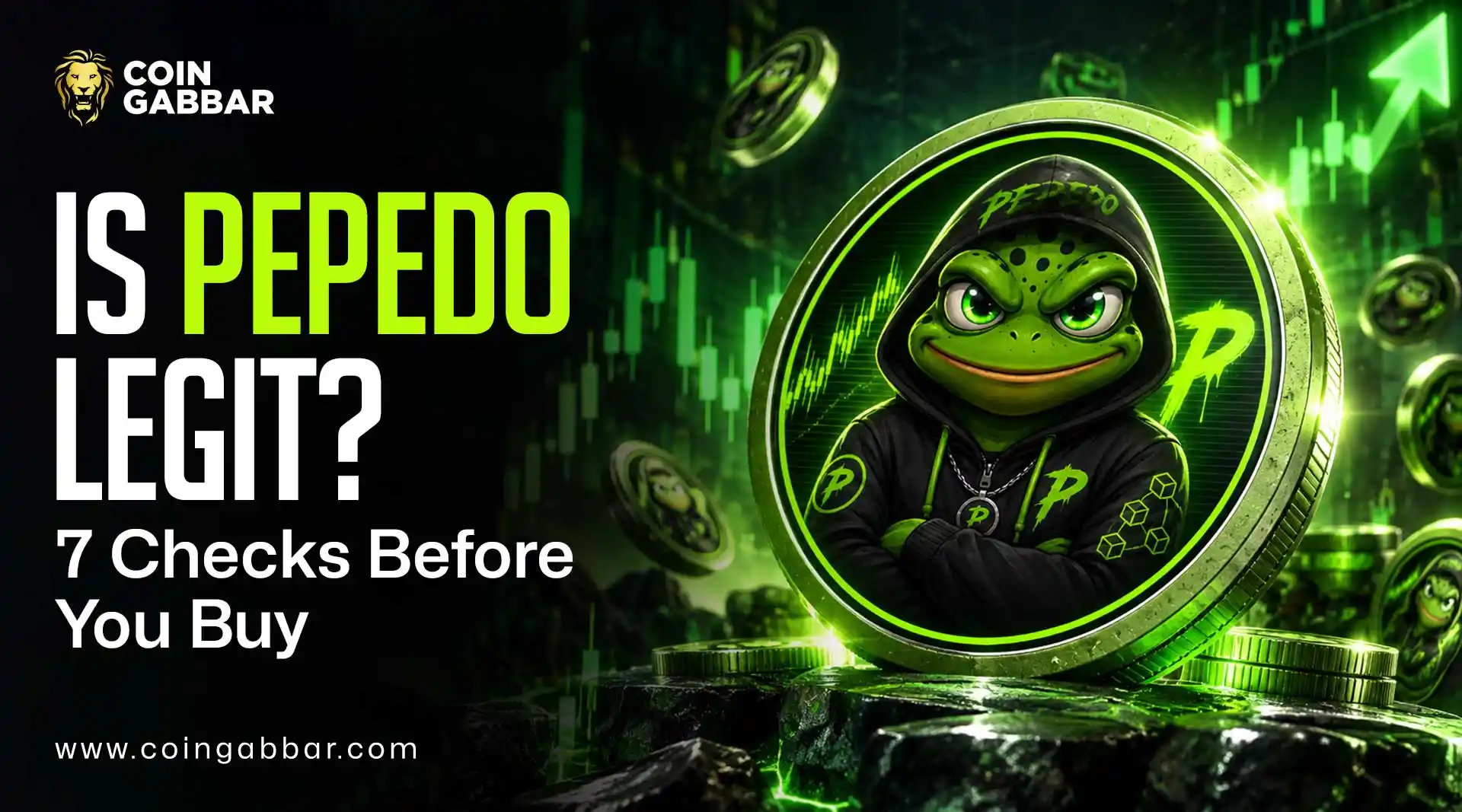
Pepedo is a presale-first meme coin built around a hooded, cyber-green frog mascot. The $PDO token comes with plans for staking, NFT badges, DAO governance and referral rewards. It's early-stage, so verification matters more than branding.
Source: official website
Pepedo Presale Review: The Numbers
The whitepaper lists five presale stages. Pre-sale price stages explained simply: each round costs more, so early buyers get the lowest price on paper.
Stage | Label | Price |
1 | Live Now | $0.000008 |
2 | Next Raise | $0.000012 |
3 | Scale Phase | $0.000018 |
4 | Launch Prep | $0.000026 |
5 | Final Round | $0.000036 |
Source: official presale page
From Stage 1 to Stage 5, the price climbs 4.5 times. Here's how the supply splits.
Allocation | Share | Tokens |
Presale | 40% | 80 billion |
Staking Rewards | 20% | 40 billion |
Liquidity | 15% | 30 billion |
Marketing | 10% | 20 billion |
Ecosystem | 10% | 20 billion |
Team | 5% | 10 billion |
The whitepaper shows these shares. The 200 billion total and the token counts come from Coingabbar's review of the site. That review also reports staking pools paying 48% to 240% APY, while the whitepaper gives no APY figures. Treat those staking APY numbers as unverified.
Crypto Presale Checklist: How to Verify a Presale Token
1. Confirm the Pepedo Official Website
Fake pages are the easiest way to lose money, so learn how to spot fake presale websites: altered domains, copied designs and links from strangers. The site's canonical tag points to pepedo.io, while reviews link to pepedo.co. Match the address against the project's official channels, then bookmark it. Phishing usually starts with one wrong click.
2. Which Network Does Pepedo Use?
BEP-20 vs ERC-20 presale tokens look alike but run on different chains with different wallets and fees. The whitepaper and the site description say BNB Smart Chain. Coingabbar reports Ethereum on the tokenomics page. Which network does Pepedo use? Ask the official channels before paying, since a payment on the wrong network can be lost.
3. Verify the Contract
Here's how to verify a token contract address. Copy it from the official site, then do a block explorer check on BscScan (BNB) or Etherscan (Ethereum). You'll see the creator, the holder spread, and whether the smart contract is verified. It also helps you spot a honeypot, a contract that lets you buy but blocks selling. I found no published contract address, so this check is open.
4. Look for a Pepedo Audit.
The roadmap lists an audit, and Coingabbar reports a BlockSafu audit marked as passed. I saw no report link. To check a smart contract audit report, find it on the auditor's own site. It should name the exact contract and rank findings by severity. A logo alone proves nothing.
5. Check the Pepedo Team.
An anonymous team crypto presale isn't automatically a scam, but it raises risk because nobody is accountable. No source I reviewed named founders, developers, or advisors. Look for verified profiles or third-party KYC.
6. Liquidity Lock and Vesting
Liquidity Lock and Vesting Liquidity Lock Explained: The project locks its trading funds for a set period so it can't pull them out, which blocks a rug pull. Per Coingabbar, the site promises a 12-month lock after the TGE, plus a team cliff of six months followed by 24 months of linear release.
That's a sensible token vesting schedule on paper. But the whitepaper says the lock provider and duration should be disclosed, so look for proof. Also check how the token claim works after launch.
7. Cross-Check the Documents
This is the core of any Pepedo whitepaper review. The whitepaper calls its tokenomics a planning model to be updated with audited figures. One mismatch may just be an outdated file, but several together call for transparency.
Item | Whitepaper/site | Coingabbar review |
Network | BNB Smart Chain | Ethereum (ERC-20) |
Stage 1 price | $0.000008 | $0.00008 in other material |
Roadmap | 5 undated phases | 4 phases tied to quarters |
Audit | Should be linked | BlockSafu audit reported passed |
Domain | Canonical: pepedo.io | Links to pepedo.co |
Source: official PDO whitepaper
Presale Token Red Flags: How to Spot a Crypto Presale Scam
Red flag | Why it matters |
Countdowns and "last chance" banners | They rush you past research |
Guaranteed returns or huge fixed rewards | No honest project can promise profit |
Requests for your seed phrase | No real team needs it |
Missing contract, audit or team | You can't verify anything |
Documents that contradict each other | It signals sloppiness or hidden changes |
So, is Pepedo a scam? I can't say that, and nobody should without proof. These checks only show what's confirmed and what's open. Use a separate wallet for presales, and follow basic wallet security.
So, Is Pepedo Legit?
So, is Pepedo legit? Right now it's unproven, not proven either way. The project publishes its stages and vesting terms, and its whitepaper is candid about being a planning model. But several key items still need answers from official channels.
Check | Status |
Official website | Confirm the domain |
Network | Conflicting information |
Contract address | Not found |
Audit | Claimed, no report seen |
Team | Not named |
Liquidity and vesting | Published, not proven |
Is Pepedo safe? No presale is risk-free. Do your own research and invest only what you can afford to lose.
Disclaimer
This article is for information only and isn't financial advice. Presale tokens carry high risk, including total loss of funds. Details come from the whitepaper and third-party reporting at the time of writing and may have changed. Always verify on official channels before you buy.