Jack.com Crypto Casino: 17 Supported Cryptocurrencies


Most online casinos that accept crypto treat it as a single payment rail: Bitcoin in, Bitcoin out, maybe Ethereum if the operator feels generous. Jack.com skips that shortcut. The platform's cashier lists 17 supported cryptocurrencies, plus multiple blockchain networks for several of them: a token library closer to what a mid-tier exchange offers than what a casino cashier usually needs.
That number matters beyond bragging rights. It changes which coins a player can move without first converting through an exchange, and it puts jack.com in a small group of operators treating crypto as a menu rather than a single default option.
How Many Cryptocurrencies Does jack.com Support?
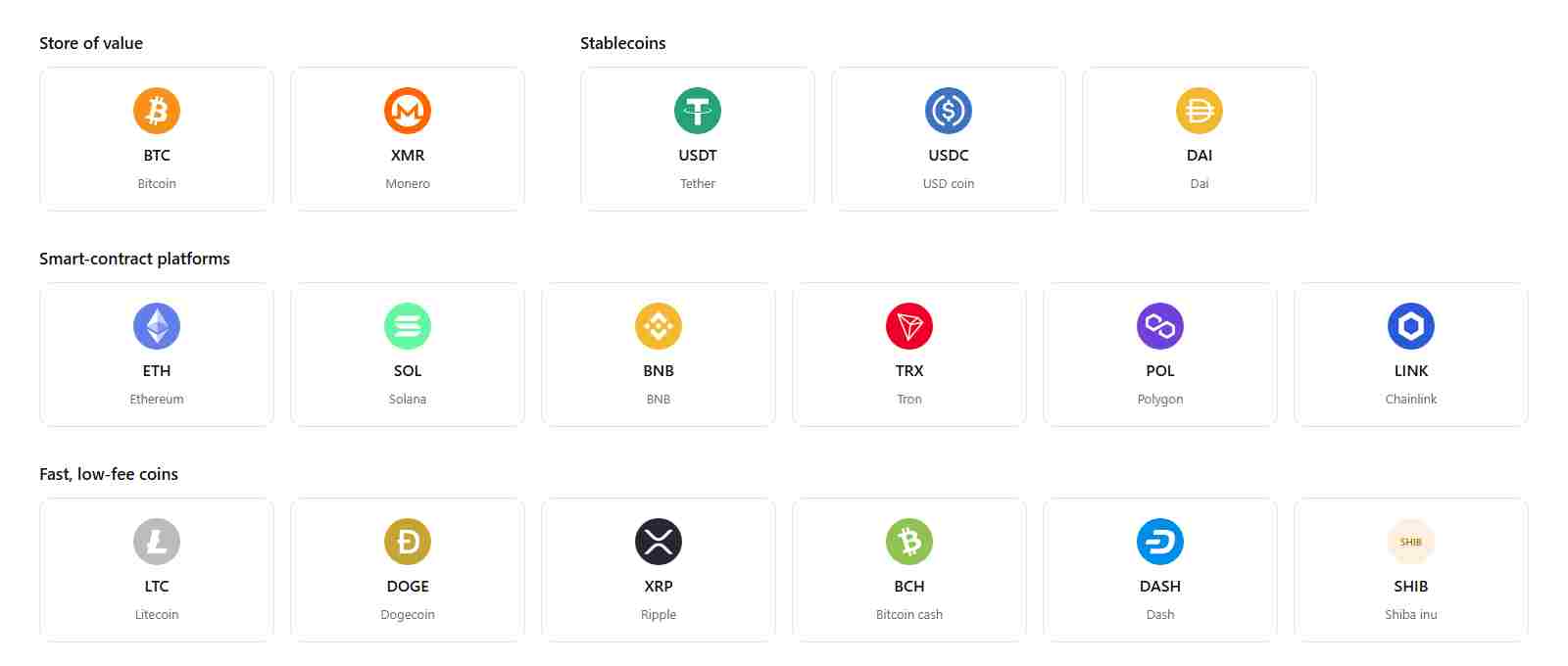
The full list of Jack supported cryptocurrencies currently runs to 17: Bitcoin (BTC), Ethereum (ETH), Tether (USDT), USD Coin (USDC), Solana (SOL), XRP, Litecoin (LTC), TRON (TRX), BNB, Dogecoin (DOGE), Bitcoin Cash (BCH), Polygon (POL), Dai (DAI), Shiba Inu (SHIB), Dash, Chainlink (LINK), and Monero (XMR).
That spread covers four distinct use cases in one wallet dropdown: a store-of-value asset (BTC), a smart-contract platform token (ETH), dollar-pegged stablecoins (USDT, USDC, DAI), and fast, low-fee transactional coins (LTC, DOGE, TRX). Few operators bother stocking all four categories. Most stop at BTC, ETH, and one stablecoin.
Jack.com is a Curaçao Gaming Authority-licensed online casino (OGL/2024/1562/1139) that combines 17 supported cryptocurrencies, multi-network deposits, and risk-based KYC that skips identity checks for most withdrawals: a specific combination that most competitors match on at most one or two of those points.
Why the network choice matters as much as the coin list
A coin list alone understates what's on offer. For several of the 17 assets, jack.com lets the player pick which blockchain network carries the transaction. USDT, for instance, can move over Ethereum's ERC-20 standard, TRON's TRC-20, or BNB Smart Chain's BEP-20: three separate networks carrying the same token. USDC, DAI, SHIB, and LINK offer similar network choices.
This matters because network fees vary by an order of magnitude depending on the chain. Sending USDT over TRC-20 typically costs a few cents; the same transfer over Ethereum's ERC-20 network can cost several dollars during periods of network congestion. A cashier that only supports one network forces every user onto whichever fee structure the operator picked. A cashier that supports three lets the player pick the cheap one.
Is jack.com an ETH Casino, a USDT Casino, or Both?
It's both, and the industry data suggests that distinction is becoming less theoretical and more a matter of which asset actually gets used to place a bet.
A stablecoin is a cryptocurrency pegged to a fiat currency, usually the US dollar, designed to hold a steady 1:1 value rather than fluctuate with the broader crypto market. That peg is exactly why stablecoins have taken over crypto gambling volume even as coins like ETH remain widely accepted. Industry trend reporting for 2026 shows stablecoins, chiefly USDT and USDC, now account for the majority of crypto casino wagering, in a crypto gambling sector projected between $65 billion and $81 billion this year. USDT alone commands roughly 60% of total stablecoin market capitalization.
The reason is straightforward: a 10% swing in ETH's price mid-session turns a winning bet into a losing one purely on exchange-rate noise, unrelated to the outcome of the game. A stablecoin balance doesn't do that. Jack.com's inclusion of USDT, USDC, and DAI alongside ETH means a player can size a session in dollar terms without watching a second, unrelated market.
That doesn't make ETH support redundant. Ethereum holders who want to wager directly, without first swapping into a stablecoin, still need an operator that lists ETH natively rather than forcing a conversion step. Forced conversions typically carry their own fee and slippage cost.
Where Dogecoin and Litecoin Fit in a 17-Token Library
DOGE and LTC occupy a different niche than either BTC or the stablecoins: both were built for cheap, fast transfers rather than as stores of value or smart-contract platforms, and both carry an established, meme-adjacent user base that treats them as spending money rather than investment holdings.
A dogecoin casino or litecoin casino designation is less about novelty than about transaction cost and speed. Litecoin's block time runs roughly four times faster than Bitcoin's, and confirmation costs stay low even during busy periods. For players who hold DOGE or LTC specifically because they're cheap to move, an operator that supports them directly, rather than requiring a swap into BTC or a stablecoin first, removes a conversion step and its associated fee.
What the 17-Token List Means for Withdrawal Speed and Access
Coin count is only half the story if the money doesn't move quickly once a player cashes out. Independent testing of jack.com's withdrawal times has clocked routine crypto cashouts at roughly 10 to 18 minutes, well inside the up-to-24-hour window the platform's terms allow for. The operator also runs risk-based KYC rather than checking every withdrawal: identity documents get requested when a withdrawal is large or flagged, not by default.
Multi-network support ties directly into that speed. A stablecoin withdrawal routed over TRC-20 confirms faster and cheaper than the same withdrawal forced onto a congested ERC-20 network. So the choice of network isn't just about the deposit side of the ledger: it affects how quickly a player sees their winnings land in an external wallet.
The Bigger Picture: Token Count as a Proxy for Platform Maturity
That list of Jack supported tokens is a specific, checkable claim. Unlike marketing language about "extensive" or "wide-ranging" crypto support, it's a number a player can verify by opening the deposit page and counting. That verifiability is itself informative: operators that publish a specific, stable token list and multiple network options per asset are typically running more mature payment infrastructure than those that quietly rotate a shorter list of coins in and out.
For a player deciding where to deposit, the practical checklist is short: does the casino support the coin already in your wallet, without a forced conversion; does it let you choose the cheapest network for that coin; and does it get withdrawals back to you in minutes rather than days. Jack.com's 17-token library, and the per-asset network choice underneath it, answers the first two questions directly. The 10-to-18-minute withdrawal figures from independent testing answer the third.
As stablecoins continue absorbing a larger share of crypto betting volume through 2026, the operators best positioned won't be the ones that added a Bitcoin icon to a fiat cashier. They'll be the ones that built for the full range of assets crypto users actually hold, from BTC and ETH down to DOGE, LTC, and the stablecoins now driving most of the volume.
Disclaimer: This article is for informational purposes only. Cryptocurrency support, transaction networks, fees, withdrawal times, licensing, and platform policies may change and should be independently verified before use. Cryptocurrency transactions and online gambling involve financial risks, and availability and legality may vary by jurisdiction. This content does not constitute financial, investment, or gambling advice.