Kaspa Network: Inside the New Pixel Pet Mainnet Experiment

Kaspa Network News: Pixel Pets, KOB and What's Coming Next
Kaspa Network news today centers on a Tamagotchi-style digital pet, Kaspet, that is now alive on a real blockchain. Kaspet is a small pixel creature that needs regular feeding, and every feeding is a genuine network transaction.
Source: X Official Announcement
The network behind it produces a block every 100 milliseconds. How does a virtual-pet fit inside a coin, and what else is running beside it?
What Is Kaspet? Pixel Pets Live on the BlockDAG Network Today
Kaspet is a digital pet that exists as one unspent transaction output on the Kaspa mainnet, the live network where real KAS moves. It was built by KiiLabs, the team behind Kaspa Kii, and went live around 11 November 2026 as an early beta.
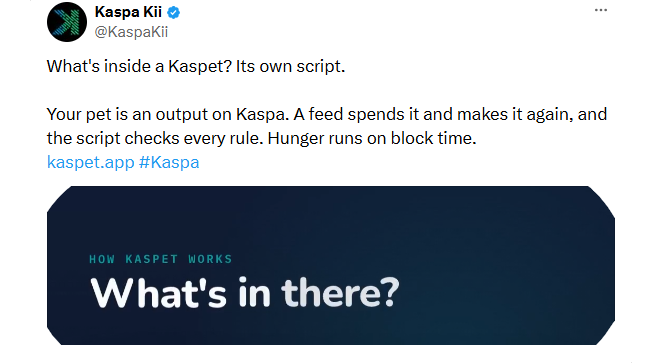
Its script holds the pet’s genes, owner and hunger clock. Feeding or playing spends the old output and creates a new one, and the script checks every rule.
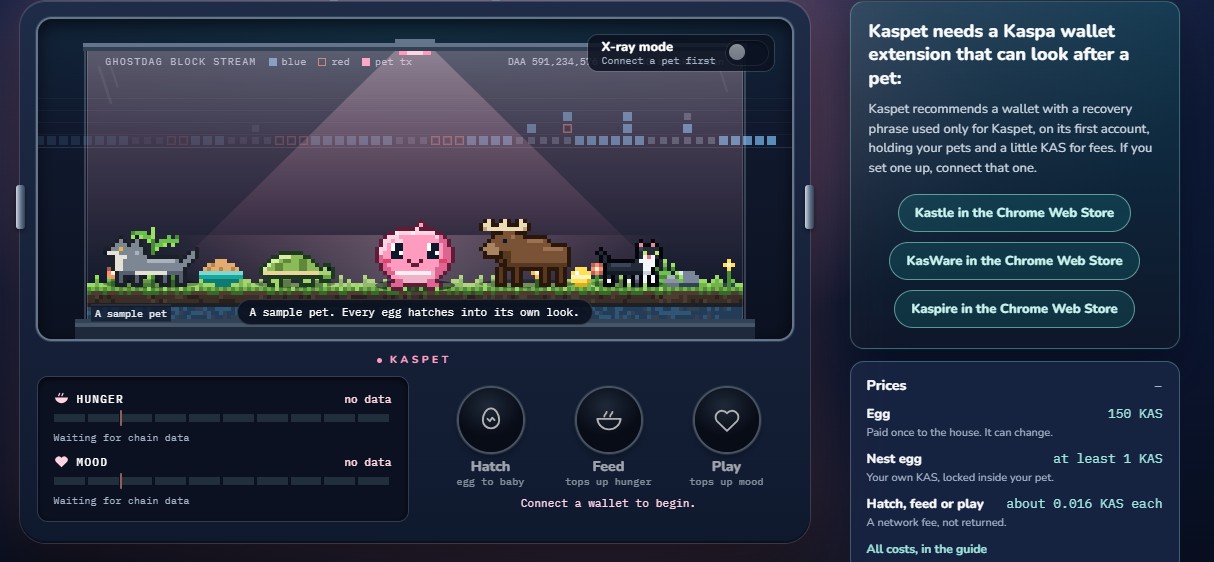
Because hunger follows block time, the mainnet itself acts as the pet’s clock. A neglected pet moves through a grace period, then a shelter, and can eventually be reaped. Recovery files let owners reclaim the pet’s small KAS deposit even if the website disappears.
Source: Official Site
The Kaspa Kaspet project keeps costs simple:
Egg price: 150 KAS, paid to KiiLabs
Accessories: 0.5 KAS each
Trading or gifting on the Square: 1 KAS fee
Breeding: unlocked after a pet turns 30 days old
Early rarity snapshot (approximate): 48% common, 18% rare, 8% epic, 26% legendary
KiiLabs can adjust the egg price between 1 and 2,000 KAS. The team describes it as a product fee, not an investment. Core care works from a personal wallet. Marketplace actions still need a KiiLabs co-signature.
What Kaspa Decentralized Trading Tools Do Without a Central Server
KOB is a permissionless limit-order book running directly on Layer 1. No central server matches the orders. These Kaspa Decentralized Trading Tools lean on the short block gap of the BlockDAG network.
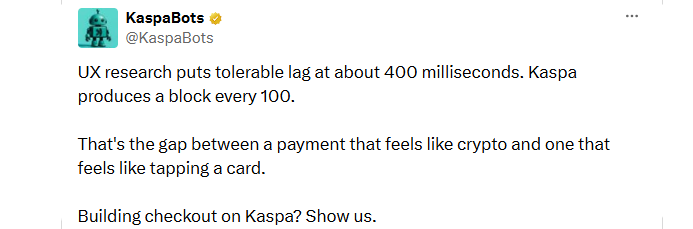
Speed is the selling point. A post from @KaspaBots cites UX research placing tolerable lag near 400 milliseconds, known as the Doherty Threshold. Developer IzioDev argued that Kaspa’s 100ms blocks plus one network round trip still land under that mark. Real-world results will vary with network conditions.
Kaspet has its own trading corner, the Square, but handles pet gifts and sales with a KiiLabs co-signature. KOB is a different tool for a different purpose. The two share the same BlockDAG network and appeared in the same news cycle.
How Kaspet Compares With Other Market Present Pets
CryptoKitties (Ethereum, 2017): Breedable NFT cats with ownership on-chain but much of the art and logic elsewhere. It became known for clogging Ethereum. Kaspet ties hunger to block time and rebuilds the pet with every action.
Axie Infinity: A full play-to-earn economy with several tokens and land. Kaspet is far simpler and uses no separate in-game currency for feeding.
Other NFT pets (CryptoPuppies, Dogamí): Mostly static or lightly interactive collectibles. Kaspet makes the pet the script, with rules enforced by the proof-of-work DAG.
Kaspet is less a polished mass-market game and more a working proof of concept.
Entity X and the Prediction Market Plans Behind the Kaspa Network
Two open items round out this Kaspa Network update 2026. One developer is building an ownerless prediction market on the base layer, targeting mainnet by the end of 2026. Minting would create equal YES and NO KCC20 tokens, backed by funds committed to each market.
The other is “Entity X,” the largest wallet, holding over 1.5 billion KAS. Its balance traces back to exchange flows, but no owner has been confirmed. The public ledger shows balances, not identities, so the question stays open.
What Comes Next
The Kaspa Network now has three live or near-live products, each testing whether fast blocks can support everyday apps. Mainnet delivery of the prediction market and the first real trading volume on KOB will show whether this is a lasting platform or a short-lived demo.
Disclaimer: This article is for informational purposes only and does not constitute financial or investment advice. Crypto markets carry significant risk. Always do your own research before making any investment decisions.






