Ledger Confirms CryptoBilis Incident: What Should Users Do Now?


The CryptoBilis incident has a new official update. The company says the number of impacted units is limited and that all confirmed cases involve hardware wallets sold through the Southeast Asia reseller CryptoBilis.
This Crypto News report covers the latest statement, what remains unconfirmed, and what buyers should do now.
Key Takeaways
-
The 72-hour update says confirmed cases involve products sold through CryptoBilis, while the company's systems and direct sales channels remain unaffected.
-
No exact count was provided, so the figure of 12 mentioned in the brief is not supported by the statement.
-
CryptoBilis buyers should not initialize unused hardware wallets. Anyone who has already set one up should move to a new seed using a product from the manufacturer.
What Did the Company Say in Its 72-Hour Update?
The company says confirmed cases involve hardware wallets sold through Southeast Asian reseller CryptoBilis, while its own systems and direct sales channels remain unaffected. CryptoBilis has reportedly stopped selling the products.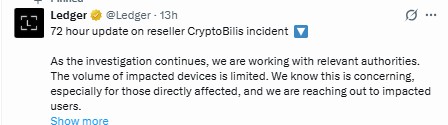
Source: Ledger Official account on X, October 12, 2026
Buyers are advised not to initialize unused products. Anyone who has already completed setup should move to a new seed using another unit from the manufacturer.
The company recommends contacting its official support team and reporting concerns to local law enforcement.
It also warns that support representatives will never request a 24-word recovery phrase through calls or direct messages. The total number of affected units remains undisclosed.
Did the Company Confirm 12 Affected Units?
No. The update on the CryptoBilis incident describes the volume as limited but provides no exact count. Latest crypto news coverage should distinguish official figures from unverified numbers.
The statement reviewed does not reveal a precise total. Therefore, the claim that 12 units were affected is unsupported by the available announcement.
Earlier trackers estimated losses above $86 million, a figure the company has not confirmed. The two sets of figures remain unreconciled in this Crypto Wallet Draining report.
What Should CryptoBilis Buyers Do?
The advice for CryptoBilis buyers is straightforward: do not initialize unused hardware wallets. If setup is already complete, move to a new seed using a product from the manufacturer.
Anyone with concerns should contact official support through support.ledger.com and file a complaint with local law enforcement. Relevant information can also be sent to security@ledger.com.
This guidance differs from the October 9 advice, which covered purchases made during the previous 90 days. The latest announcement specifies no time window.
Is the Wallet Cause Confirmed?
Reports say the company confirmed an unauthorized hardware implant in one affected unit. Its systems and direct sales channels are reportedly not affected.
A security researcher reported finding a possibly tampered product purchased at a store in Europe.
The company referred to its update and maintained that all confirmed cases involve CryptoBilis. SlowMist's Cosine said the Flex model also appears in cases strongly linked to the reseller.
These claims require caution, and the full cause of every case has not been confirmed. The Hardware Wallet Security lesson is about possible supply-chain tampering, not a flaw proven in every product.
What Should Readers Watch Next?
Three items matter in the latest CryptoBilis update. First, whether the company publishes an exact count of affected units.
Second, whether cases outside the reseller are confirmed. Third, whether further security news addresses reseller controls. Readers following the latest crypto news should rely on official channels.
Conclusion
The CryptoBilis incident is now framed as a limited, reseller-linked case, but key numbers remain unconfirmed. The extent of the tampering and any resulting security changes remain open questions for Crypto News readers to follow.
YMYL Disclaimer
This article is for informational purposes only and is not financial or investment advice. Cryptocurrency carries a significant risk of loss, and security details can change. Readers should verify information through official sources and consult a qualified professional before making financial decisions.







