Loan Meme Coin Explained: Features, Utility, and Market Potential


Loan Meme Coin: Project Concept, Token Utility, and Market Trends
Most memecoin holders face the same choice. Sell and lose the upside, or hold and leave the tokens idle. Loan Meme tries to offer a third option.
It is a lending platform where users can borrow USDC or USDT against a memecoin. Others can lend stablecoins and earn interest instead. The official Loan Meme site says every market is isolated, which shapes most of the risks covered below.
Readers searching for the Loan Meme coin will also find a clear answer on whether a token exists yet. This guide explains how the platform works, what the fee and liquidation rules look like, and what remains unconfirmed as of October 24, 2026.
Does "Loan Meme Coin" Mean a Token or a Platform?
The phrase suggests a token. The official pages point to a product instead. Loan Meme is the lending platform itself.
A loan works the same way it does anywhere else. A user gets cash now and repays it with interest. The difference is collateral, which is the asset pledged to secure the loan. Here, that asset is a memecoin.
The word "meme" describes the collateral. Memecoins are volatile, community-driven tokens, and few lending platforms accept them. The project's homepage describes its focus as isolated lending against memecoins.
A token named $LOAN does appear on the analytics page. The project calls it an upcoming ecosystem token. No launch date or supply figure is published there.
How Does Loan Meme Work Step by Step?
The protocol documentation page describes four user actions. Each one is separate and explicit.
Deposit: Send a listed token to a custodial wallet. Depositing alone doesn't lend or borrow.
Lend: Add USDC or USDT to the lending pool and earn interest. A lending position isn't collateral.
Borrow: Take USDC or USDT against one token at a time, up to that market's opening LTV.
Repay or withdraw: Repayments cover accrued interest first. Collateral that debt doesn't need can be withdrawn.
LTV means loan-to-value. It is the maximum share of collateral value a user can borrow. Each market sets its own figure, and no single number applies everywhere. Live values sit inside the official Loan Meme app.
How Do Isolated Markets Change the Risk?
Isolated means one collateral token backs one market and nothing else. Collateral in one market gives no borrowing power in another.
That design limits the damage from a single crash. The documentation confirms that other markets, lending positions, and stable coin balances stay untouched when one market is liquidated.
There's a catch, though. The app shows an aggregate account health factor, yet the documentation calls it informative only. One market can be liquidated while the account looks healthy.
A health factor compares collateral value with debt, adjusted by the liquidation threshold. Below a certain level, the position is closed. Borrowers watching isolated lending markets should track each position separately.
What Fees and Interest Rates Apply?
Loan Meme sets variable annual rates. Interest accounting runs every 30 minutes, using APR divided by 17,520 periods per year. Lending confirmed at 12:30, for example, starts earning at 13:00.
Borrowers pay an opening fee set by each market. They are also charged for the opening period, even when repaying before the next cut. Lenders face entry and exit fees, and the lending minimum is at least $5 before the entry fee.
The confirmation screen shows the gross amount, fee, and net amount before a user commits. Exact rates aren't published in the documentation, so none are quoted here.
Feature | What the official pages say |
Borrow assets | USDC or USDT |
Collateral | One memecoin per isolated market |
Interest accounting | Every 30 minutes |
Lending minimum | At least $5 before the entry fee |
Collateral pricing | Time-weighted prices |
Bridge | Listed as coming soon |
What Happens When a Position Gets Liquidated?
Liquidation is the forced sale of collateral when debt gets too high. When a market's debt reaches its threshold, Loan Meme sells that market's collateral for USDC or USDT. It then closes the debt.
Two details stand out:
Loan Meme keeps all proceeds and bears any loss. No surplus goes back to the user.
The account is locked for new borrowing, lending, and withdrawals while the sale runs.
Once started, liquidation continues even if prices recover. That matters for tokens that can bounce within minutes.
Which Chains and Tokens Does Loan Meme Support?
The application form for projects lists Ethereum (ETH), Solana, Base, BNB Chain, Arbitrum, and Robinhood Chain, plus an "Other" option. That shows where a token can be submitted from. It doesn't prove each network has a live market today.
Submission also doesn't guarantee a listing. The page states that all applications go through review. The bridge feature is labeled as coming soon.
What to Know About the Upcoming $LOAN Token
The analytics page says 77% of total revenue is reserved for buybacks of $LOAN. A buyback means a project uses revenue to buy its token from the market.
Notice what is missing. No total supply, allocation table, vesting schedule, or presale details appear on the pages reviewed. Revenue figures also load dynamically and weren't visible during research.
A buyback plan is a stated intention. It doesn't guarantee price support, and the Loan Meme token plan still needs fuller tokenomics and supply disclosure before it can be judged.
What Are the Main Risks of Using a Loan Meme?
Crypto lending carries real risks, and memecoin collateral raises them. The official pages themselves flag several:
Price swings: A sharp drop can trigger liquidation of one position.
Treasury liquidity: Lending withdrawals are paid when treasury liquidity permits. The protocol page says there is no guaranteed immediate withdrawal.
Price feed gaps: A missing or stale price pauses new debt and collateral withdrawals in that market.
Custody: Deposited tokens sit in a custodial wallet, not in the user's own wallet.
Audit limits: The analytics page shows an "Audited by" label. An audit reviews code for flaws. It isn't a safety guarantee.
Expert Analysis: Where Does the Model Stand Out?
Pricing memecoin collateral is hard. Prices swing fast, liquidity can vanish, and thin markets can be manipulated. The project says collateral uses time-weighted prices, which smooth short spikes. That's a sensible safeguard, though it can lag during a fast crash.
The treasury design adds another layer. Lenders send funds to the Loan Meme treasury, and withdrawals depend on treasury liquidity. This differs from open pools, where each lender's funds sit in a shared contract. Lenders are trusting the operator as well as the code.
Several points remain open. The $LOAN token has no published supply, date, or allocation. Live rates and market caps depend on what the analytics page shows at any moment. Audit details need a direct read of the full report.
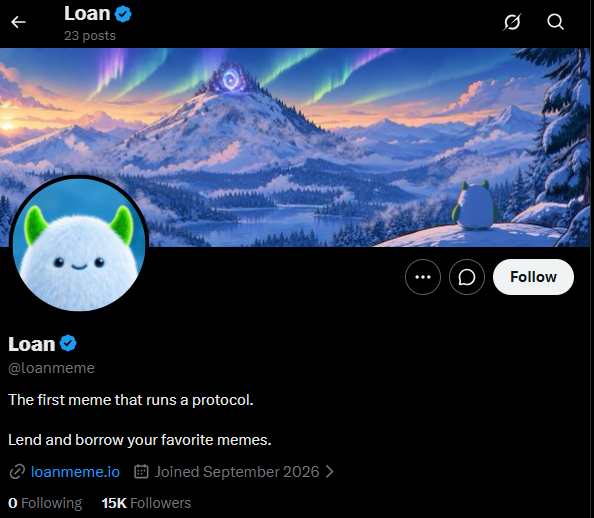
Readers who want updates can follow the official X account and recheck the documentation before acting. Any decision should rest on personal research and personal risk tolerance.
Disclaimer:
This article is for information only and is not financial advice. Crypto lending and memecoins are high-risk, and users can lose their entire collateral. Always do your own research and consult a qualified adviser.