MiCA Stablecoin Deadline Explained for EU USDT Holders in 2026

MiCA Stablecoin Deadline and the Steps EU USDT Holders Should Take
What actually changed for EU USDT holders once the MiCA stablecoin deadline passed? The answer is less dramatic than some headlines suggested, yet it is far from simple.
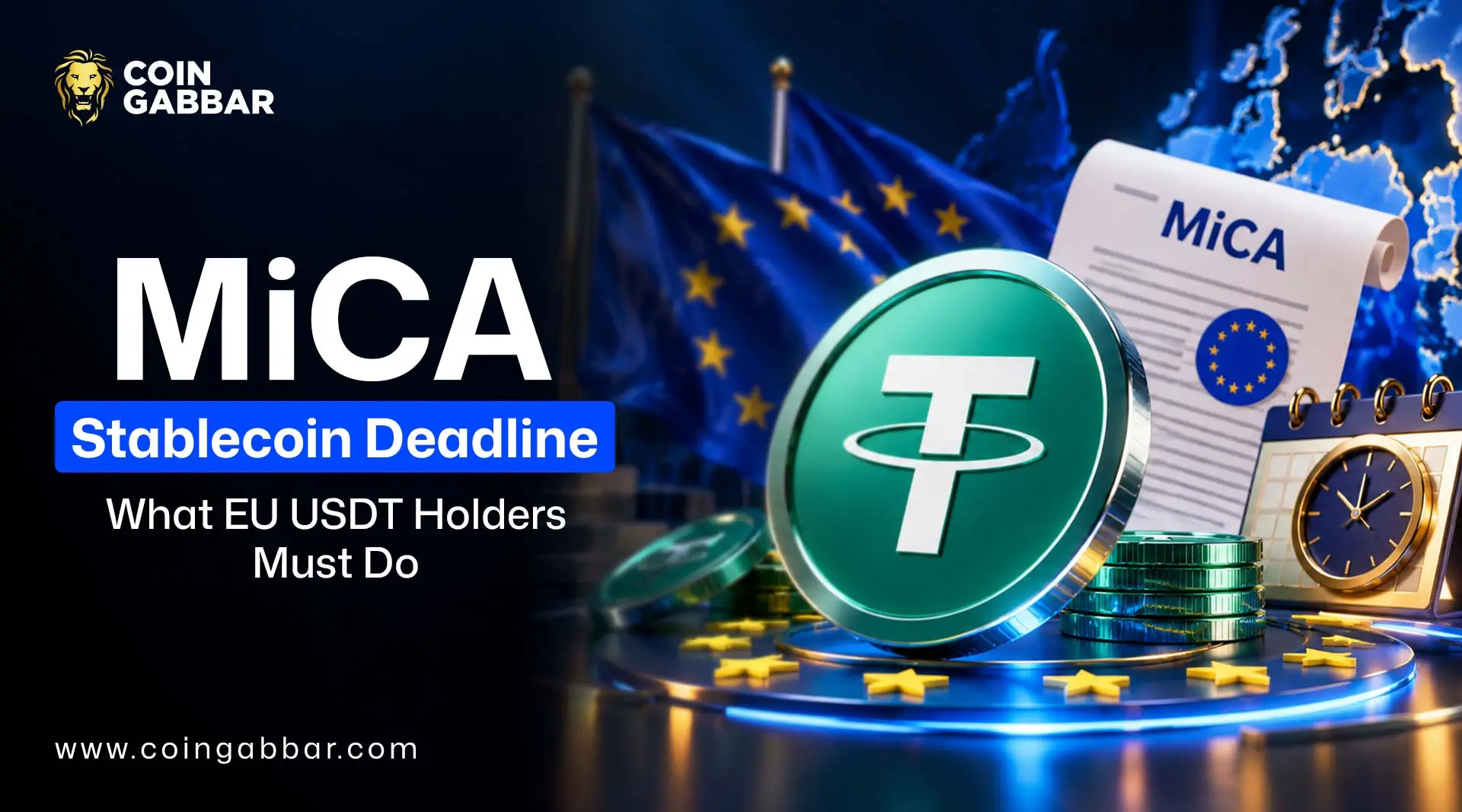
The MiCA stablecoin deadline is often described as one date. In practice, it covers two milestones: issuer rules that began on 30 June 2024 and the end of the provider grace period on 1 July 2026.
What Is the MiCA Stablecoin Deadline in Plain Terms?
MiCA stands for the Markets in Crypto-Assets Regulation, published as Regulation (EU) 2023/1114. It replaced a patchwork of national rules with a single framework covering all 27 member states.
The stablecoin chapters, which cover e-money tokens and asset-referenced tokens, applied from 30 June 2024. Rules for crypto-asset service providers, known as CASPs, followed on 30 December 2024. A CASP is any exchange, broker, or custodian that serves clients in the EU.
Member states could then let firms already active under national law keep operating while they applied for a license. That grace period had a hard EU-wide limit, and the MiCA stablecoin deadline for platforms landed on 1 July 2026.
Did the MiCA Stablecoin Deadline Get Extended?
No extension came. In April 2026, the European Securities and Markets Authority (ESMA) published a statement on transitional periods confirming that the grace period would expire across the EU on 1 July 2026.
After that date, a provider that serves EU clients without authorization is in breach of EU law. The regulator also expected unauthorised firms to hold wind-down plans, and it urged investors to check a provider's status before moving funds.
The public list for that check is the interim MiCA register. As of 3 August 2026, the register showed roughly 321 authorized CASPs across 26 EU and EEA countries.
How Does MiCA Treat USDT Specifically?
MiCA splits fiat-backed stable coins into two groups. E-money tokens (EMTs) track one official currency, such as the dollar or the euro.
Asset-referenced tokens (ARTs) track a basket of assets or currencies, and USDT, which tracks the dollar, is generally viewed as an EMT.
Offering an EMT to the public in the EU requires the issuer to be an authorised credit institution or e-money institution. As far as available information shows, Tether has not obtained that authorization as of 28 October 2026.
Its chief executive has also said in public interviews that the company did not plan to apply.
In January 2025, ESMA told national regulators that platforms should stop services involving non-compliant stablecoins by the end of the first quarter of 2025.
The statement did not name any token. Several large exchanges nonetheless restricted USDT for EEA clients around that time, according to public reports.
The MiCA stablecoin deadline of July 2026 did not rewrite those issuer rules. It removed the room for platforms to keep operating outside them.
| Stablecoin | Type | MiCA status (as of 28 October 2026) |
| USDC | Dollar EMT | Issuer authorized in the EU |
| EURC | Euro EMT | Issuer authorized in the EU |
| USDT | Dollar EMT | No issuer authorization found in available information |
Authorization and stability are two separate things. A license shows that an issuer meets regulatory requirements, but it does not guarantee that a peg will hold.
Can EU Residents Still Hold or Move USDT?
MiCA focuses on issuers and service providers. The regulation's wording does not, on its face, outlaw private ownership of a token, although national rules and platform terms still vary from country to country.
After the MiCA stablecoin deadline, what changes in practice is access. Authorized platforms must avoid services that amount to offering a non-compliant stablecoin, which helps explain why trading pairs, deposits, and conversions for USDT have narrowed on many EU-regulated venues.
Retail access points are tightening as well, as the debate over crypto ATM rules and risks shows.
Some holders respond by moving assets to self-custody. That route has its own risks, which a look at hardware wallet supply chain attacks makes clear.
What Should USDT Holders Check After the MiCA Stablecoin Deadline?
A short checklist helps cut through the noise around the MiCA stablecoin deadline:
-
Whether the exchange or broker appears on the ESMA register as an authorized CASP
-
Whether the platform has issued wind-down or withdrawal notices, and by what date
-
Whether USDT services have moved to sell-only or withdrawal-only mode
-
Whether switching to an authorized stablecoin could trigger fees, slippage, or tax events under national rules
-
Whether yield or lending products tied to USDT are still offered, since decentralized protocols follow a different model, as this comparison of DeFi lending architecture
-
Platform notices often carry specific dates, so reading them early avoids rushed decisions.
Expert Analysis: Why the Deadline Shifts Pressure to Platforms
ESMA's approach places the compliance burden on platforms rather than on the token itself. A crypto exchange that loses its license loses its EU client base, so the incentive to restrict a non-authorised stablecoin is strong.
The MiCA stablecoin deadline therefore works less like a ban on a token and more like a filter on who may sell access to it. That is an analyst interpretation, not an official statement.
Whether Tether applies for authorization, partners with a licensed entity, or stays outside the regime remains open. None of those paths has been confirmed in the official sources reviewed for this article.
What Remains Uncertain After the Deadline?
The European Commission opened a targeted consultation on reviewing MiCA, with replies accepted until 31 August 2026. Policy work on how foreign stablecoins might be recognized continues beyond the MiCA stablecoin deadline, and no change to USDT's status has been confirmed.
International rules are moving too. The United States now has its own framework, covered in this guide to GENIUS Act stablecoin rules and the two regimes, together with the MiCA stablecoin deadline, which may shape how dollar stablecoins operate across borders.
Conclusion: What the MiCA Stablecoin Deadline Means Next
The MiCA stablecoin deadline combined two steps: issuer rules in 2024 and the end of the platform grace period on 1 July 2026. USDT's issuer has no confirmed MiCA authorization as of 28 October 2026, so access depends largely on which platforms an EU holder uses.
It is still unclear how regulators and issuers will deal with foreign stablecoins once the rules settle in. Until then, holders hit by the MiCA stablecoin deadline are better off checking the ESMA register, going through the notices their platform sends, and waiting for official updates before moving any funds.
Disclaimer:
This article is for information only and is not financial, legal, or tax advice. Crypto assets are volatile and regulation changes quickly, so readers should verify details with official sources and a qualified professional before making decisions.