MPC Wallet vs Multisig: How Do Their Trust Models Differ?

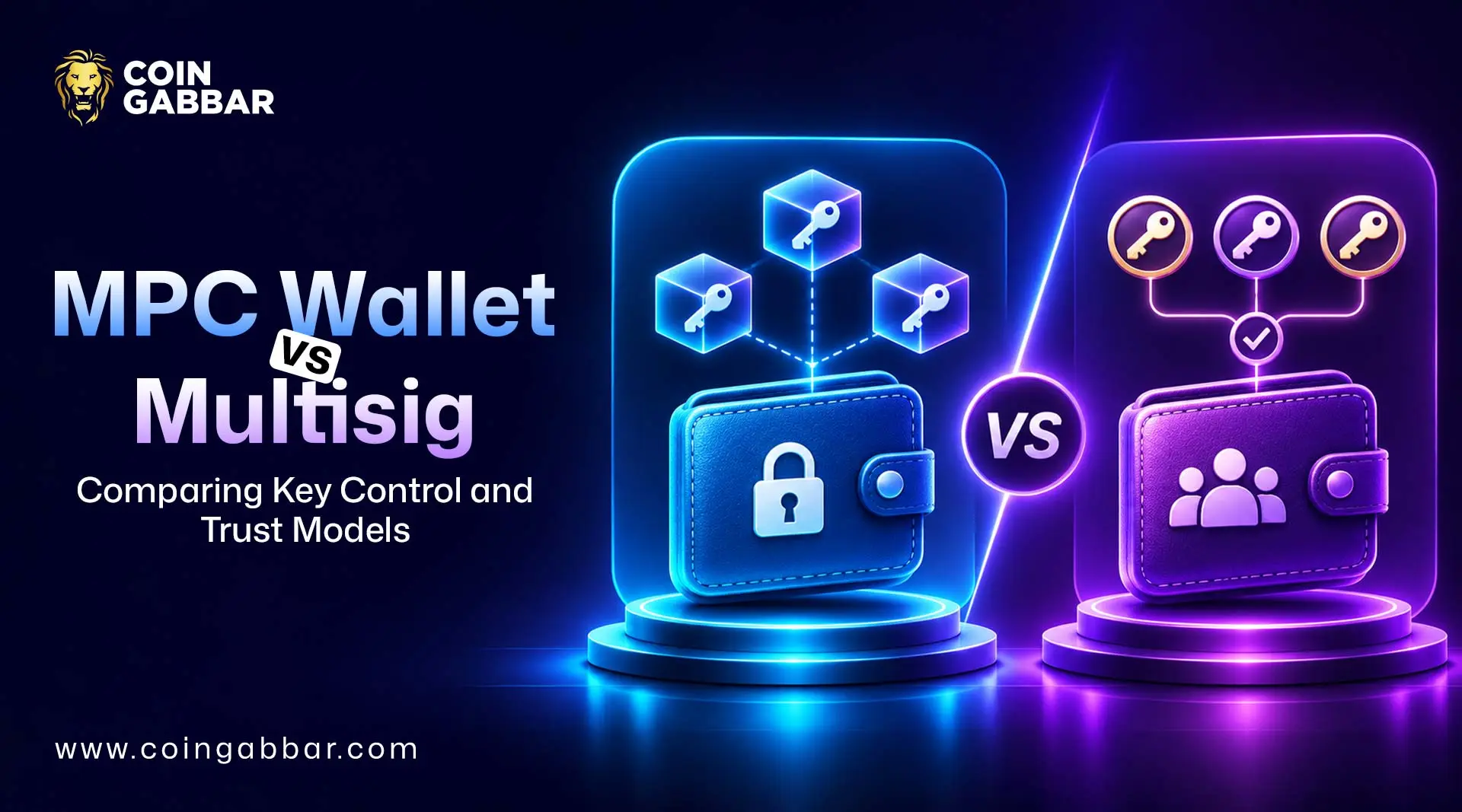
Where Security and Accountability Differ in MPC Wallet vs Multisig
A single private key can drain a wallet in seconds. That risk pushed teams, treasuries, and exchanges toward shared control, and the MPC wallet vs multisig debate followed.
Both sides of the MPC wallet vs multisig question ask several parties to approve a payment. They differ in where that approval is checked, who holds which secret, and what must be trusted.
What Are an MPC Wallet and a Multisig Wallet?
A multisig wallet needs several separate private keys to approve one payment. Many multi-signature wallets write the rule as M-of-N, so a 2-of-3 setup lets any two of three holders sign.
Bitcoin stores the public keys and the signature count in a redeem script, and the address is a hash of that script, as the Bitcoin developer reference explains. On Ethereum, a smart contract usually holds the same rule.
An MPC wallet works differently. MPC stands for multi-party computation. It lets several parties compute one result while each keeps its own input private. The wallet key is split into shares, and a threshold of shares signs together.
Most crypto wallets don’t actually hold your coins. What they hold are the keys, and those keys are what prove you own something recorded on the blockchain. The MPC wallet vs multisig split begins with how those keys are held.
MPC Wallet vs Multisig: Who Controls the Private Key?
In the MPC wallet vs multisig comparison, key control is the sharpest difference. Each multisig signer holds a complete private key. A stolen key is still a valid key, so in a 2-of-3 setup an attacker holding one key needs only a second.
An MPC wallet has no device holding the full key. A stolen share cannot sign alone, and the attacker must collect enough shares to reach the threshold. Common threshold protocols include CGGMP21 and DKL23.
The output differs as well. MPC signing produces one ordinary signature, so the chain sees a normal transaction. Strong private key control still matters in both models, because weak storage undermines any threshold.
How Do Transaction Approvals Work in Each Model?
Multisig checks approvals on-chain. Safe accounts, for example, store the owner list and threshold on-chain, and the contract verifies signatures before executing, according to the smart account documentation. Any observer can inspect that rule.
In an MPC wallet vs multisig test of approvals, MPC checks them off-chain. Parties run a signing protocol, often with policy rules attached, and only the final signature reaches the blockchain. Auditing then relies on provider logs, not the public chain.
Approval quality matters in either case. In February 2025, signers at a major exchange approved a disguised transaction through a manipulated signing interface, and more than 400,000 ETH left a multisig cold wallet. The threshold worked. The displayed details were false.
So the MPC wallet vs multisig choice does not cure blind signing. Each signer still has to verify what is being approved.
How Does Signer Distribution Change the Risk?
For signer distribution, MPC wallet vs multisig designs start from different units. Multisig spreads whole keys across people, devices, and regions. Each key often sits on a separate hardware device, and the available hardware wallet options differ in security features.
Changing signers depends on the design. A Bitcoin script fixes the key list inside the address, so a new signer set normally means a new address. Contract wallets such as Safe let owners add or remove owners and change the threshold so that rigidity is not universal.
MPC spreads shares across devices, servers, or providers. Share refresh protocols can replace a signer device without changing the address, though support varies by provider.
Spread only helps when the parts are truly separate. In an MPC wallet vs multisig layout, five shares inside one cloud account give less protection than a 3-of-5 label suggests. That is analysis, not a published finding.
What Security Assumptions Does Each Model Rely On?
On security assumptions, MPC wallet vs multisig again diverge. Multisig assumes the script or contract code is correct. It also assumes each signer device is clean and the signing screen shows honest data. Safe's documentation notes that a module can bypass signature checks, so every added module widens the trust boundary.
MPC assumes the threshold protocol is built correctly and shares are stored safely. It also assumes the coordinating servers stay clean. Complex protocols make independent audits important.
Standards for MPC wallets vs multisig custody are still maturing. The threshold cryptography project at NIST studies schemes that spread trust across parties, and its January 2026 call invites submissions to build public reference material. That call is not a finished standard for wallets.
MPC Wallet vs Multisig: Where Does Trust Actually Sit?
In MPC wallet vs multisig terms, multisig places trust in public rules and individual signers. Any observer can verify the quorum.
MPC puts its trust in the cryptography and in the environment where the operator runs it. Because of that, auditors usually look at two things: how the implementation was built and what controls the provider has in place.
When it comes to MPC wallet vs multisig, the right choice mostly depends on the group using it. Multisig works well for teams that want anyone to be able to verify the setup on-chain, such as a treasury with a stable list of signers.
An MPC wallet suits teams that work across many chains or change signers often. Some custody setups combine both.
The table below summarizes the MPC wallet vs multisig differences.
Factor | Multisig | MPC Wallet |
Private key | Several complete keys | Shares, no full key |
Approval check | On-chain script or contract | Off-chain signing protocol |
On-chain footprint | Visible quorum | One ordinary signature |
Signer changes | New address or owner update | Share refresh. |
Main trust | Public code and signer devices | Protocol and operator environment |
Audit trail | Public | Mostly provider logs |
What Are the Main Risks to Consider?
A multisig signer who approves a payment without checking its details can still lose funds, even when the threshold works exactly as designed.
If keys get lost or damaged, a multisig wallet can end up locked. This happens when the signers who still have working keys are fewer than the threshold needed to approve a transaction.
Flaws in a threshold protocol implementation could expose MPC shares, which makes independent audits and testing essential.
Heavy reliance on one MPC provider can bring back a central point of trust that the design set out to remove.
In both models, poor signer spread, weak recovery planning, and unreviewed modules or upgrades weaken any threshold.
Conclusion
MPC wallet vs multisig is really a question of where trust sits. Multisig keeps full keys with each signer and enforces approvals in public. An MPC wallet keeps shares and enforces approvals through off-chain cryptography.
For MPC wallet vs multisig, neither removes human or interface risk, and threshold standards are still maturing. The next checks are who holds each key or share, where the rules are enforced, how signers get replaced, and which audits exist.
Disclaimer:
This article is for information only and is not financial or investment advice. Crypto custody carries risk, including loss of funds. Always research independently and consult a qualified professional before making decisions.