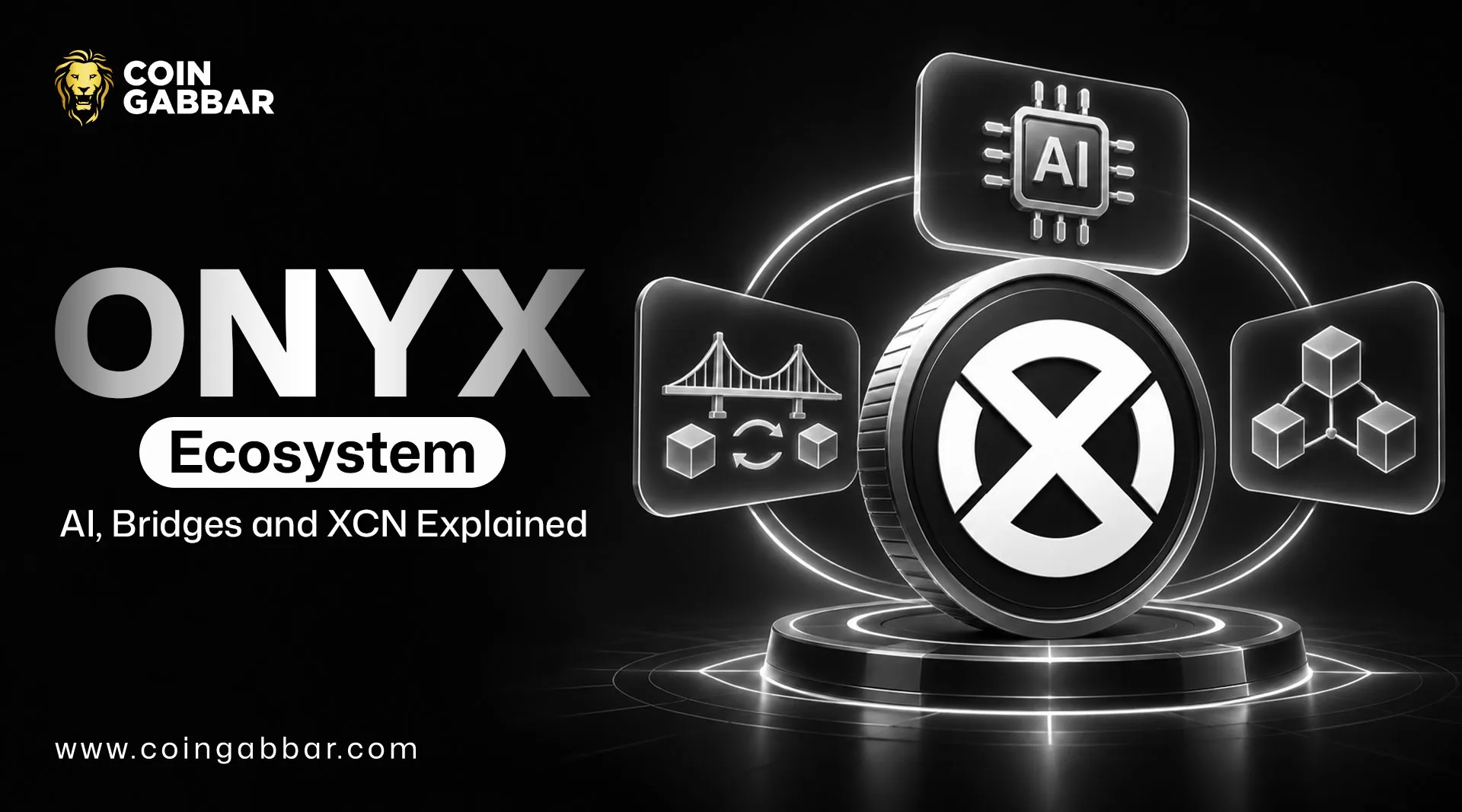
Onyx Ecosystem Explained: Blockchain, Tools and Core Features

What Makes the Onyx Ecosystem's Blockchain Tools Work Together?
Most people meet Onyx through a single product: a wallet, a bridge or the XCN token. That view misses the bigger picture. The Onyx ecosystem is a set of tools built around one Layer 1 chain, each handling a different job, from moving assets in to automating tasks onchain. This guide maps those pieces using the official website, the docs and the whitepaper. It explains what each tool does, who it suits and where the limits sit, so readers can decide what is worth their time.
Key Takeaways
Onyx is a sovereign Layer 1 for payments and financial institutions, and XCN is its native token for gas, staking and governance.
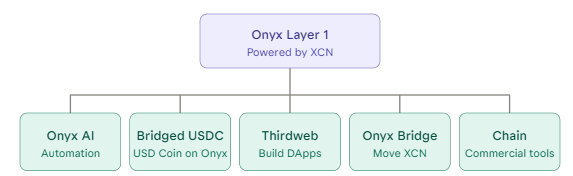
Five tools sit around the chain: an AI agent, a USDC bridge, an XCN bridge, a developer framework and institutional tooling.
Some figures, such as staking rates, are variable, so check the live app before acting.
What Is the Onyx Ecosystem and How Does It Work?
The chain in brief
The Onyx blockchain is, according to the official website, a sovereign Layer 1 built for banks, payment networks and financial institutions. Its mainnet went live on March 27, 2026. The docs describe a design that pairs EVM compatibility with asynchronous Byzantine fault tolerance (aBFT), giving builders familiar contract tooling on a chain aimed at practical finance. The site lists one-second blocks and finality under two seconds.
The whitepaper uses the project’s earlier name, Goliath. It describes a consensus design that does not fork, governed by the Onyx DAO. The site also describes a public ledger for open tokenization, paired with a private mesh layer for enterprise contracts and compliance logic.
Source: official website.
XCN in brief
Onyxcoin (XCN) is the native utility, gas and governance token. Fees are paid in XCN, validators are chosen by staked XCN, and holders vote on proposals. The website lists a maximum supply of 68.9 billion. Supply and staking numbers move, so treat any figure as a snapshot.
How the Pieces Fit Together
Tool | What it does | Who it suits |
Onyx AI | Automates contract tasks and transfers | Developers and active users |
Bridged USDC | USD Coin moved onto Onyx | Anyone wanting a dollar asset on the chain |
Onyx Bridge | Moves XCN between supported networks | Holders and builders |
Thirdweb | Tools and frameworks for DApps | Developers |
Chain | Institutional and commercial tools | Businesses |
The Agent That Automates Onchain Tasks
Onyx AI is an agent that handles smart contract deployment, token transfers and onchain workflows for the user. The docs have separate pages for its core features and wallet infrastructure. Read both before trusting any automation with real funds.
Getting Assets In
Bridged USDC is USD Coin moved onto Onyx through cross-chain bridging, which gives the chain a familiar dollar asset. Onyx Bridge covers XCN transfers across supported networks, and the docs also describe bridging ETH from Ethereum. Every bridge adds its own risk, so use the official app link from the docs and start with a small amount.
Source: official documentation.
Onyx Ecosystem Tools for Developers
Thirdweb gives builders tools and frameworks to create, deploy and manage DApps on Onyx. Chain, listed beside it, offers institutional and commercial tools. The docs go deeper with guides on network fees, exchange integration, decimal handling and running your own RPC.
The official whitepaper adds one useful point: building on the platform needs no license, and developers may ship open-source or proprietary apps.
How to Build on Onyx Blockchain
Add the network. Follow the Quick Start in the docs. The homepage example uses chain ID 327 and the RPC at rpc.onyx.org. Always copy chain details from the current docs, because older pages show different values.
Hold some XCN. Gas is paid in XCN, and the docs have a Network Fees page.
Reuse your tools. The chain is EVM-compatible, so existing Solidity contracts deploy without changes and work with Hardhat, Foundry, ethers.js and Wagmi.
Deploy and check. Follow the Deploying Contracts guide, then inspect results on Onyxscan.
Staking and Governance
Staking XCN helps secure the network and gives voting weight. The docs describe liquid staking through stXCN at a variable rate. Governance runs through Onyx Improvement Proposals, and the governance page keeps archived proposals from the earlier Ethereum-based system next to the Layer 1 ones.
Security and Audits
The website links audits from Halborn, CertiK and PeckShield, and the docs list a bug bounty. An audit lowers risk, but it does not remove it.
Check Before You Use Anything
Items marked “coming soon” on the site are not live products, so ignore them until they launch.
Thirdweb is a separate company, so read its own terms before connecting a wallet.
Rates, fees and supply figures are variable, and the live app is the source of truth.
Start from onyx.org links to avoid lookalike sites.
Final Thoughts
The ecosystem makes the most sense when read as a stack: a chain, a token, and tools for moving, building and automating. Each piece has its own docs, risks and limits, so it helps to learn them one at a time.
Disclaimer: This article is for information only and is not financial advice. Crypto assets carry risk, so research carefully before making any decision.