Pirate Chain Exploit: Millions of New ARRR Created, Where Did They Go?


Pirate Chain Exploit: 39.8M $ARRR Minted From Thin Air, Price at $0.26
As of October 16, 2026, Pirate Chain news today centers on a Pirate Chain exploit that created about 39.8 million $ARRR.
Per the official project update on X, the Pirate Chain vulnerability surfaced on October 14, 2026, and holders were asked to stop moving funds.
For readers of crypto news today, the question is how a privacy coin recovers when new coins sit unseen. The project posted it on October 15.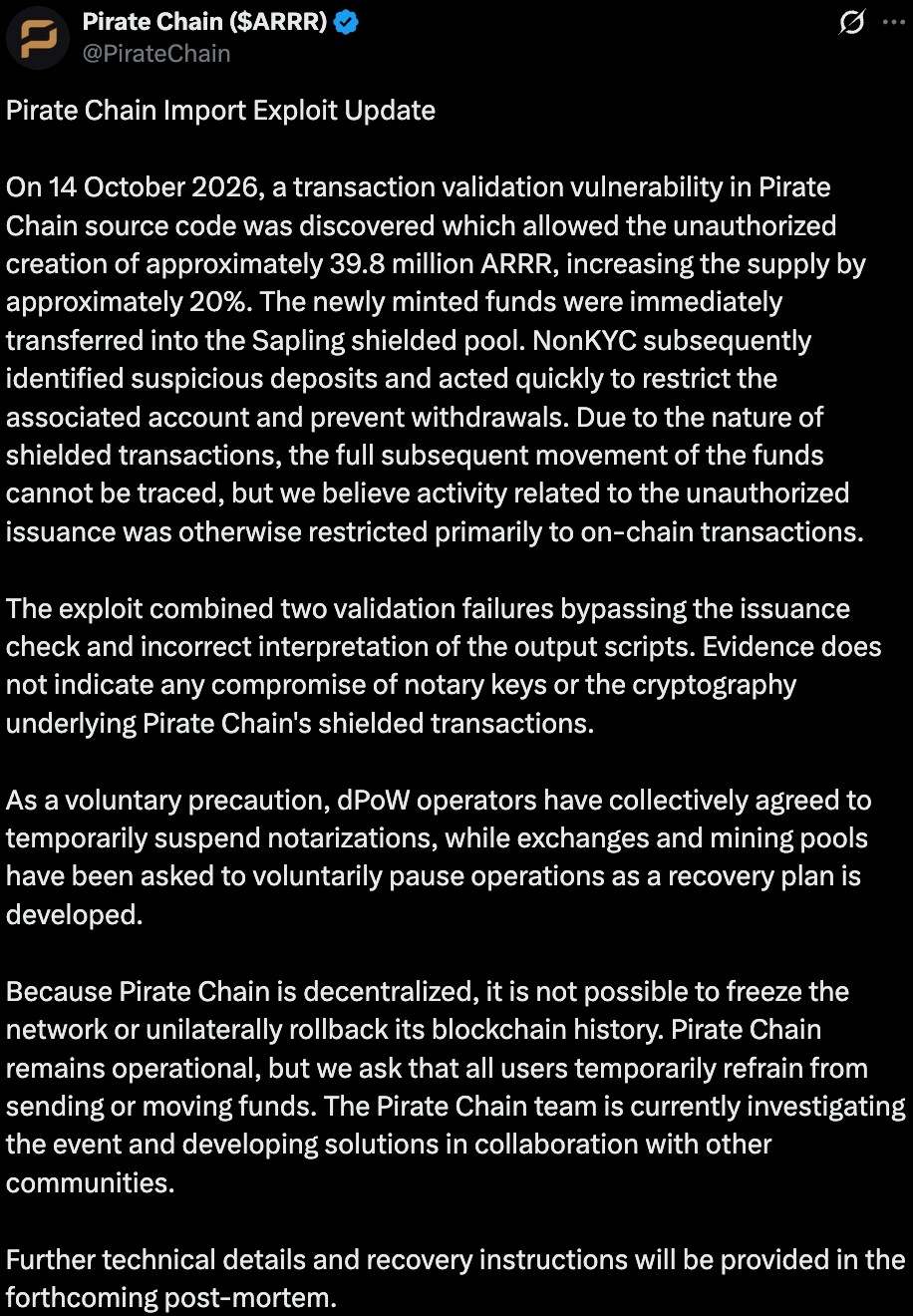
Pirate Chain Exploit: 39.8 Million ARRR Minted
A transaction validation vulnerability in the source code allowed the unauthorized creation of those coins. Per the project, $ARRR supply increased by 20 percent, an approximate figure.
Pirate Chain Exploit Explained: Two Validation Failures
The flaw combined two failures:
Issuance check bypass: the control limiting new coin creation was skipped.
Output script error: the network misread output scripts.
An October 15 post on the official X account linked the problem to the Ironwood turnstile, which handles supply accounting. Ironwood went live on October 3.
ARRR Unauthorized Minting: What Happened to the Funds?
The new coins moved at once into the Sapling privacy pool, so Pirate Chain Sapling shielded pool funds cannot be fully traced, the team said.
Shielded transactions hide sender, receiver, and amount, so the Pirate Chain Sapling pool stays opaque.
NonKYC Blocks $ARRR Withdrawals: What Did the Exchange Do?
NonKYC identified suspicious deposits and restricted the linked account, per the update. The NonKYC $ARRR response is the only exchange action the update names.
Wu Blockchain also covered this news in its tweet on X, noting the restrictions.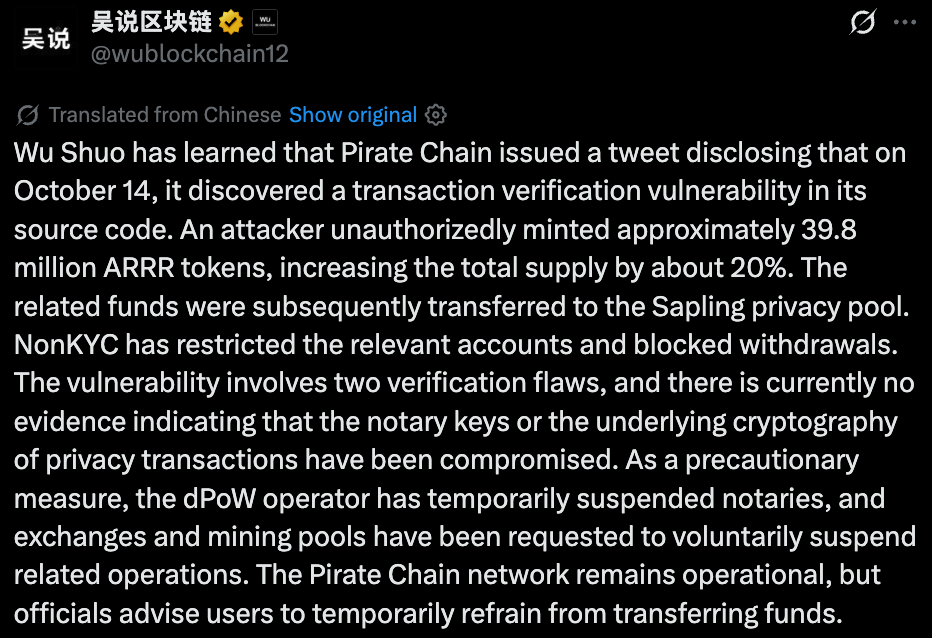
Pirate Chain dPoW Notarizations Suspended: Who Did What?
Party | Action |
dPoW operators | Paused notarizations |
Exchanges, mining pools | Asked to pause |
Project team | Building a recovery plan |
Evidence does not point to compromised notary keys. Which $ARRR exchanges suspended deposits, withdrawals, or both is unconfirmed, so $ARRR exchange withdrawals may differ by platform.
Can Pirate Chain Be Rolled Back?
On October 15, the official account said developers would roll the chain back to October 14, 2026, 1:00 PM Pacific Time, or 20:00 UTC.
The later update sets a limit. The network is decentralized, so the team cannot freeze it or roll back history alone. A Pirate Chain post-mortem update with recovery instructions is expected.
Is Pirate Chain Safe to Hold After the Exploit?
No official source labels the coin safe. Is ARRR safe after the exploit? That depends on the recovery plan.
Readers seeking Pirate Chain hack news today should note the team says exploit. The ARRR exploit remains under investigation.
ARRR Price Today After Exploit: CoinGecko Snapshot
Data from CoinGecko, as of October 16, 2026:
Metric | Value |
Price | $0.2614 |
24h change | -4.0% |
Market cap | $51.3M |
24h volume | $485,269 |
Total supply | 200M |
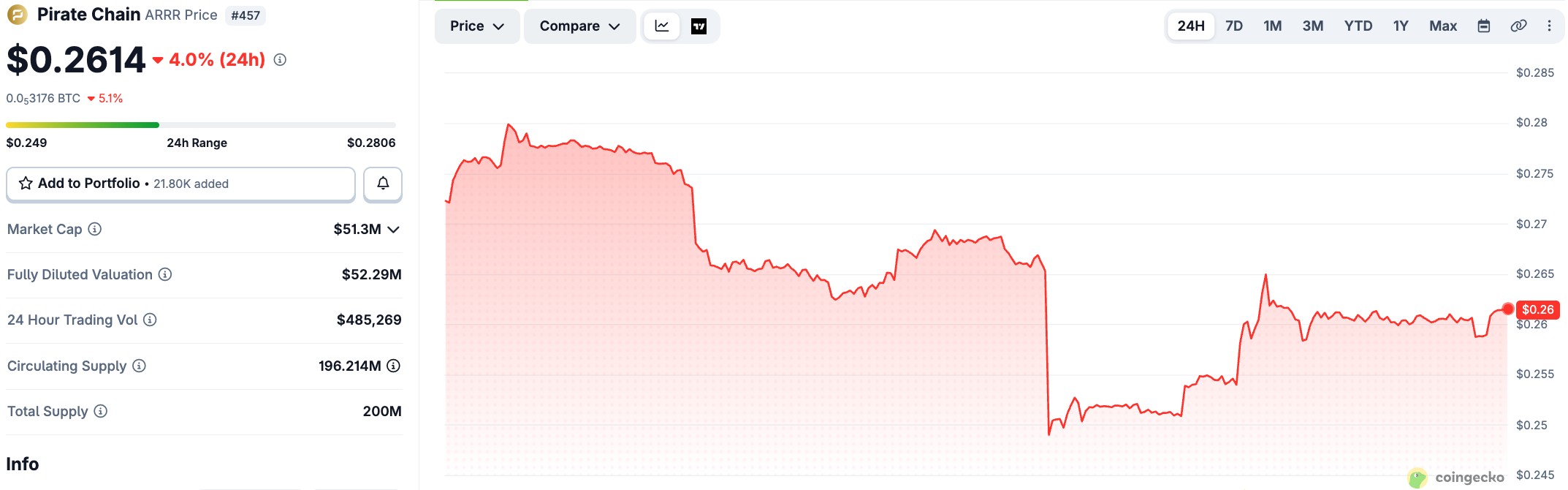
$ARRR news today shows a dip, but no source links it to the exploit. The 200M total supply matches the cap in the official source code repository, so the listing does not appear to count the minted coins.
Expert View: What Could the Pirate Chain Exploit Mean?
Analysts following crypto news may read the incident as a validation failure, not a market event. Shielded transactions limit tracing, so validation rules matter most.
The ARRR supply increase and unauthorized minting test whether a decentralized chain can coordinate a recovery plan. Price impact stays uncertain.
Disclaimer: This article is for information only and is not financial, legal, or investment advice. Crypto assets are volatile, and you can lose money. Verify details with official sources before making any decision.






