Pump.fun Wallet Migration: Mt. Gox Ex-CEO Flags Private Key Risk

Mark Karpelès, the former CEO of Mt. Gox, says that the Pump.fun Wallet Migration process does not match its "end-to-end encryption" description after he reviewed the JavaScript code behind it, according to Wu Blockchain's report on X.
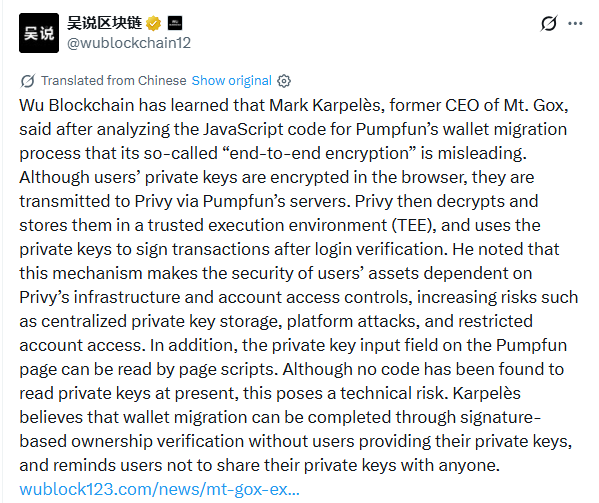
He explains that keys are encrypted in the browser but sent on to Privy, which stores them in a protected server environment, and that he found no code reading the keys at present.
This crypto news update explains what he said, what is still unconfirmed, and what users can do today.
Key Takeaways
Mark Karpelès, former CEO of Mt. Gox, says the "end-to-end encryption" claim for the Pump.fun Wallet Migration is misleading.
He says private keys are encrypted in the browser but are then sent to Privy through Pump.fun's servers.
He found no code that reads private keys today but calls the setup a technical risk.
Users should never share a private key with anyone.
Pump.fun has retired external wallet sign-in on the web, replacing browser wallets such as Phantom, Solflare, and Ledger with email, Google, Apple, or GitHub login, according to its official notice.

Mark Karpelès, the former CEO of Mt. Gox, raised concern on his X account when he found out about it.
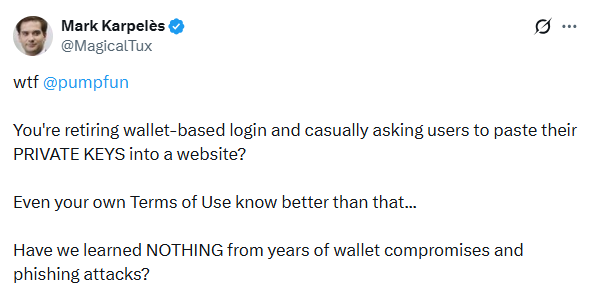
What Did Karpelès Say About the Pump.fun Wallet Migration?
According to Wu Blockchain report, Karpelès says the keys are decrypted by Privy inside a trusted execution environment, which is a locked-down area of a server built to protect sensitive data, and then used to sign transactions after a login check.

In his view this makes the safety of user assets depend on Privy's systems and account access rules, which raises the risk of central key storage, platform attacks, and locked accounts.
He also notes that the private key input box on the page can be read by page scripts, and although no such code was found, he calls it a technical risk.
How Does Privy Handle Wallet Keys on Pump.fun?
Pump.fun's help center says that users who sign in with Privy, for example through email or a social account, have wallet data managed by Privy and can export only a private key, not a seed phrase, as explained in its official export guide.
Privy's own wallet migration documentation describes keys being rebuilt only for a short time inside isolated secure environments when needed.
These two documents describe how Privy wallets work in general, and they do not respond to Karpelès' claims about the Pump.fun Wallet Migration page.
Signature-Based Verification: The Safer Option Karpelès Suggests
Karpelès believes a wallet migration can be finished with signature-based ownership verification, which means a user proves control of a wallet by signing a message, so the private key never leaves their device.
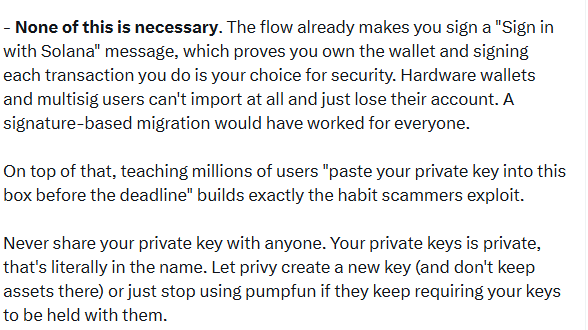
This works like signing a document instead of handing over the key to your house, and it is a common way for apps to confirm who owns an address.
He also reminds users not to share their private keys with anyone.
What Should Pump.fun Users Do Now?
Users should avoid typing a private key into any page unless they fully trust where it goes, and they should follow only the official Pump.fun and Privy channels for updates.
A private key gives full control of a wallet, so anyone who sees it can move the funds. It also helps to keep only small amounts in an app wallet and to review which sites can access your tokens.
The Bottom Line
This is a security warning from an analyst, and it is not a report of stolen funds. The next statements from Pump.fun or Privy should show whether the migration process changes.
Disclaimer: This article is for information only and is not financial or investment advice. Crypto assets carry risk, including the loss of funds, so verify current details with official sources.






