Remittix Presale: RTX at $0.23! What to Expect Before Launch?

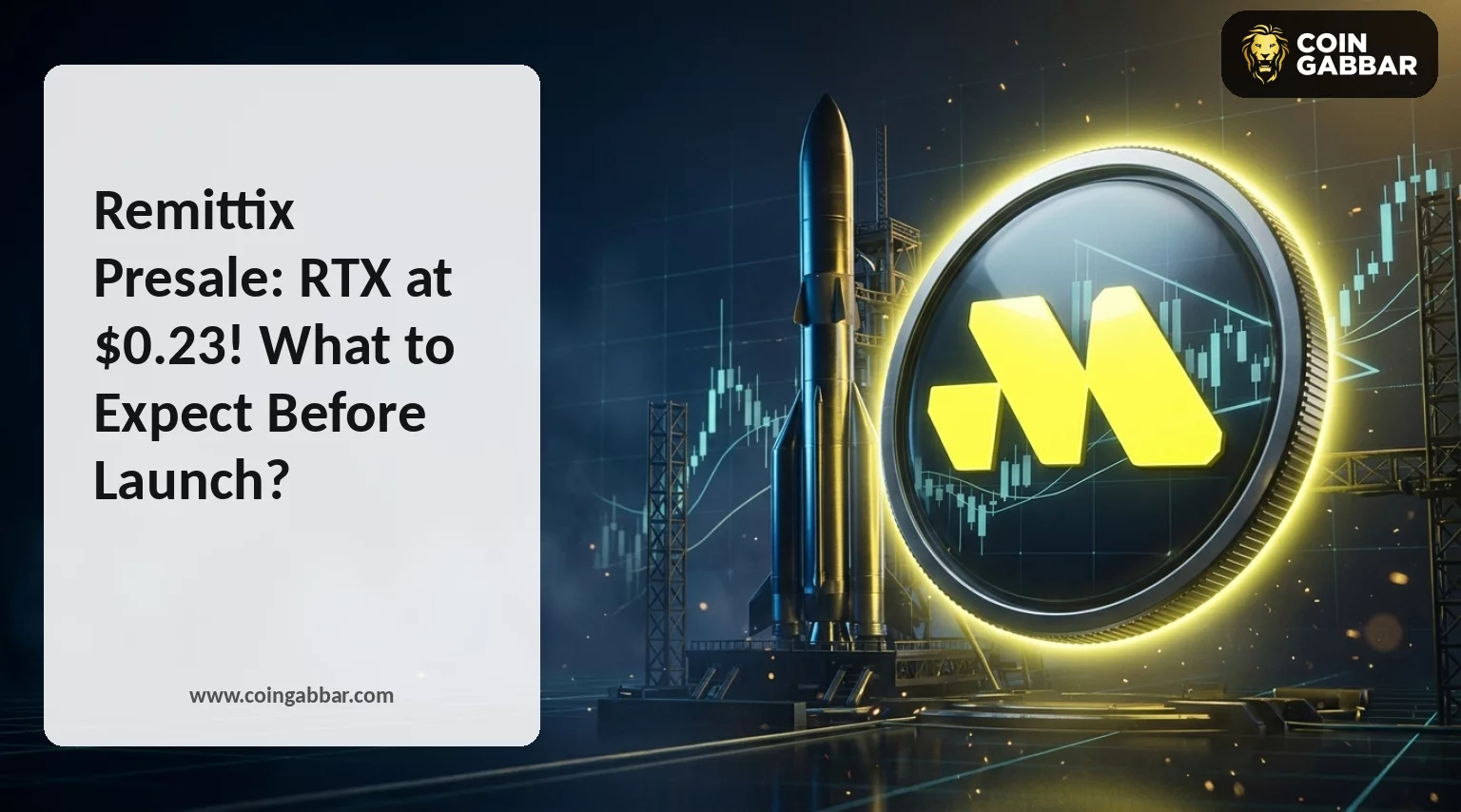
The Remittix Presale is approaching a key milestone as the project prepares for its announced November 24, 2026, token launch. In its latest public updates, Remittix says RTX is available at $0.23, with $0.46 set as the final presale-stage price.
The RTX project has also reported more than $32 million in contributions and a $36 million fundraising target.
However, the announced launch price should not be treated as a guaranteed exchange price. The actual market value after launch will depend on confirmed exchange listings, circulating supply, available liquidity and trading demand.
Investors should also verify the token contract and the latest security information before making a decision.
Remittix Presale: Latest Figures
Metric | Reported Figure |
Dashboard price | $0.28 |
Final presale-stage price | $0.46 |
Funds raised | $32.72 million |
Fundraising target | $36 million |
Scheduled launch | November 24, 2026 |
Source: CoinGabbar report published October 9, 2026. Verify the live dashboard before publication.
Remittix Presale Price and Tokenomics
Remittix describes itself as a PayFi project focused on connecting cryptocurrency payments with fiat settlement. Its proposed ecosystem includes crypto-to-bank payments, a wallet and additional trading and earning features.
The project's public token information states a maximum supply of 1.5 billion RTX, with 750 million tokens, or 50% of the supply, allocated to the presale. The remaining allocation is described as 15% for marketing, 12% for exchange listings, 10% for ecosystem reserves, 9% for the team and 4% for rewards.
These allocations are project-published figures and should be rechecked against the latest official documentation before publication. A token allocation does not, by itself, establish how many tokens will be circulating when trading begins.
RTX Launch Date: What Investors Should Know
Remittix has announced November 24, 2026, as its planned RTX market-launch date. It has also said that the presale has raised more than $32 million and is moving toward a $36 million hard cap.
The launch date is a milestone to monitor, but the practical details matter just as much. Before trading starts, readers should look for a dated announcement confirming the exchange venues, the official token contract, initial circulating supply, liquidity arrangements and token-claim process.
Exchange names should not be described as confirmed unless the exchanges themselves or a reliable official announcement verify the listing. A planned launch is not the same as confirmed exchange trading.
Remittix Price Prediction: Possible RTX Valuation Scenarios
A useful way to assess RTX is to compare possible token prices with the project's stated maximum supply. Fully diluted valuation (FDV) estimates the value of all tokens at a given price, assuming the full supply is included in the calculation.
Using the stated maximum supply of 1.5 billion RTX, the following figures are mathematical scenarios, not forecasts.
RTX price scenario | Implied FDV |
$0.23 | $345 million |
$0.46 | $690 million |
$1.00 | $1.5 billion |
$2.00 | $3 billion |
The $0.46 scenario represents twice the announced $0.23 presale price. The $1 and $2 scenarios would imply much larger valuations and would require market demand and adoption to support them. They should not be presented as expected targets without additional evidence.
FDV is also different from initial market capitalization. Market capitalization uses the circulating supply, while FDV uses the maximum or total supply specified for the calculation. Since a verified launch circulating-supply figure has not been established here, an initial market-cap estimate would be premature.
Can RTX Reach $0.46 Before Launch?
Moving from $0.28 to $0.46 represents an increase of approximately 64.3%. However, this is a comparison between presale price points, not a guaranteed investment return.
Three factors could influence the next phase:
Presale progress: Reaching the stated funding target could mark progress, but fundraising alone does not prove sustainable token demand.
PayFi adoption: Actual payment activity and recurring users would provide stronger evidence of utility than promotional claims.
Exchange liquidity: Trading depth, available supply and buyer demand will influence the opening price.
Investors should also distinguish the project's announced plans from exchange-confirmed listing details.
What Could Influence RTX After Launch?
1. Exchange listings and liquidity
Confirmed exchange access can affect how easily holders trade RTX. Yet the number of listings alone is not enough to judge market quality. Trading volume, order-book depth, liquidity-pool arrangements and withdrawal availability are also important.
2. Token supply and unlocks
The project's stated 1.5 billion maximum supply makes token distribution a key part of the valuation analysis. Investors should verify the presale release schedule, team allocation restrictions and any other unlock dates. A large amount of newly tradable supply can add selling pressure if demand does not grow at the same pace.
3. Product adoption
Remittix says it is developing crypto-to-bank payment infrastructure and related financial products. Long-term value would depend on measurable use, such as active users, completed payment volume, supported payment corridors and repeat transactions. Roadmap claims alone do not demonstrate product adoption.
4. Market conditions
Newly launched tokens can experience sharp price movements in either direction. Broader crypto-market weakness, limited liquidity or early-holder selling could put pressure on RTX even if the project meets some development milestones.
Remittix Security Checks and Risks
CertiK's public Remittix profile shows one acknowledged centralization finding, with no critical, major or medium findings listed on the displayed audit dashboard.
The same profile says CertiK KYC is not in place and no CertiK bug bounty is listed. These details should be read directly from the audit provider's current records rather than summarized as a blanket statement that the token is risk-free.
A security audit does not guarantee that a project will succeed or that every possible risk has been eliminated. Readers should check the exact contract covered by the audit, the status of any findings, the permissions held by privileged wallets and whether the launch contract matches the audited one.
Before publication, the contract address also needs special attention: public pages associated with the project have displayed different RTX contract addresses. Do not insert a contract address into this article until the team provides a consistent, independently verifiable address and the relevant blockchain explorer confirms it.
Remittix Presale: What Happens Next?
According to CoinGabbar analysts, The next meaningful milestones are confirmation of the November 24 launch arrangements, official exchange announcements, verified contract details and disclosure of the initial circulating supply. These details will provide a firmer basis for assessing RTX than presale fundraising totals alone.
For now, the $0.23 presale price and $0.46 final-stage price provide reference points for valuation calculations, but neither establishes what RTX will trade at after launch. Investors should compare the implied FDV with the project's actual product usage, supply schedule and available liquidity before drawing conclusions.
Disclaimer
This article is for informational purposes only and does not constitute financial or investment advice. Price and valuation scenarios are illustrative calculations, not guaranteed outcomes. Presale information and launch plans may change. Conduct independent research, verify official documentation and assess your risk tolerance before making any investment decision.