What Is the Sanctum SANC Token? Burn, Listing, and LST Guide

What Is the Sanctum SANC Token? Burn, Listing, and LST Guide
The chart looked asleep for weeks. Then Sanctum's token lit up every trending list in a single morning.
If readers keep seeing the Sanctum SANC token and wonder why, they're not alone. Plenty of posts blame a supply burn. The real timeline is messier, and it starts with a name change.
What Is the Sanctum SANC Token and What Does It Do?
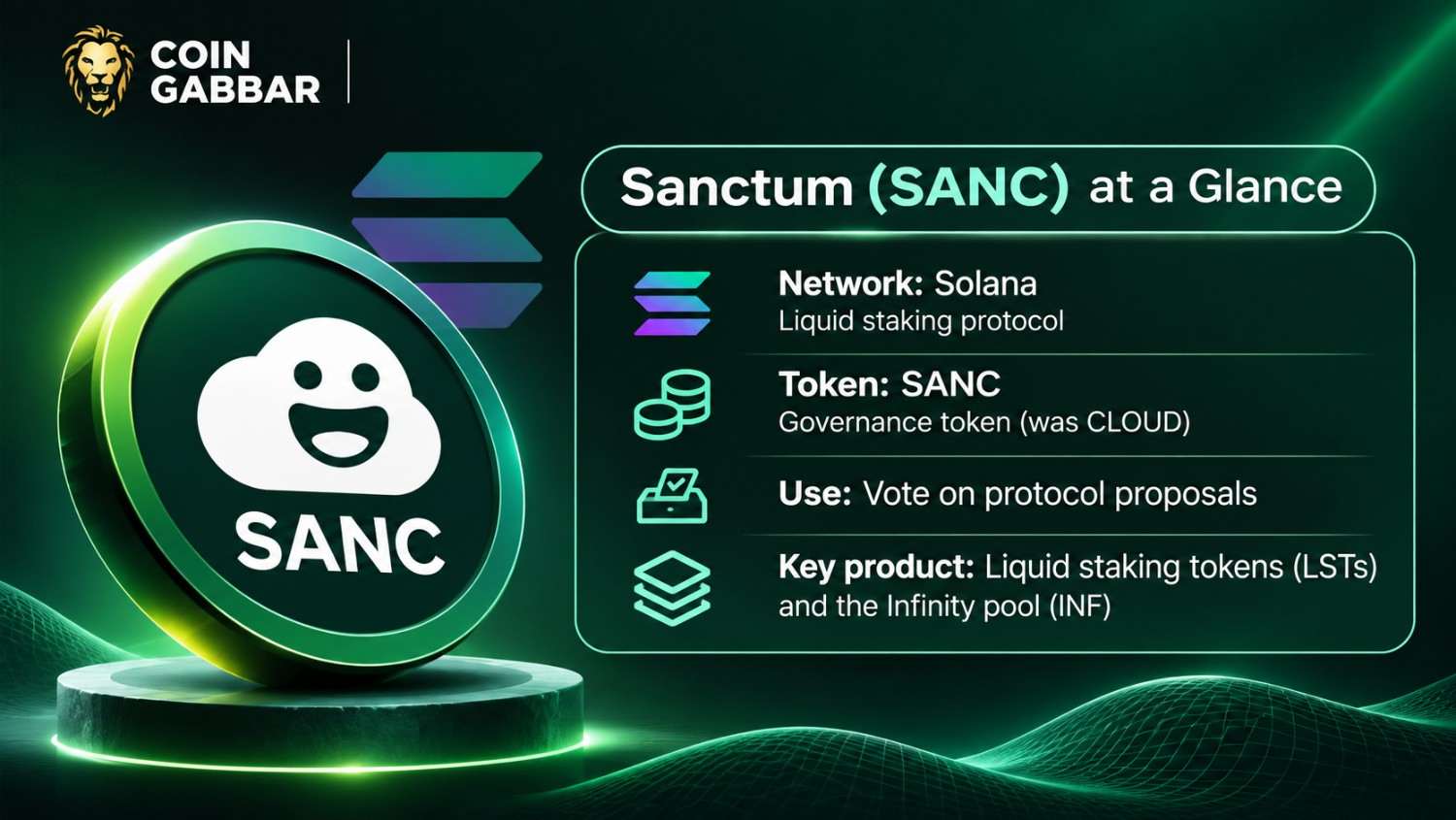
Sanctum is a liquid staking project on Solana. Users stake SOL and get back a liquid staking token, or LST. That token earns rewards and can still be traded or lent.
SANC is Sanctum's governance token. Holders vote on proposals. It was called CLOUD until October 2026. The token address didn't change, so existing CLOUD holders now hold SANC.
Don't confuse it with Laravel Sanctum, a PHP login package. The two only share a name.
Why Did SANC Jump After the Upbit Listing on 13 November?
The trigger was a listing, not the burn. Korea's Upbit added SANC to its KRW, BTC, and USDT markets. Trading opened at 13:00 Korea time on 13 November 2026, with deposits over Solana only.
SANC had hovered near $0.0436 through 12 November. On Solana DEXs, it more than doubled within the hour of Upbit's announcement, per Solana Compass price data.
At about $0.0965 on 13 November, the full 740.7 million supply was worth roughly $71.5 million, by our math. Our Upbit listing coverage has the exchange details. Moves like this can reverse as fast as they came.
Why Did Sanctum Burn 25% of Its Supply in October 2026?
A governance vote called CLOUD-008 set it up. Founder FP Lee posted the proposal on 2 September. A 72-hour MetaDAO vote opened on 16 September and passed on 19 September.
| Date | What happened? |
| 2 Sep 2026 | CLOUD-008 proposed |
| 16 Sep 2026 | MetaDAO vote opens. |
| 19 Sep 2026 | Vote passes |
| 6 Oct 2026 | Burn executed on-chain |
| 7 Oct 2026 | Sanctum says the burn is done. |
| 13 Nov 2026 | Upbit listing, price jump |
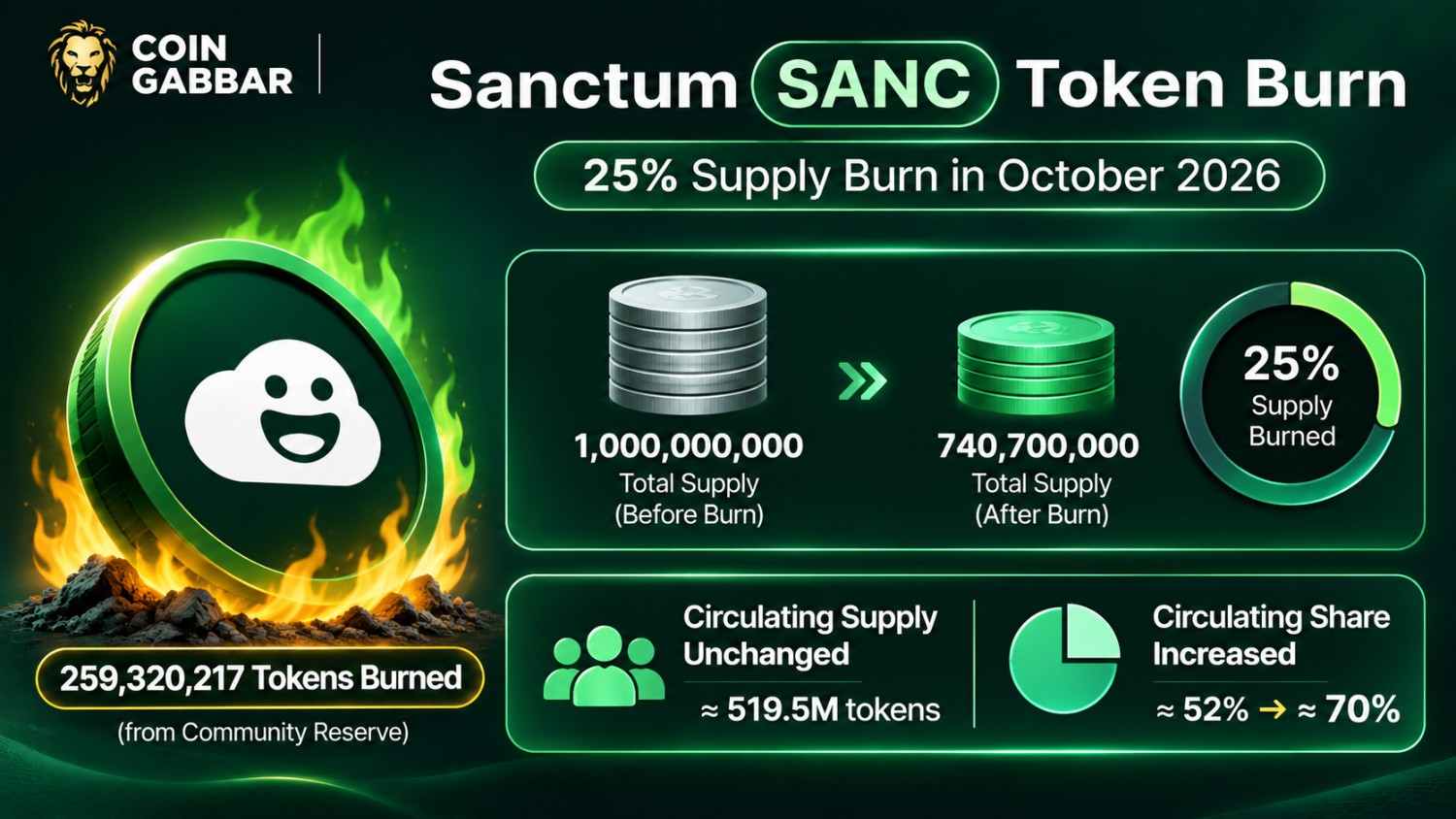
The burned tokens came from the Community Reserve, 259,320,217 CLOUD in all. Total supply fell from 1 billion to about 740.7 million, per Solscan. Of roughly 307 million tokens first set aside for that reserve, only 48 million were ever handed out.
Sanctum said the idle leftovers worried retail and institutional investors. Burning them made further distribution impossible.
Did the Burn Cut the Circulating Supply of SANC?
No. The burned tokens were never in circulation. Sanctum's investor dashboard listed about 519.5 million tokens as circulating, and the burn didn't touch that figure.
What changed is the ceiling. By our math, circulating tokens went from about 52% of the old 1 billion cap to about 70% of the new total.
Vesting isn't finished. The Team Reserve holds about 115.6 million tokens, and roughly 105.6 million more vest through July 2027. Sanctum's Q2 2026 report also says it has declined programmatic buybacks.
How Do Sanctum LSTs and the Infinity Pool Work?
Each Sanctum LST is a stake pool. Users deposit SOL, the pool stakes it, and they receive an LST that grows in SOL value as rewards arrive. Jupiter's jupSOL and Bybit's bbSOL run on Sanctum.
Infinity is one shared pool that holds many LSTs. Its token, INF, earns the rewards of every LST in the basket plus swap fees, as the Infinity documentation explains. Sanctum's docs put the fee split at 90% to the pool and 10% to the protocol.
The Reserve allows users to exit to SOL immediately instead of waiting out Solana's unstaking cooldown. Its fee floats between 0.08% and 8%, so a rush for the exit costs more.
Is Sanctum Growing, or Is Its Profit Slipping?
A bit of both. Sanctum's Q3 2026 report, published on 23 October, shows record staked SOL. It also shows gross profit falling for a second straight quarter in SOL terms.
| Metric | Q2 2026 | Q3 2026 |
| Staked SOL (TVL) | 16.64M | 18.62M |
| Gross profit (SOL) | 11,287 | 9,446 |
| Gross profit (USD) | $0.88M | $825,942 |
| INF average APY | 6.22% | 5.7% |
One event propped up Q3. On 10 July, a single holder unstaked 162,000 SOL through the Reserve and paid 1,651 SOL, about 90% of that segment's gross profit.
Scale still matters. In August 2026, DefiLlama data ranked Sanctum first among Solana protocols by TVL, ahead of Jupiter. Live data on DefiLlama also tracks Sanctum's performance.
Is Sanctum SANC Safe? What Risks Should SANC Buyers Check?
Smart contract bugs are the main risk. Sanctum says its code is audited and that an 11-member multisig holds the upgrade key for its stake pool programs. Audits cut risk, but they can't erase it.
LSTs can also trade below the SOL they hold, and small ones can show wide gaps in a stressed market.Solana does not use slashing, so a weak validator can reduce staking rewards but does not put the staked SOL at risk.
For the Sanctum SANC token itself, thin liquidity is the bigger worry. A rally powered by one listing can fade quickly, and vesting tokens keep arriving through July 2027.
Expert Opinion: What Does the Burn Really Signal for Holders?
CoinGabbar analysis suggests the Sanctum SANC token burn was housekeeping, not a demand story. It lowers fully diluted value and clears a reserve that worried investors. It doesn't change what traders can sell today.
The case for Sanctum SANC rests on record-staked SOL and a growing set of partner LSTs. The case against is shrinking SOL-denominated profit and no buyback or revenue share for holders. Both views have real support.
The Upbit listing adds access and attention. Whether it adds lasting demand isn't clear yet, and the next quarterly report will help answer that.
Disclaimer: This article is for information only. It isn't financial or investment advice. SANC moved sharply in hours and could fall just as fast. DeFi carries smart contract risk, rules can change, and nothing here guarantees any outcome.
















