Sei Network News: Mastercard Report Looks Beyond Technology


Technology Is No Longer the Bottleneck, Says New Research
Sei Network News; it resurfaced its August 2026 joint report with Mastercard on X this week. The report’s central finding is that institutional adoption is no longer limited by weak technology. Instead, trust, regulatory clarity, and consistent execution now determine the pace of adoption among major financial firms.
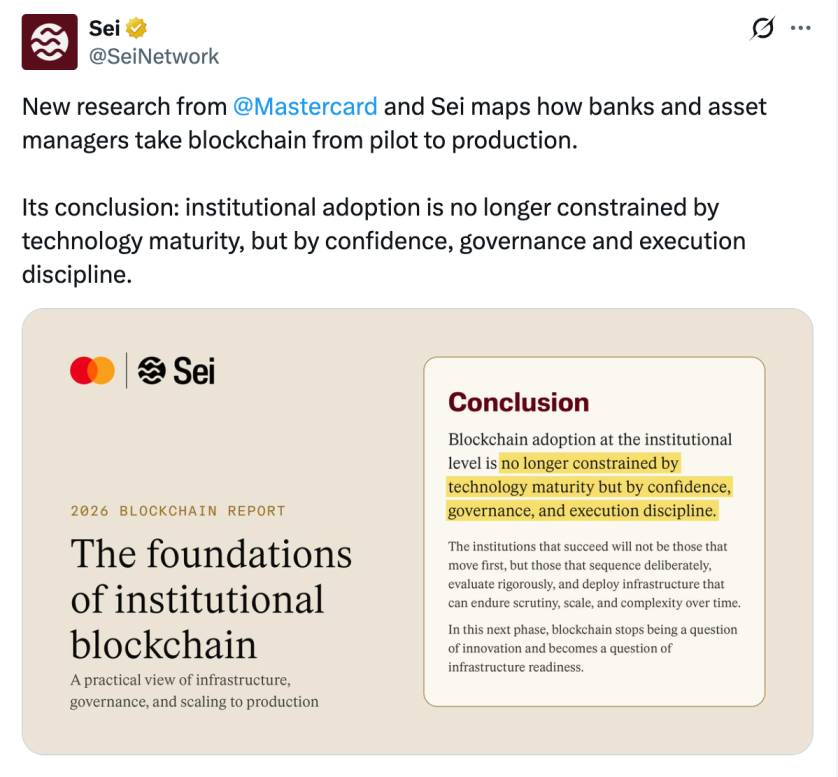
The team shared the key finding on X. The 2026 report, titled "The foundations of institutional blockchain," came out on August 26, 2026, according to the project's blog.
It draws on 40+ expert interviews in payments, compliance, and infrastructure. It also reviews the checklists that banks already use.
The Numbers Behind the Shift From Pilots to Production
The study points to three signs that the technology has matured:
-
Capacity: about 3,400 transactions per second across major networks, roughly 100 times the 2019 level.
-
Tokenized assets: more than $27B in bonds, funds, deposits, and other assets are now on-chain.
-
Treasuries: According to the report, BlackRock's tokenized Treasury fund passed $2.5B in assets under management in May.
These figures cover major networks as a group, not one chain alone. With tokenized assets already past $27B, this Sei Network news is less about speed than about proof. A pilot becomes a live product when buyers trust that settlement is final and that governance holds up under review.
How Banks Move From Pilot to Production in Five Stages
The study says banks and asset managers pass through five gated stages: eligibility, validation, pilot, production, and scale. Each stage has its own decision owner and its own proof bar.
Christian Rau, SVP Digital Assets and Blockchain APEMEA at Mastercard, said adoption needs more than new ideas. He called for strong tests of trust, scale, compliance, and fit with existing systems.
Where Performance and Governance Weigh Most by Use Case
Institutions score chains on five pillars, from raw speed to governance and daily operations. The weights change with the job, and the research maps six use cases.
| Use case | Top priority |
| Real-time payments | Raw throughput |
| Treasury workflows | Governance |
Jack Lipstone, business development director at Sei Labs, said performance is becoming non-negotiable. Institutions favor chains that mix speed and reliability and links to other systems, he added. Sei co-authored the study, so readers should treat this as a partner view.
What This Sei Network News Means for Banks and Builders
For crypto news readers, the takeaway is practical. The paper calls itself the current playbook for banks and for the teams building the systems under review. In practice, that means proving final settlement, clear governance, and steady operations, not only fast blocks.
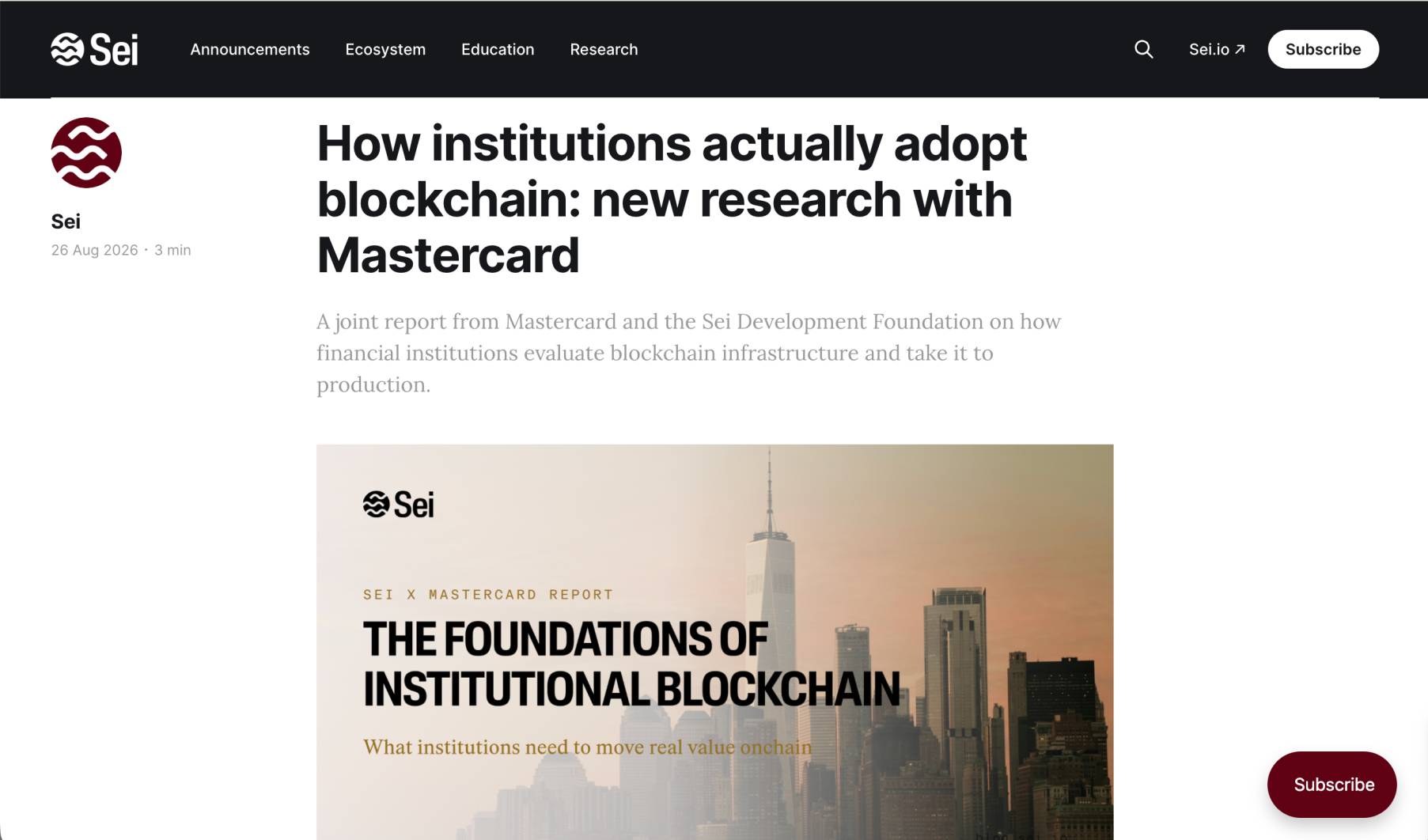
The full paper, including all six use cases, is on the project blog behind a short sign-up form.
This crypto update rests on the project's own posts and the paper it co-published, so outside data is limited. Even so, this Sei Network news suggests the next phase for banks is a test of trust and process, more than a test of speed.
Disclaimer: This article is for educational and informational purposes only and should not be considered financial or investment advice. Always conduct your own research before making investment decisions.






