Shiba Inu vs Floki: Exploring Utility, Community and Ecosystem

Shiba Inu vs Floki: How Do Their Communities and Utility Compare?
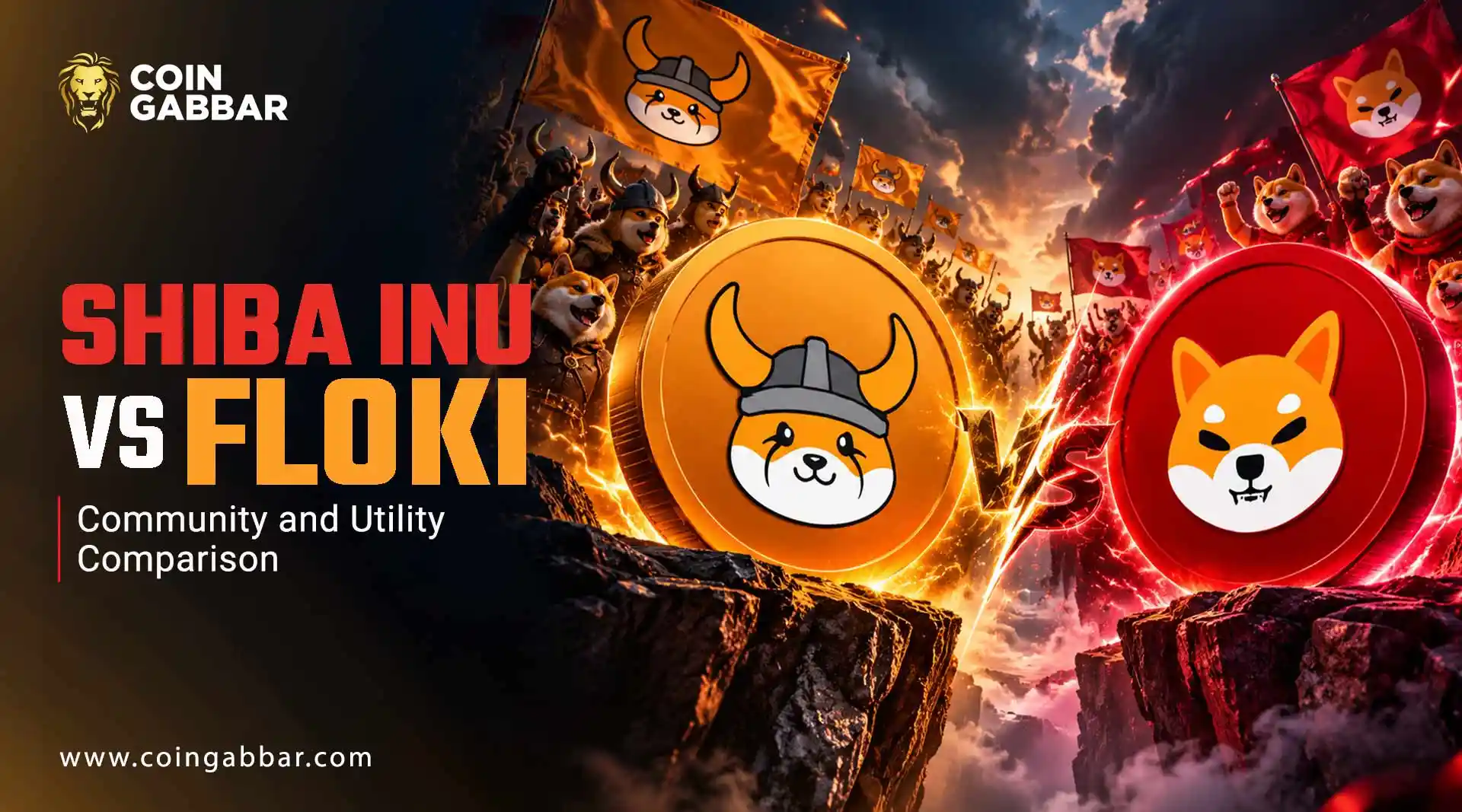
Shiba Inu vs Floki is one of the most searched matchups in crypto, and it usually gets reduced to a price chart. This meme coin comparison looks at what matters more over time: community strength and real utility. Both projects started as jokes and both now call themselves ecosystems. The difference is how each one built that ecosystem, and where the gaps still are.
Why Does Utility Matter for Meme Coins?
A meme coin can run on attention alone for a while. Attention fades, though, and tokens with real uses tend to hold interest longer through market cycles. That is why both projects keep adding products, networks and partnerships.
Utility gives holders a reason to use the token, not only trade it. It also gives each community something to build around beyond the meme. Keep that in mind through the rest of this Shiba Inu comparison and Floki comparison.
What Is the Difference Between SHIB and FLOKI?
The short answer to what is the difference between SHIB and FLOKI is structure. The SHIB token sits at the center of a chain-based setup: Shibarium, a layer-2 network, plus ShibaSwap, BONE, LEASH and TREAT. The FLOKI token sits at the center of a product-based setup: a game, a trading bot, a token locker, an education platform and a tokenization service.
Source: Official Floki website
Put simply, Shiba Inu crypto leans toward infrastructure, while Floki crypto leans toward consumer products. That split shapes almost everything below, and it is the core of how Shiba Inu and Floki are different.
How Do the Shiba Inu Community and Floki Community Compare?
The Shiba Inu community, often called the SHIBArmy, is one of the largest holder bases in crypto. In April 2026, the team reported the ecosystem passing roughly 1.585 million SHIB wallets, a record at the time. That is a holder count, not proof of daily activity, so it works best as a signal of reach.
Source: SHIB X Account
The Floki community, known as the Floki Vikings, is built more around a brand. It runs a DAO for governance votes, community burn events and charity work, including school projects in Ghana and Nigeria. Marketing campaigns and partnerships are a steady part of how FLOKI grows. Its holder numbers are harder to compare directly because the token lives on both Ethereum and BNB Chain.
Source: Floki ecosystem
In the Shiba Inu community vs Floki community question, SHIB usually wins on raw scale, while FLOKI puts more effort into organized, brand-led engagement. Any SHIB vs FLOKI community verdict depends on whether scale or structure matters more to you. A fair Shiba Inu vs Floki community comparison should look at activity, not just wallet counts.
What Is Shiba Inu Utility Today?
Shiba Inu utility comes from a stack of connected pieces:
Shibarium: the layer-2 network, reported to have passed 1 billion transactions in 2026
ShibaSwap: the ecosystem's decentralized exchange and the base of Shiba Inu DeFi
BONE: the gas and governance token on Shibarium
LEASH and TREAT: supporting tokens for staking, rewards and services
Games and NFTs: Shiba Eternity, Shiboshis and the metaverse project
These are the main SHIB use cases, and most of them run through Shibarium. That is also where the risk sits. A September 2025 exploit hit the network, and the team has since focused on security, including a September 2026 infrastructure migration.
A privacy upgrade using Zama's encryption technology has been targeted for 2026, so check its current status before treating it as delivered. The direction toward Shiba Inu Web3 infrastructure is clear, but delivery matters more than roadmaps.
What Is Floki Utility Today?
Floki utility is spread across separate products, all tied to the token:
Valhalla: an NFT metaverse game where FLOKI is the main in-game currency
FlokiFi Locker: a token and liquidity locking service, part of Floki DeFi
Floki Trading Bot: part of its trading fees is used to buy back and burn FLOKI
TokenFi: a tokenization platform launched in October 2023
University of Floki: a crypto education platform
Staking and FlokiPlaces: staking rewards paid in TOKEN, plus an NFT and merchandise marketplace
These are the practical FLOKI use cases. FLOKI exists on Ethereum and BNB Chain with a 1:1 bridge and trades on major exchanges, so it is easy to reach. That supports Floki Web3 adoption, though how many people actually use each product is a separate question that public dashboards should answer.
Shiba Inu vs Floki: Utility Comparison Table
Feature | Shiba Inu (SHIB) | Floki (FLOKI) |
Core model | Own layer-2 network (Shibarium) | Product suite around one token |
Network token | BONE for gas on Shibarium | None; uses Ethereum and BNB Chain |
DeFi | ShibaSwap | FlokiFi Locker, staking |
Gaming | Shiba Eternity, metaverse | Valhalla |
Education | Not a core focus | University of Floki |
Tokenization | Not a core focus | TokenFi |
Supply | Hundreds of trillions of tokens | Burns via trading bot and FlokiFi fees |
Main risk | Network and bridge security | Depth of product adoption |
This table is the quickest SHIB vs FLOKI ecosystem comparison. The SHIB ecosystem is narrower but deeper on infrastructure. The FLOKI ecosystem is wider but built from smaller parts.
How Do Governance and Token Burns Differ?
Both projects use community governance. SHIB has Doggy DAO and BONE-based voting on Shibarium, while FLOKI holders vote through the Floki DAO.
Burns work differently. SHIB's supply is so large that burning is mostly a community effort with slow visible impact. FLOKI ties burns to product activity, since part of the trading bot fee and FlokiFi fees go toward buying and burning the token. That link between usage and burning is a notable design difference, but it only matters if the products actually get used.
How Are the Two Ecosystems Growing?
Shiba Inu ecosystem growth shows up in network numbers: wallets, Shibarium transactions and upgrades. Floki ecosystem growth shows up in product launches: Valhalla, the trading bot, mobile apps and TokenFi.
That difference matters. Network growth can jump in a strong market and cool just as fast. Product growth depends on whether people keep using each tool after the launch buzz. Neither approach guarantees price performance, and both stories stay tied to overall market mood.
Shiba Inu vs Floki: Which Has More Utility?
On Shiba Inu vs Floki which has more utility, there is no clean winner. SHIB has deeper infrastructure but leans heavily on one network. FLOKI has more separate products, though each is smaller in scope.
A SHIB vs FLOKI utility ranking depends on the user. Builders may prefer Shibarium. Everyday users may find FLOKI's tools easier to try. In a fair Shiba Inu utility compared with Floki review, both are still proving how much of their utility turns into steady demand. The Shiba Inu vs Floki utility comparison is therefore about fit, not a single score.
What Should You Check Before Comparing?
Verify current wallet, transaction and usage data on public dashboards
Look at supply and burn figures from on-chain sources, not social posts
Check whether each product is live or still a roadmap item
Review each project's security history
Separate holder counts from real daily activity
Conclusion
Shiba Inu and Floki both grew out of meme culture, but they now play different games. SHIB is building outward from a network, and FLOKI is building outward from products. The Shiba Inu community is larger in scale, while the Floki community is more brand-driven. Neither has settled the question of lasting utility, so the best comparison is always the latest verified data.
Disclaimer: This article is for informational purposes only and is not financial advice. Meme coins are highly volatile, and ecosystem details change often, so check official sources before making decisions.