Solana Firedancer Upgrade: The Future of Solana

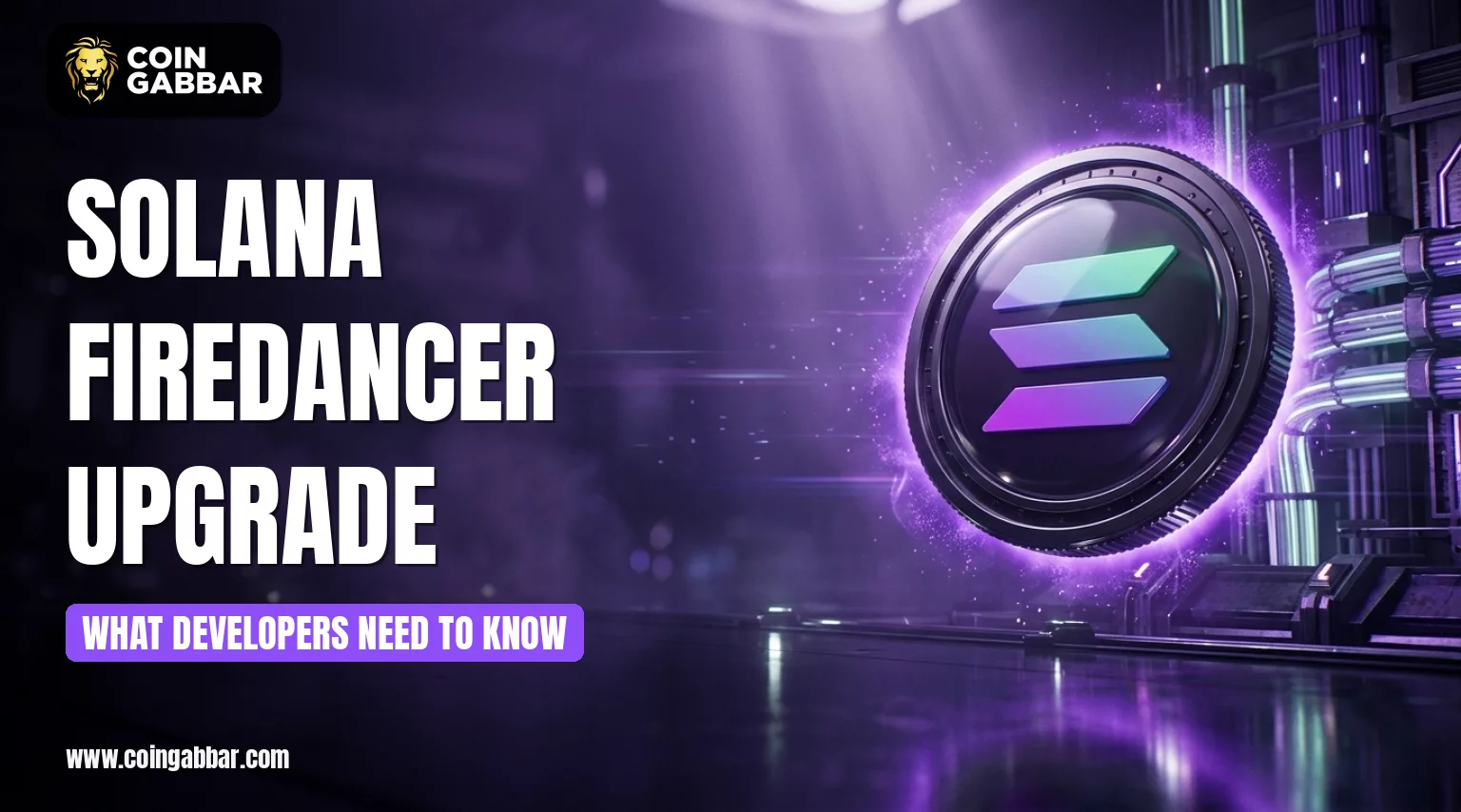
Solana Firedancer Upgrade Explained: Future of Network Scaling
Few Solana topics spark as much talk as Firedancer, and few are as often misunderstood. The Solana Firedancer Upgrade is not a change to Solana's rules. It is a new piece of software that validators can run.
This guide explains the Solana Firedancer Upgrade, where it stands and what it means for network scaling.
The Solana Firedancer Upgrade refers to Jump Crypto's validator-client, written from scratch in C and C++.
It aims to raise performance and add client diversity, and it is rolling out gradually across mainnet.
What Firedancer Really Is
Validators run software called a client. Solana's original-client family is Agave. Firedancer is a second, independent-client with no shared code, according to its repository.
That independence is the point, because a bug in one client should not take down every validator.
So the Solana Firedancer Upgrade changes what validators run, not what users do. Programs and wallets work as before. The Solana program model guide explains how smart contracts execute.
Why Solana Wanted Another Client
Relying on one codebase concentrates risk. When a flaw appears, the whole network can feel it.
Solana has seen outages in the past, and the Solana network outages guide covers how recovery works.
Client-diversity spreads that risk across different codebases. Firedancer's own documentation also stresses a restrictive sandbox design, which is meant to improve security.
Frankendancer vs Full Firedancer
Client | What it is | Status |
Agave | Original Solana client family | Widely deployed |
Frankendancer | Hybrid using Firedancer networking and block production, with Agave execution and consensus | Reported on mainnet since September 2024 |
Full Firedancer | From-scratch-client with no Agave code | Reported live on mainnet in December 2025, rolling out gradually |
Unchained reported that full Firedancer went live after more than 100 days of testnet operation and over 50,000 blocks without major issues.
Later quoted a founding engineer saying it was running in production, with a deliberately slow rollout.
Where Adoption Stands
Numbers differ widely. One vendor blog puts full Firedancer near 14% of stake and the hybrid near 26% in mid-2026.
Another source reports a combined figure of roughly 14% by April 2026. These estimates do not match, so treat any single percentage with caution and check live validator trackers before quoting one.
What About One Million TPS?
The Solana Firedancer Upgrade is often linked to a long-term goal of one million transactions per second.
Unchained calls that a goal, not a current network rate. Lab benchmarks and live tests reported by vendors are not the same as sustained everyday throughput.
Real speed also depends on demand, program design, other validators and network conditions.
A faster-client helps, but it cannot lift limits set by the slowest part of the system. The Solana Firedancer Upgrade is a step toward scale, not a finish line.
What Changes for Users and Builders
Holders: no action is needed, and wallets keep working.
Developers: program logic stays the same, though faster block production may help latency-sensitive apps. The Solana AI projects guide shows who might benefit.
Payment apps: speed and reliability matter most here, as the Solana payments article explains.
Validators: operators choose which client to run and should read the official docs first.
Firedancer vs Alpenglow
These are separate efforts. Firedancer is a client, while Alpenglow is a proposed consensus change.
The Solana news page tracks Alpenglow updates, which remain in development until they ship. Anyone reading the Solana Firedancer Upgrade headlines should keep the two apart.
How to Follow Progress
Read the official Firedancer docs and release notes.
Check live validator trackers for stake share by client.
Note the date of every figure you see.
Compare at least two sources.
Treat vendor blogs as opinion, not audit.
Security and Risk Checks
New code risk: a young client can hide bugs, and one flaw could affect every validator running it.
Uneven stake: heavy concentration on one client weakens the diversity benefit.
Fake airdrops: scammers use Firedancer buzz to push bogus tokens and claim pages, so use only official links.
Not a price signal: the Solana Firedancer Upgrade says nothing about SOL's price.
Outage risk remains: diversity reduces single-client failure but does not eliminate outages.
Method limit: this guide reflects documentation and press reading, not independent measurement, and is not financial advice.
Final Thoughts
The Solana Firedancer Upgrade is best seen as plumbing. A second independent-client makes Solana more resilient, and a faster one could lift its ceiling over time.
Yet adoption is gradual, claims vary and headline speeds are targets. Readers who check dates, compare sources and separate Firedancer from other efforts will see the Solana Firedancer Upgrade for what it is: meaningful progress, not instant transformation.
Disclaimer: This article is educational information about the Solana Firedancer Upgrade, not financial or investment advice. Crypto assets are volatile and can lose all value. Rollout details and figures change. Nothing was tested. Verify details through official Solana and Firedancer sources and consult a qualified professional.