South Korea Crypto Exchange Security: FSC Calls for Urgent Action

South Korea Crypto Exchange Security Is Back in Focus
Crypto users trust exchanges to keep their funds safe. But a single hack can put that trust at risk. Recent events have raised fresh concerns about wallet safety and fund checks.
South Korea is now taking a closer look at local crypto exchanges. The move follows a major theft at Binance. The country's financial watchdog wants firms to improve how they protect user funds.
South Korea FSC Calls Emergency Meeting After Binance Hack
South Korea's Financial Services Commission (FSC) held an emergency meeting on November 2, 2026. This update came from the FSC official X account, Korea.
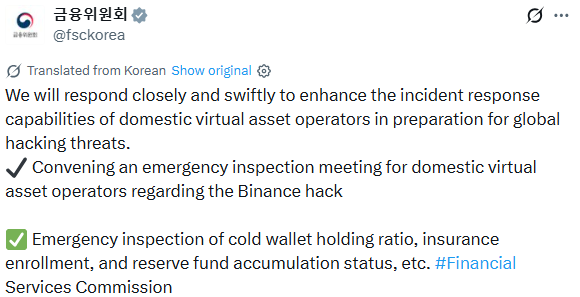
It met with the Financial Supervisory Service (FSS), the Korea Financial Security Institute, DAXA, and major crypto firms.
The main goal was clear. The FSC wanted to review exchange security and check how the company would handle a major hack.
The meeting came after a large theft at Binance on October 29. About $6.3 billion in crypto assets was taken from its hot wallet, based on figures cited by South Korean reports.
A hot wallet stays online and helps an exchange handle daily deposits and withdrawals. This makes it useful for fast payments. But it also faces online risks.
The FSC reviewed how local exchanges control access to their systems. It also looked at wallet approval tools and the steps used to sign withdrawals. The regulator wants firms to act fast and close gaps in their systems. This has put South Korea Crypto Exchange Security in focus across the crypto market.
FSC Wants Exchanges to Hold More Crypto in Cold Wallets
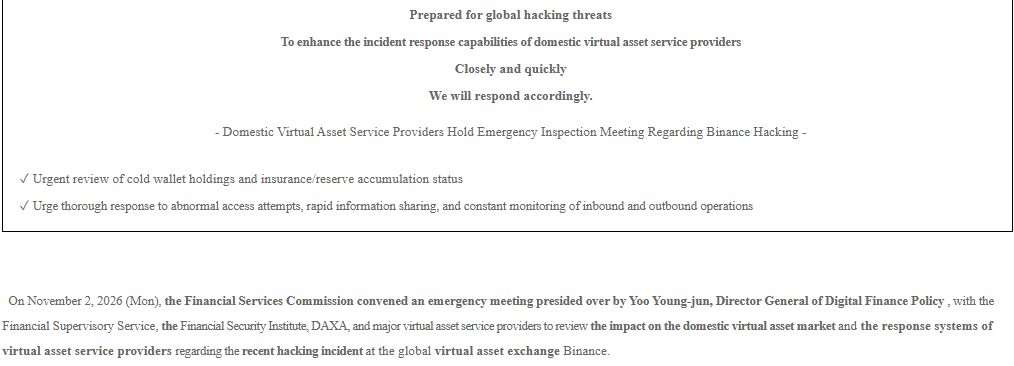
Cold wallets keep crypto assets offline. They are not linked to the internet during normal use. This can lower the risk of online attacks.
Hot wallets work in a different way. They stay online so users can send and receive funds. Exchanges need them for daily trade and cash flow.
South Korean law already sets an 80% cold-wallet rule. Crypto firms must keep at least 80% of user assets in cold storage.
According to the press release, the FSC has now asked firms to raise that share where possible. The aim is to keep more user funds away from online threats.
This is not a new 80% rule. That limit was already in place. The latest move asks exchanges to review their current safety plans and take extra steps.
A larger cold-wallet share can limit the funds exposed to online attacks. Yet no wallet system can remove every risk.
Crypto Exchanges Face Stronger Checks on Withdrawals
The FSC also wants exchanges to watch deposits and withdrawals at all times. This can help teams spot strange activity early.
Fast checks matter when a wallet or account shows signs of a breach. A quick response may help stop more funds from leaving an exchange.
The regulator also wants firms to keep more staff ready for security events. These teams should be able to act when they see a threat.
Exchanges have also been asked to report and share details of odd access attempts. This can help other firms spot similar risks and take action.
These steps show that exchange safety goes beyond wallet storage. Firms also need strong login controls, safe approval tools, and clear response plans.
South Korea Asks Crypto Firms to Build Extra Reserves
The FSC has also asked crypto firms to set aside more reserves. These funds can help firms deal with losses after a security event.
Insurance and reserve funds are key parts of user protection. They can help an exchange meet its duties if a major loss takes place.
But users should not treat reserves as a promise of full payment in every case. The terms and level of cover can vary from one firm to another.
The FSC has not set a new reserve target in its public notice. It has asked firms to review their plans and take extra steps to protect users.
What South Korea Crypto Exchange Security Means for Users
The latest review puts user fund safety at the center of the debate. It also shows why cold storage, fund checks, and fast alerts matter.
Crypto users should take basic steps to protect their own accounts. Use a strong password and turn on two-factor login. Never share a login code or wallet recovery phrase.
Users should also read exchange notices with care. Check for updates on wallet safety, deposit limits, and withdrawal services.
The FSC has not named a new cold-wallet rate or a set date for the extra steps. More details may come as talks with the industry continue.
What Comes Next for South Korea's Crypto Exchange Security?
South Korea wants local crypto exchanges to improve their safety plans after the Binance hack. The FSC has called for more cold storage, live fund checks, faster alerts, and extra reserves.
The next step will be to see how each firm acts on these requests. Clear updates from exchanges will help users track the changes.
For now, the key issue is simple. Crypto firms must show that user funds are safe and that they can respond fast when a threat appears.
YMYL Disclaimer: This article is for news and learning only. It is not financial advice. Crypto assets carry risk, and exchange security measures cannot prevent every loss. Always check official notices before making a decision.






