Stablecoin Crypto News: Japan’s Big Banks Joint Yen Stablecoin Test


Why Did Japan’s Three Megabanks Join Forces on a Yen Stablecoin?
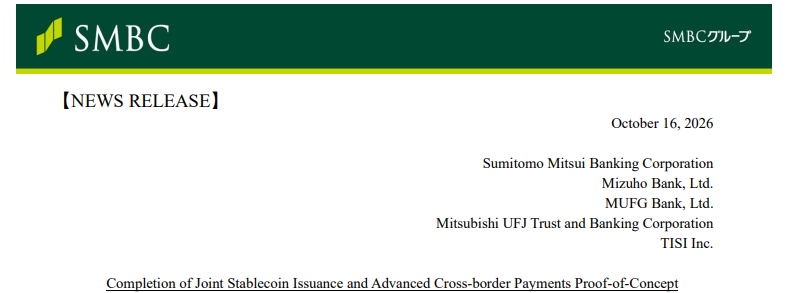
Stablecoin Crypto News out of Tokyo: Japan’s three largest banks have shown they can run one yen stablecoin together. Mizuho, MUFG and SMBC finished a seven-day trial in July, and the joint release came out on October 16, per the official press release. A trust bank and a systems firm joined the test. Live use is the next goal.
The bigger question is what changes for ordinary users, and who ends up controlling this money.
Stablecoin Crypto News: How the Three Megabanks Ran the July Test
The trial ran from July 17 to 23, 2026. Mitsubishi UFJ Trust and Banking and systems firm TISI joined the three banks. The key details:
Legal form: the coin was issued as a trust right under Japan’s Payment Services Act
Structure: the three banking institutes acted together as principal trustees, with the trust bank as agent trustee
Platform: SMBC supplied the blockchain system, which TISI built
Tested: issuance, transfer and redemption, plus multi-bank operations, AML/CFT checks and system reliability
Use case: simulated payments between Mitsubishi Corporation’s Japanese and overseas offices
TISI also posted a Japanese-language announcement.
What the Yen Stablecoin Means for Users, Firms and Cross-Border Pay
Most people will not hold this coin directly. The design targets payments and remittances, and circulation is limited to users who passed bank identity checks, though the banking group say the design may still change. Still, the effects could reach ordinary customers through the firms and banks they use:
Speed: settlement can be faster than traditional international transfers.
Automation: smart contracts could run some payments on their own.
Safety: trust assets sit in bank deposits to keep the value steady.
Timing: live transactions are targeted within fiscal 2026, which ends in March 2027.
Euro, Hong Kong Dollar and Won Stablecoins: Where Each Plan Stands
Japan is not alone. Stablecoin Crypto News from other regions shows the same bank-led pattern:
Euro: Qivalis, backed by 37 banks in 15 countries, won an e-money licence from the Dutch central bank, per its announcement. It still needs to publish a white paper and has no fixed launch date.
Hong Kong: the HKMA granted its first licences on April 10, 2026, to HSBC and a Standard Chartered-led venture. Both plan HKD-pegged coins.
South Korea: a won stablecoin law is still in negotiation. The dispute centers on whether banks must own at least 51% of issuers, and the government aims to pass it by the end of 2026, per US trade officials.
Stablecoin Market Today: $302.92B Supply and USDT Dominance Figures
Stablecoin Crypto News also needs scale for context. DefiLlama data shows:
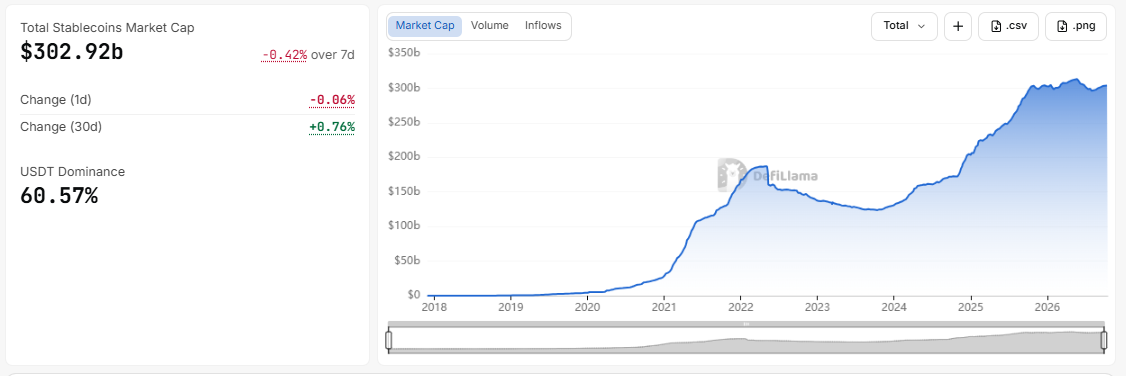
Total stablecoin market cap: $302.92B
7-day change: down 0.42%
1-day change: down 0.06%
30-day change: up 0.76%
USDT dominance: 60.57%
Supply has moved sideways near its high. Dollar-linked tokens still lead, so a bank-issued yen coin enters a market built around the dollar. No supply target has been announced.
What Bank Stablecoins Reveal About Decentralized Money and Control
These fiat-based coins run on blockchains, but they are not decentralized. Banks issue them, regulators supervise them, and in Japan only verified users can hold them. What the trend shows is a shift in rails and in rivalry:
Rails: the largest banks now accept on-chain settlement.
Control: issuers stay centralized, so the open-access model is not what banks are building.
Rivalry: euro, yen, won and HKD plans challenge a market built on the dollar.
Assets like Bitcoin sit outside this system, with no issuer at all.
The next tests are concrete: a first live yen payment before March 2027, the Qivalis token launch and Seoul’s bill by year-end. If they land on time, Stablecoin Crypto News will shift from pilots to everyday payment rails run by banks.
Disclaimer: This article is for informational purposes only and does not constitute financial or investment advice. Crypto markets carry significant risk. Always do your own research before making any investment decisions.






