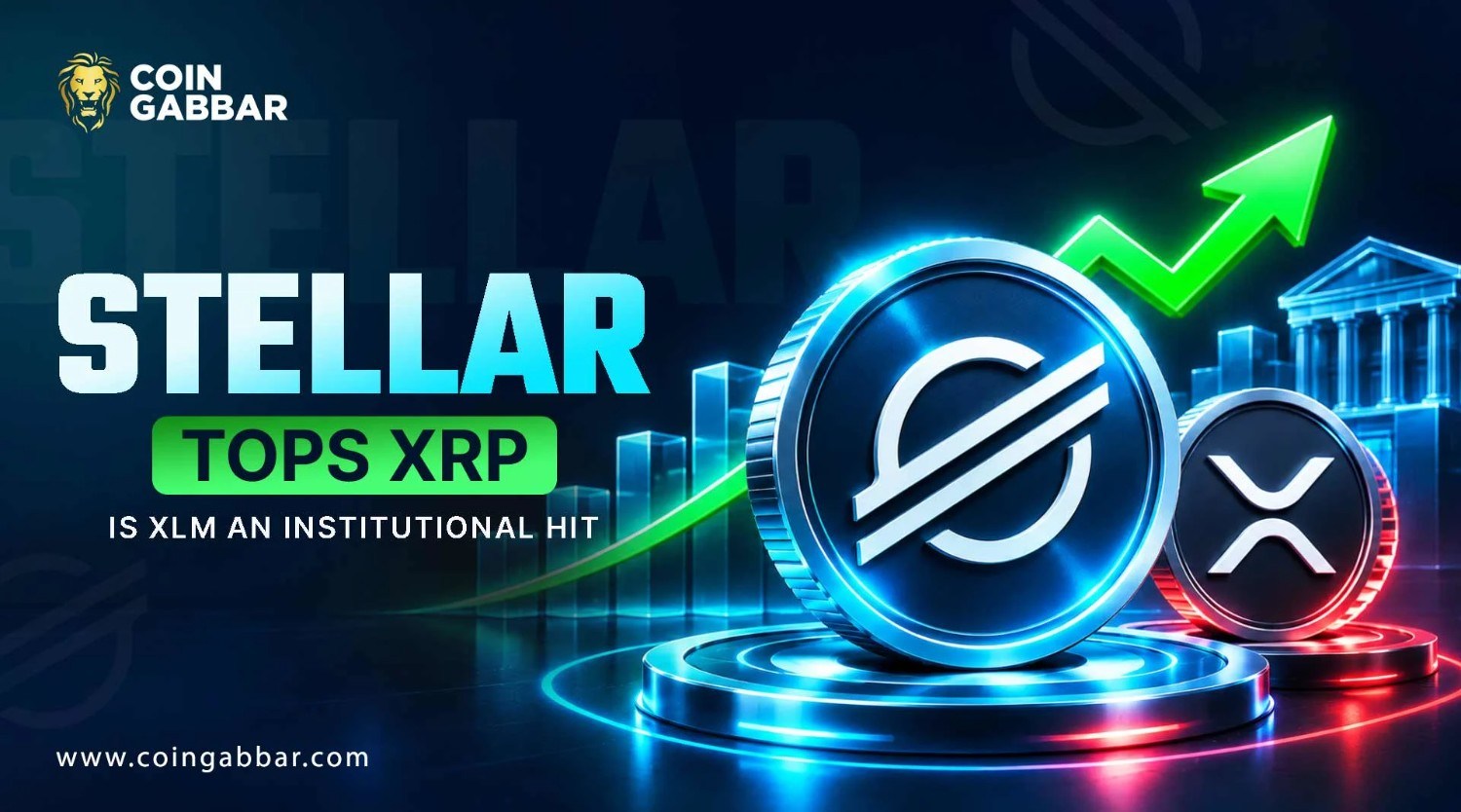
Stellar tops XRP in tokenized fund growth, and the gap isn't small. In a 24-hour window reported on November 26, 2026, tokenized fund value on the network rose $80.4 million. The XRP Ledger rose $36.3 million.
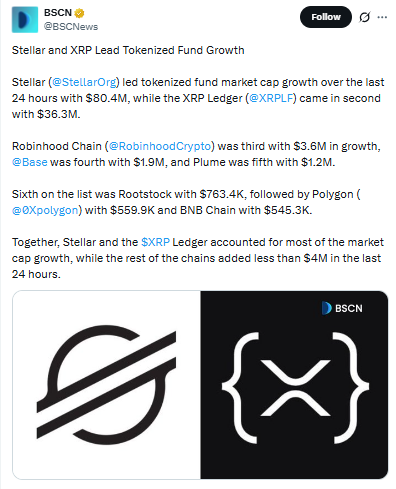
The comparison also circulated in social media posts. On-chain funds are traditional products, like money market funds, that exist as digital tokens on a blockchain.
Stellar's growth reflects real activity from established issuers, including Franklin Templeton and Spiko. Its reported daily gain beat the XRP Ledger's.
But the figure measures change in fund value, not purchases of XLM. Network adoption doesn't automatically mean token demand.
Here's the breaking part. Stellar led. The XRP Ledger came second. Robinhood Chain followed with $3.6 million, Base with $1.9 million, and Plume Network with $1.2 million. Every other major chain stayed under $4 million.
Wording matters here. The figure shows growth in on-chain fund value, not net investor deposits.
Value can rise through new issuance, fewer redemptions, or valuation changes. The data covers funds only, not all real-world assets.
Franklin Templeton and Spiko drove most of November's growth. Both issue regulated money market products on the network.
One weekly report for the period through November 22 put total growth near $207.2 million. Franklin Templeton added $108 million, and Spiko added $68.2 million. Together, that's $176.2 million, or about 85% of the weekly total. Two issuers, most of the growth.
Turns out, trading shows the same pattern. Dashboard figures cited in a market update put Aquarius at about 97% of Stellar's decentralized exchange (DEX) volume over seven days.
A DEX lets traders swap tokens without a middleman. When one app dominates, liquidity rests on a single point. Concentration cuts both ways. If one issuer redeems, the headline number can drop fast, while more issuers would spread that risk.
The daily figures come from one on-chain analytics snapshot covering 24 hours, reported on November 26, 2026. They track on-chain fund value on each network.
They don't include every on-chain asset category, and they don't reveal who bought what. That's why a headline saying Stellar tops XRP needs context. Weekly and quarterly numbers can tell a different story. Daily data works best as a signal, not a verdict.
Stellar was built for fast, low-cost cross-border payments and asset issuance. That made it a natural venue for on-chain funds. Low fees and stablecoin settlement may add to the appeal. And issuers like Franklin Templeton and Spiko already run regulated products there.
Ethereum still leads on-chain funds, so Stellar's win is against XRP's daily pace, not the whole field.
Three metrics often get mixed up. Tokenized fund value covers funds only. Real-world assets (RWAs) are a wider group, including bonds and other off-chain assets that exist as tokens. Real-world asset tokenization explains the difference.
Stellar's tokenized asset base grew 548% year over year, reaching about $4.5 billion by mid-November. Reports place Stellar second behind Ethereum for tokenized funds.
Separately, XLM's market cap is the total value of every coin in circulation. With supply near 35.5 billion and a price near $0.13, it lands in a similar range. Different snapshots. Different meanings. Different dates.
Funds can settle in USD-pegged stablecoins. So a fund worth billions may need only small amounts of XLM for network fees. Demand for the rails isn't demand for the coin.
XLM looked set to benefit, or so the headline implied. Actually, that's too generous. As of November 26, 2026, XLM traded near $0.1276, up about 4.2% in a day. But it was down about 23.4% over 30 days, based on that same market update.
The stance here is plain. Adoption is real, but the price chart stays weak until buyers prove otherwise. Coinbase suspended its XLM/BTC pair on November 25, though USD trading stays open. A pair suspension isn't a token delisting.
The table below sets the latest reported figures side by side.
Factor | Stellar (XLM) | XRP Ledger |
24-hour fund value growth | $80.4 million | $36.3 million |
Main fund issuers | Franklin Templeton, Spiko | Not covered in the data reviewed |
Position in tokenized funds | Second to Ethereum | Behind Stellar on daily growth |
Core risk | Issuer concentration | Smaller growth |
Analysts often compare XRP vs Stellar side by side. But one day doesn't crown a winner. And that race is far from settled. Will Stellar's lead hold once the daily numbers cool? Quarterly data should show whether this growth is steady or temporary.
Protocol 30, called Bell, went live on mainnet on November 23. It adds muxed contract addresses with customer IDs, opt-in post-quantum signature checks for smart contracts and millisecond ledger timestamps.
It doesn't make the network quantum-safe, and it doesn't speed up transactions by itself. But it gives builders better tools. A longer plan targets quantum-safe account signers by the end of 2027. Details remain unconfirmed.
DTCC has announced a planned tokenized securities connection to Stellar, targeted for the first half of 2027. That's a plan, not a finished rollout.
The stronger signal is who's issuing. Regulated asset managers back the growth. The main concern is concentration across issuers and trading venues. The biggest unknown is stickiness. Fund value can leave as fast as it arrives, and it's unclear how much is new money versus existing holdings.
Fees stay small, so even large fund growth adds little direct fee demand for XLM today. Readers should verify issuer names, snapshot dates and metric definitions behind each number. Tokenized money market funds work differently from trading tokens.
Stellar tops XRP on tokenized fund growth right now. The network story is strong, built on real issuers.
The coin story is weaker. Fees stay small, concentration remains high, and price hasn't confirmed anything.
Readers tracking XLM institutional adoption should treat each daily figure as one data point, not a trend. Next checks are fairly simple: new issuers, the next quarterly data, and whether XLM reclaims the $0.1495 level cited in earlier market analysis. Until then, Stellar tops XRP in tokenized funds, but XLM hasn't followed.
Disclaimer
This article is for informational purposes only and isn't financial advice. Crypto assets are volatile and carry a high risk of loss. Readers should do their own research before making any decision.
Frequently Asked Questions (FAQ)




Owned by:-
DCG Tech FZCO, UAE
Delivery Partner:-
Gabbar MediaTech Pvt Ltd.
Copyright © 2026 Coin Gabbar. All Rights Reserved