Telcoin Wallet: How It Connects Traditional Banking With Crypto

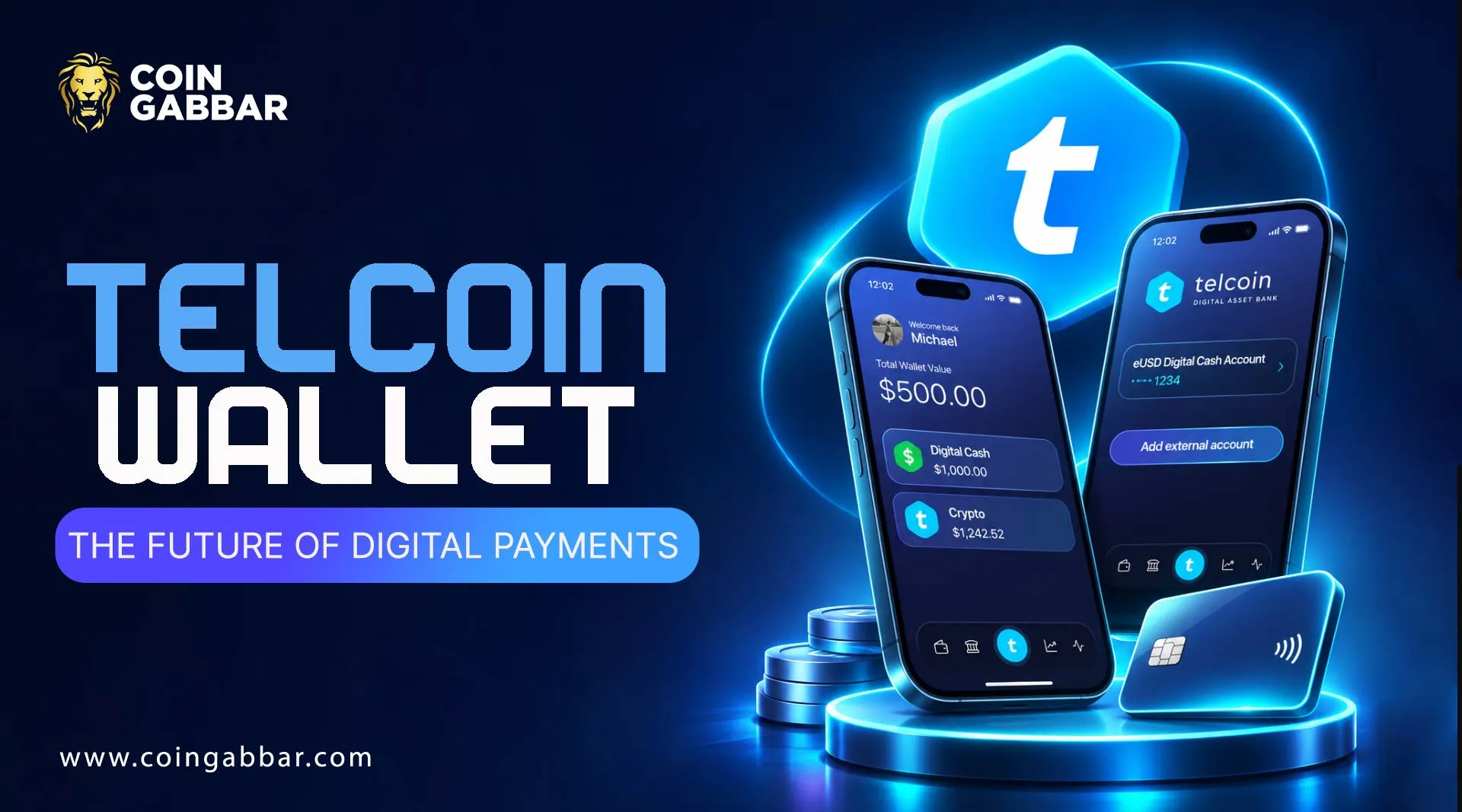
How Does Telcoin Wallet Combine Digital Cash and Crypto Payments?
Sending money abroad usually means slow transfers and high fees. The Telcoin wallet tries to fix that by putting remittances, stablecoins and crypto swaps into one app.
It comes from Telcoin, a company that now also runs a chartered digital asset bank in the US. This guide covers what the app does, how to set it up and where it falls short.
Key Takeaways
The app combines remittances, Digital Cash stablecoins and swaps for 100+ digital assets.
Its eUSD is described as the first Digital Cash stablecoin issued from a regulated US bank.
Many features depend on location, so check availability before signing up.
What Is Telcoin?
Telcoin describes its mission as banking the Internet of Money. It unites blockchain technology, digital banking and telecommunications under one platform.
The Telcoin Association, a non-profit Swiss Verein, governs the platform. Telcoin is also a GSMA Associate Member.
Its native token is TEL. The company is also building Telcoin Network, an EVM compatible chain secured by mobile operators. Its timetable shows a code freeze on November 16, genesis on December 2 and a public launch in mid-December.
Source: official website.
Detail | Telcoin |
Company | Telcoin Holdings Pte. Ltd. |
Governance | Telcoin Association (Swiss non-profit) |
Bank | Telcoin Digital Asset Bank (Nebraska charter) |
Stablecoin | eUSD and other Digital-Cash |
Wallet network | Polygon (ERC20 assets) |
Security | SOC 2 Type I certification (May 2025) |
Telcoin Wallet App: Three Tools in One
The official wallet page groups the app into three parts.
Remittances. Users can send fiat to more than 20 countries for 2% or less in total fees, where available. That is a target cost for a US$200 transfer, so actual fees can vary.
Digital Cash. These are multi-currency stablecoins that sit at the base of Telcoin’s mobile financial services.
Digital Assets. Users can store, send and swap more than 100 assets on popular DeFi protocols.
Telcoin Wallet Features
The app stores compliant ERC20 assets on the Polygon network, including TEL and Cash.
Its newest service is eUSD. Users send USD by ACH or wire from a linked bank account and receive the same amount of eUSD in the app. Telcoin Digital Asset Bank charges nothing for this deposit, though an outside bank may charge for wires. ACH is usually free but slower.
Once held, eUSD works like USDC or USDT. Users can swap it for supported crypto without leaving the app.
Digital Cash now covers many currencies on the Polygon network.
Region | Digital Cash |
US | eUSD |
Americas | eCAD, eMXN |
Europe and UK | eGBP |
Asia-Pacific | eAUD, eHKD, eJPY, eNZD, eSGD |
Africa | eCFA, eZAR |
Other | eSDR |
An euro version, eEUR, is listed as coming soon under EU MiCA rules.
What Digital Cash Is Meant to Do
Digital-Cash is the base layer behind the app. Telcoin points to three main uses.
Cross-border payments. The goal is fast and affordable transfers, with local account rails in more countries over time.
Direct merchant payments. Telcoin compares it to handing a merchant a $20 bill, but digitally.
Blockchain banking. This would give users one-click access to on-chain deposit, loan, insurance and settlement products.
The same rails also target telecoms. Examples include inter-carrier settlements and treasury management for large multinationals.
Telcoin Digital Asset Bank
Behind eUSD stands Telcoin Digital-Asset Bank. Its charter came from the Nebraska Department of Banking and Finance in November 2025.
Telcoin calls it the first bank charter explicitly authorized to connect consumers with DeFi. On June 23, 2026, it launched on-chain bank accounts for US residents.
Telcoin also plans monthly auditor attestations that compare reserves with Digital-Cash in circulation. That is a plan, so readers should check whether reports are published.
Telcoin Wallet V4 and the Move to V5
Telcoin wallet V4 arrived on February 7, 2025. It laid the groundwork for Digital-Cash transactions and began the next phase of the platform.
The current sign-up flow now refers to Wallet V5. Readers should confirm which version the app store shows today.
How to Set Up Telcoin Wallet
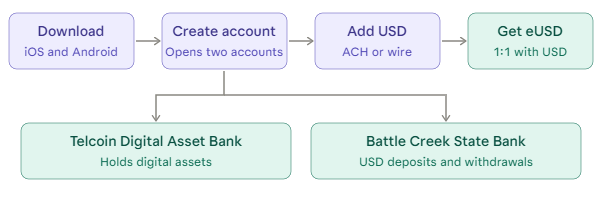
Setup takes a few minutes. The steps below follow the official flow.
Start with the Telcoin wallet download. The app is on the Apple App Store and Google Play.
Create an account. Onboarding opens two linked accounts. One is a Telcoin Digital Asset Bank account for assets. The other is a Battle Creek State Bank account for USD deposits and withdrawals.
Add USD. Send an ACH or wire from the bank account.
Receive eUSD. The balance arrives in the app at 1:1 with USD.
Bank features target US residents, so users elsewhere should check the support center first.
Telcoin Wallet vs Other Crypto Wallets
Many general crypto wallets focus on storing and swapping. The comparison below shows where this app differs.
Feature | Telcoin wallet | Typical crypto wallet |
Fiat remittances | Yes, where available | Often not built in |
Linked bank account | Yes, via two bank accounts | Rarely |
Regulated stablecoin | eUSD from a US bank | Usually third-party stablecoins |
DeFi swaps | 100+ assets | Common |
Local currency stablecoins | Many Digital-Cash types | Limited |
The edge is the bank link. The trade-off is that regional limits can apply.
Security and Trust
Telcoin completed SOC 2 Type I certification in May 2025. BD Emerson carried out the audit, and the company says ongoing audits continue.
A public trust page and a status page are also listed on the site. Even so, certification does not remove market risk.
Telcoin itself warns that digital-assets can be high-risk and may lose principal. They carry no government insurance or guarantee.
Who Should Use It
The app suits people who send money across borders often and want lower fees. It also fits US residents who want a direct link between a bank account and stablecoins.
Casual users who only want a simple crypto wallet may find the bank setup more than they need.
Telcoin Wallet Review: Pros and Cons
Pros
Remittances, stablecoins and swaps live in one app.
A regulated bank issues eUSD.
The fee target for remittances is 2% or less.
SOC 2 Type I certification supports its security claims.
Cons
Several features depend on region.
Outside wire transfers may cost extra.
Assets can lose value and carry no insurance.
Some plans, such as eEUR and attestations, are not yet live.
Conclusion
The app aims to bridge regular banking and crypto in a single place. Its strongest points are the bank link and the regulated eUSD.
Before using it, check regional availability and read the terms. Start small, and treat any asset as high risk.
Disclaimer: This article is for information only and is not financial advice. Digital assets are volatile, and you may lose money.