UK FCA DeFi Rules Draft: What Changes for DeFi Firms by Q1 2027

FCA DeFi Rules Proposal: How Existing UK Regulations Apply to DeFi?
The UK Financial Conduct Authority (FCA) published draft DeFi guidance, called GC26/7, on October 21, 2026. The FCA DeFi Rules proposal covers operational resilience and financial crime risks for regulated firms that use decentralized finance.
The public can send feedback until November 18, 2026. One point matters first. This is not a ban on DeFi. The regulator says it wants to explain how current requirements apply.
FCA DeFi Rules at a Glance: Key Dates, Risks and Proposals
| Key detail | What readers should know |
| Regulator | |
| Consultation | GC26/7 |
| Published | October 21, 2026 |
| Main focus | Operational resilience and financial crime prevention |
| DEX market share | About 14% to 19% of global crypto spot volume, January to August 2026 |
| Feedback deadline | November 18, 2026 |
| Expected final guidance | Q1 2027 |
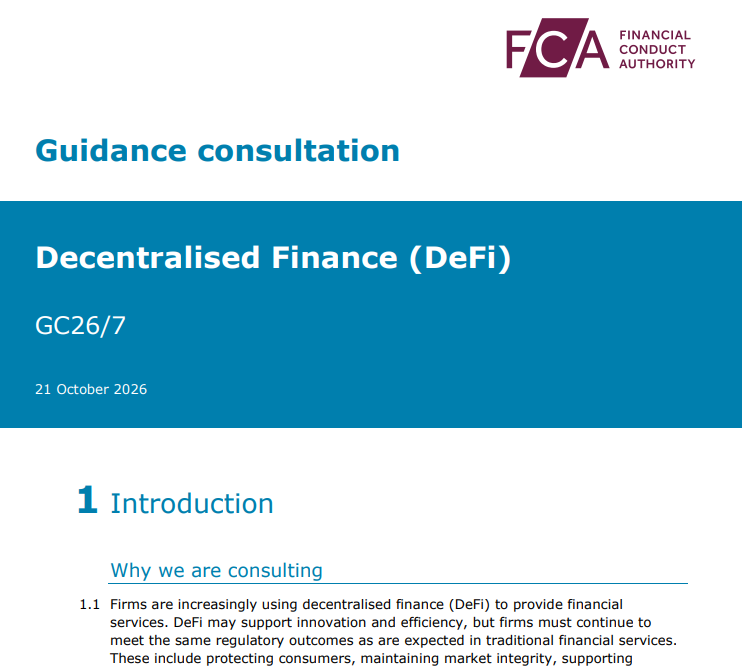
Source: FCA consultation paper GC26/7.
Are FCA DeFi Rules New Regulations or Clarifications of Existing?
GC26/7 is proposed non-Handbook guidance. The FCA says it clarifies existing requirements and does not create new duties. The FCA DeFi Rules point to three frameworks. These are SYSC 15A on operational resilience, SYSC 6 on compliance and financial crime, and the Money Laundering Regulations (MLRs).
Which rules apply depends on the regulated activities a firm carries out. The FCA tells firms to check their own obligations before using the guidance. So the answer to a common question is no. DeFi is not being banned or newly regulated across the board. The FCA also says that using smart contracts does not automatically remove the need for authorization.
Smart Contracts, Bridges, Oracles: Which DeFi Risks Are Under Review?
Under the FCA DeFi Rules, regulated firms should look at how DeFi can disrupt their services. The draft names four risk areas:
-
Smart contracts: coding flaws or exploits can stop a service or cause losses.
-
Cross-chain bridges: a failure at one link can block transfers between networks.
-
Oracles: wrong or delayed price data can distort how a protocol works.
-
Third-party dependencies: outside providers can create single points of failure.
The link to operational resilience is simple. A firm should know how a disruption could affect customers and should choose suitable controls.
TechFlow, citing industry data, reports that DeFi and bridge hacks have caused more than $12 billion in losses since 2016.
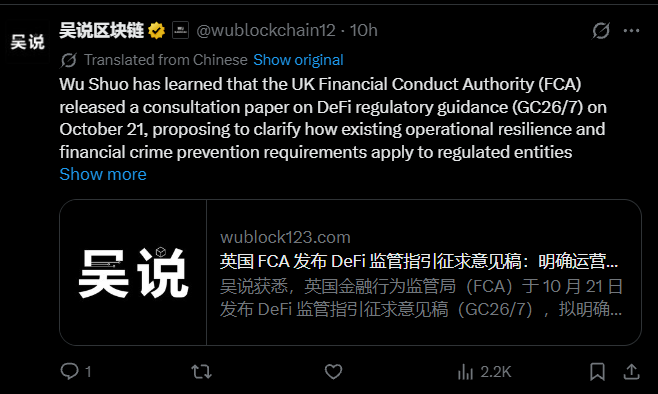
Source: Wu Blockchain
What Could DeFi Firms Need to Address?
The draft also covers anti-money laundering (AML), customer due diligence and transaction monitoring. The FCA DeFi Rules do not say that every user, wallet or protocol must complete KYC. They apply to FCA-regulated firms that interact with DeFi, help customers reach it, or offer financial services through it.
An ordinary person using a decentralized app is in a different position from a regulated firm. A firm cannot point to a smart contract and claim its duties have gone away. The FCA says any firm carrying out regulated activities in the UK must be authorized or exempt, even if it calls itself “decentralized.”
FCA DeFi Rules Timeline: Consultation Deadline and Next Steps
This timeline covers GC26/7 only.
-
October 21, 2026: The FCA publishes the draft guidance and opens the consultation.
-
November 18, 2026: Feedback closes. Responses go through the FCA website form or to GC26-7@fca.org.uk.
-
Q1 2027: The FCA plans to publish final guidance after reviewing feedback.
The FCA lists six questions. They ask whether its risk descriptions are right, whether its proposed steps work, and what other measures could reduce financial crime in DeFi.
A separate FCA paper on crypto-asset scope, CP26/36, was released the same day. It has its own timetable, and some media reports give different dates for it, so check the FCA site.
What the FCA DeFi Rules Could Mean for Crypto Businesses and Traders
For businesses, the FCA DeFi Rules may prompt a review of four areas: risk controls, third-party dependencies, customer checks and transaction monitoring. The consultation may also change how firms judge their UK compliance duties.
Market context helps here. Decentralized exchanges made up about 14% to 19% of global crypto spot volume from January to August 2026. TechFlow also reports that about 8% of UK crypto users accessed assets through decentralized exchanges in 2025.
These figures describe activity. They do not show that the guidance will raise or lower token prices. Analyst forecasts on price impact are guesses, not facts.
Conclusion: What to Watch Before FCA Finalizes DeFi Guidance
Three points stand out. Existing obligations still apply to regulated firms. The consultation centers on operational resilience and financial crime.
November 18 is the key feedback deadline. The FCA DeFi Rules will become clearer when final guidance arrives in Q1 2027. Firms and crypto news readers should follow the FCA website for updates.
YMYL Disclaimer: This article is for informational purposes only and does not constitute financial, investment, or legal advice. Crypto assets are volatile and risky. Consult official FCA publications and qualified professionals before making financial or compliance decisions.









