US Trump Tariff News: Why China Faces Biggest Risk From Fresh Duties

US Trump Tariff News: China, EU and 14 Economies Face New Tariff Risk
US Trump Tariff News today centres on a major trade move. As of November 25, 2026, the Trump administration is preparing fresh tariffs on China and 15 other economies, according to the Wall Street Journal.
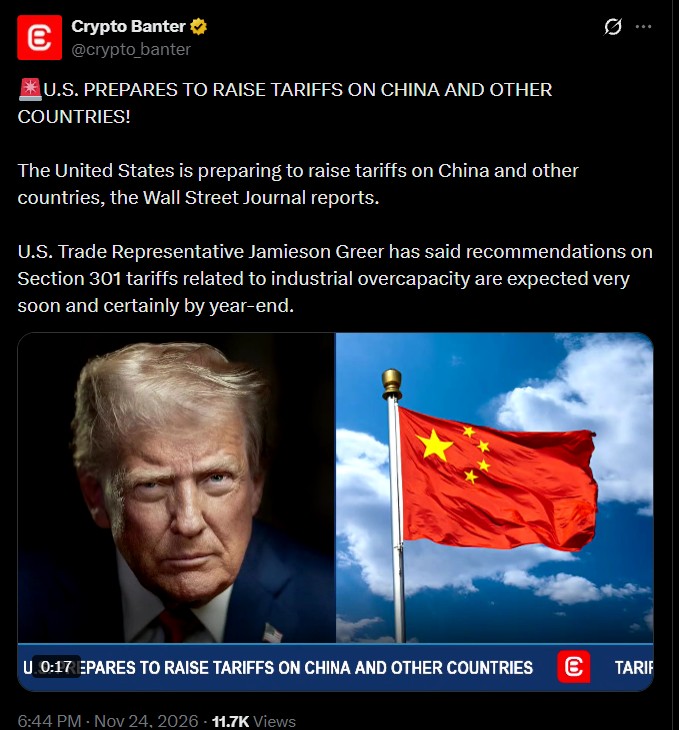
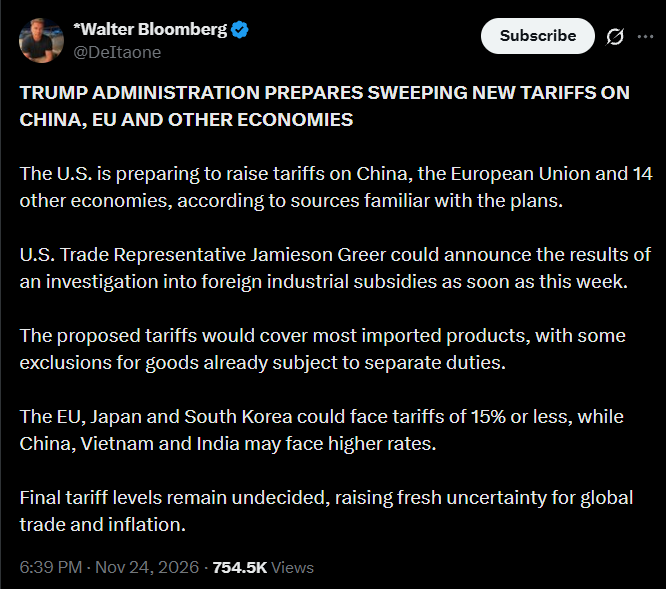
U.S. Trade Representative Jamieson Greer could announce the findings this week. China is a central target, and the outcome could shake global trade.
At a Glance
-
The U.S. is preparing fresh tariffs on 16 economies.
-
China is among the main targets.
-
The investigation began on March 11, 2026.
-
The duties could cover most imported products.
-
India and Vietnam may face higher rates.
-
Final rates and start dates are not confirmed.
Why Is Trump Preparing New Tariffs on China and Other Countries?
Washington says foreign governments back their factories with subsidies and other support. That help lets firms build more goods than markets need and sell them cheaply abroad. The U.S. argues this hurts American manufacturers.
The probe falls under Section 301 of the Trade Act of 1974. This law lets the U.S. respond to trade practices it calls unreasonable or discriminatory. Greer says excess capacity is harming the U.S. industrial base, Reuters reported.
Source: The Kobeissi Letter
China Faces Higher Tariff Risks: What Is Washington Targeting?
The administration calls China the biggest source of industrial overcapacity. It points to steel, aluminium, electric vehicles, appliances and solar products. The nation rejects the claim and says its exports reflect competitive strength.
A U.S. truce now runs to January 10, 2027, after a September 23, 2026 extension. Firstpost reports that second-term tax rates on Chinese goods are capped at 20%, on top of roughly 25% from Trump's first term.
A 12.5% forced-labour duty already applies, leaving about 7.5% of room under that cap. If the truce lapses, China's rate could rise. This is why US Trump Tariff News matters so much for Beijing.
Source: Crypto Banter X Post
Which 16 Economies Could Face New U.S. Tariffs?
The investigation covers these economies. Rates may differ based on each country's trade deal.
| Region | Economies |
| Asia | China, India, Japan, South Korea, Vietnam, Bangladesh, Cambodia, Indonesia, Malaysia, Singapore, Taiwan, Thailand |
| Europe | EU, Norway, Switzerland |
| North America | Mexico |
How Much Could the New Trump Tariffs Increase?
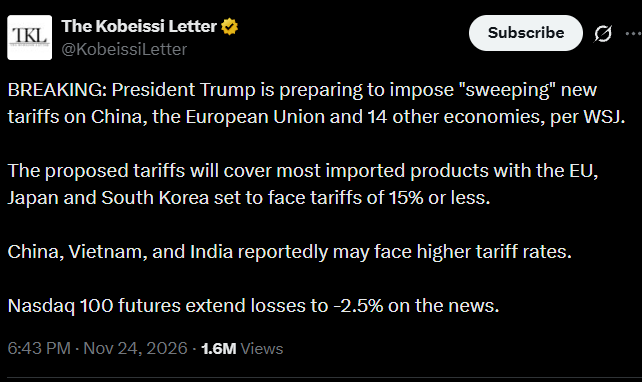
No rate is official yet. The Wall Street Journal reported that the EU, Japan, and South Korea could face 15% or less under their deals. Firstpost says Malaysia has a 19% ceiling. China, India, and Vietnam may face higher rates.
The new duties could stack, meaning they would be added on top of existing ones. That includes the 10% to 12.5% tariffs set on July 24, 2026 under a separate Section 301 forced-labour probe of 60 economies. That case faces a court challenge. Steel, aluminium and autos may be excluded because national-security tariffs already cover them.
Source: Walter Bloomberg X Post
What Could the Tariffs Mean for Users and Crypto Market Investors?
Tariff headlines can move markets fast. After the reports, The Kobeissi Letter said Nasdaq 100 futures fell 2.5%. Crypto often trades alongside risk assets like tech stocks, so US Trump Tariff News may shift market mood. No report yet links this plan to a specific crypto price move.
Everyday users may also pay more for imported electronics if costs rise. Investors may prefer to wait for the official announcement before acting, and should size risk carefully.
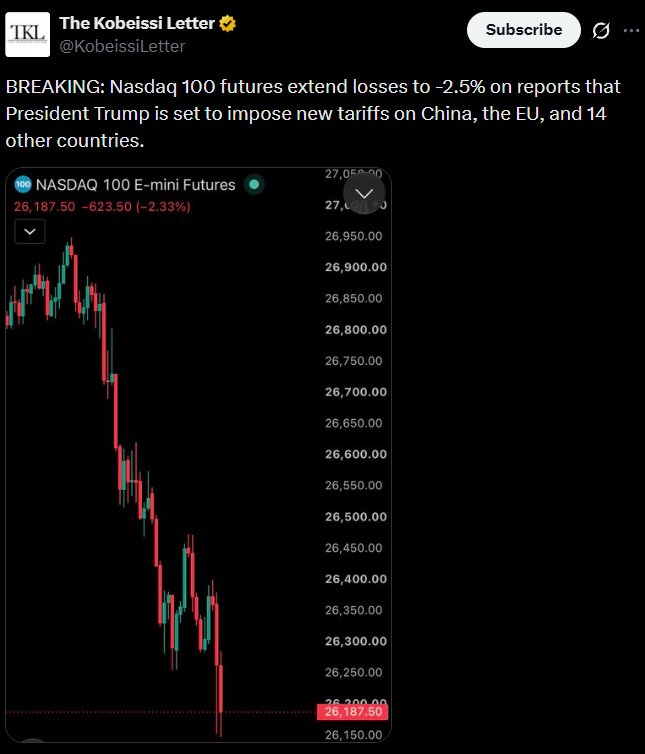
Source: X Post
What Happens Next in Trump Tariff Investigation?
Greer is expected to release the findings, possibly this week, but the timing can change. Final rates, product lists, exemptions, and effective dates remain unclear. Affected countries may respond or negotiate, which could shape the final plan.
Conclusion
The U.S. is preparing new Section 301 tariffs, with China at the centre of the probe. India, the European Union and other partners could feel the effects, along with global supply chains. The official USTR announcement will decide the actual tariff structure.
Disclaimer: This article is for informational purposes only and is not financial or investment advice. Tariff rates and trade details may change after official announcements. Crypto and market investments carry risk, so do your own research.


Frequently Asked Questions (FAQ)




