What Is NEAR Intents? Chain Abstraction Explained Simply

Why Are Cross-Chain Swaps Still So Hard for Crypto Users?
What is NEAR Intents, and why do so many crypto readers keep searching for it in 2026? It is a tool on NEAR Protocol that handles chain abstraction, which means hiding the hard parts of using many blockchains.
A user only has to say what is wanted, like trading one token for another on a different network, and a group of traders competes to complete it. This article explains how it works, what it offers, where the risks are, and what the latest near protocol news says.
How Does NEAR Intents Work Across Multiple Blockchains?
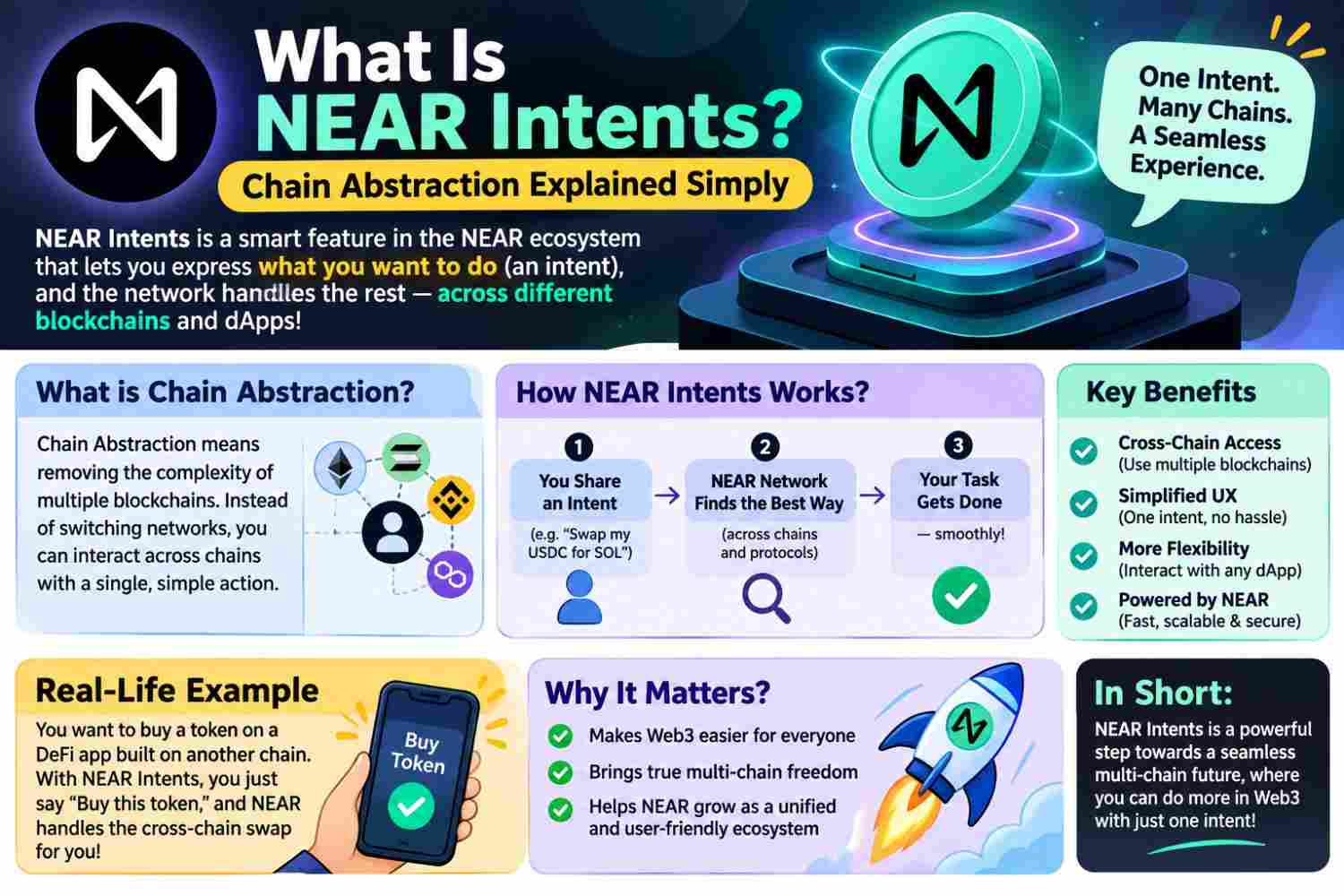
It all begins with an intent. An intent is a simple request that tells the system the result wanted, without any technical steps. The official intents documentation says this request is sent to a group of market makers, also called "solvers," who are traders offering prices.
They compete to give the best quote. When a quote is accepted, a verifier smart contract on NEAR Protocol checks the rules and completes the trade.
Chain abstraction means the blockchain works quietly in the background while the user thinks only about the goal. That is the role what is NEAR Intents plays: it connects requests to available liquidity, meaning funds ready for trading, and settles them, so many networks can be reached from one request.
Why Does Chain Abstraction Matter for Web3?
Moving between chains often means finding a bridge, approving tokens, paying fees on two networks, waiting for confirmations, and then swapping into the right digital asset.
Each step costs time and money, and many beginners give up halfway. Chain abstraction tries to fix this by putting the whole process behind a single action.
Which Features Make NEAR Intents Different From Bridges?
A regular bridge locks an asset on one chain and creates a wrapped copy on another. That adds an extra step and keeps the risk in one place. Intent-based architecture works another way. Solvers fill the request from funds they already hold, and the destination asset goes straight to the user.
The documentation lists these features:
All-or-nothing swaps: a swap either finishes fully or the funds are refunded automatically.
Fast settlement: solvers compete to fill orders quickly.
Existing wallets: users can keep the wallets they already use on supported chains.
Better prices: several solvers quote against each other to offer the best rate.
The live NEAR Intents app can confirm these points.
What Role Do Solvers Play in NEAR Intents Swaps?
Solvers watch incoming requests and compete on price and speed. The quote generation process takes place off-chain, thereby ensuring a swift experience for users, while the final affirmation still occurs on the blockchain for security purposes.
Developers can expand into the area using the 1Click API that transforms the whole process into an easy-to-follow deposit and receive mechanism.
The published fee structure shows that the 1Click API charges 0.2% for requests without authentication. Authenticated users pay no platform fee. They only cover network gas costs, which are the small fees paid to blockchains, and the price gap left by market makers.
How Can a Swap Be Made With NEAR Intents?
The following four steps constitute an average swap:
At the beginning of a swap, a starting asset, an asset to be received, and a receiving address are chosen.
The quote will be received together with the one-time deposit address on the beginning chain.
Funds go to that address, and the swap begins after confirmation.
The new asset arrives, or the funds return to the refund address if something fails.
The full flow is on the official NEAR Intents website. Beginners learning what is NEAR Intents may find this easier than manual bridging.
Which Assets and Networks Does NEAR Intents Support?
Support keeps growing, so the official chain list should be checked before any transfer. A data report updated on September 29, 2026 said the official dashboard showed more than $30 billion in total volume across 35 chains and over 100 assets.
Public reports have named Solana, TRON, and Zcash among the integrations. More details are on the NEAR Intents ecosystem page.
What Are the Real-World Uses of NEAR Intents?
It can be used for token swaps, stablecoin transfers, wallet integrations, payments, and AI agent tasks. In March 2026, the project launched Confidential Intents, which allow private execution.
Readers who ask what is NEAR Intents used for can check the NEAR platform to see these features in action.
What Do the Latest Near Protocol News and Volume Show?
News coming from the near-protocol indicates signs of explosive growth. The overall volume was reported to reach $5 billion in November 2025, $10 billion in January 2026, and $20 billion on June 3, 2026, where more than 25 million swaps were made.
One of the reports stated that the daily volume went beyond $300 million on September 18, 2026. These reports usually come from official accounts on X, and the above-mentioned numbers are verified on November 5, 2026.
What is more important is the steady growth of around a year, which signifies that its practical use is achieved rather than just a one-time event. The big open question is value capture, meaning how much of that activity helps the NEAR Protocol token. Volume is not revenue, because fees are a small share of each swap.
What Are the Benefits and Risks of NEAR Intents?
The intents documentation lists these benefits:
Fewer manual steps for cross-chain swaps.
Access to several chains from existing wallets.
Better quotes from solvers that compete with each other.
Automatic refunds when conditions fail.
An easier start for first-time users and apps that want cross-chain features.
Readers asking what is NEAR Intents and whether it deserves study should weigh the risks too. Bugs in smart contracts, unreliable solvers, price gaps, fee changes, and regulatory attention on cross-chain and privacy tools could all affect results. An audit lowers risk but never removes it, so details should be confirmed in the official docs before any funds move.
What Should Readers Remember About NEAR Intents?
In short, what is NEAR Intents has a clear answer: a system where solvers turn one request into a finished cross-chain swap, settled by a verifier contract on NEAR Protocol.
While the increasing volume growth and extensive chain support are impressive features, token value capture and fee changes still leave a lot to be desired. According to experts, it is best to begin exploring NEAR Intents by going through NEAR Intents official documentation and keeping up with the latest news in the NEAR protocol.
Disclaimer
The content of this article is for informational purposes only and should not be viewed as financial, investment, or legal guidance. Cryptocurrencies were identified as volatile and highly risky assets so that the information provided must be verified with official resources beforehand.