XAUH Gold Token Backing Fees Redemption and Risks

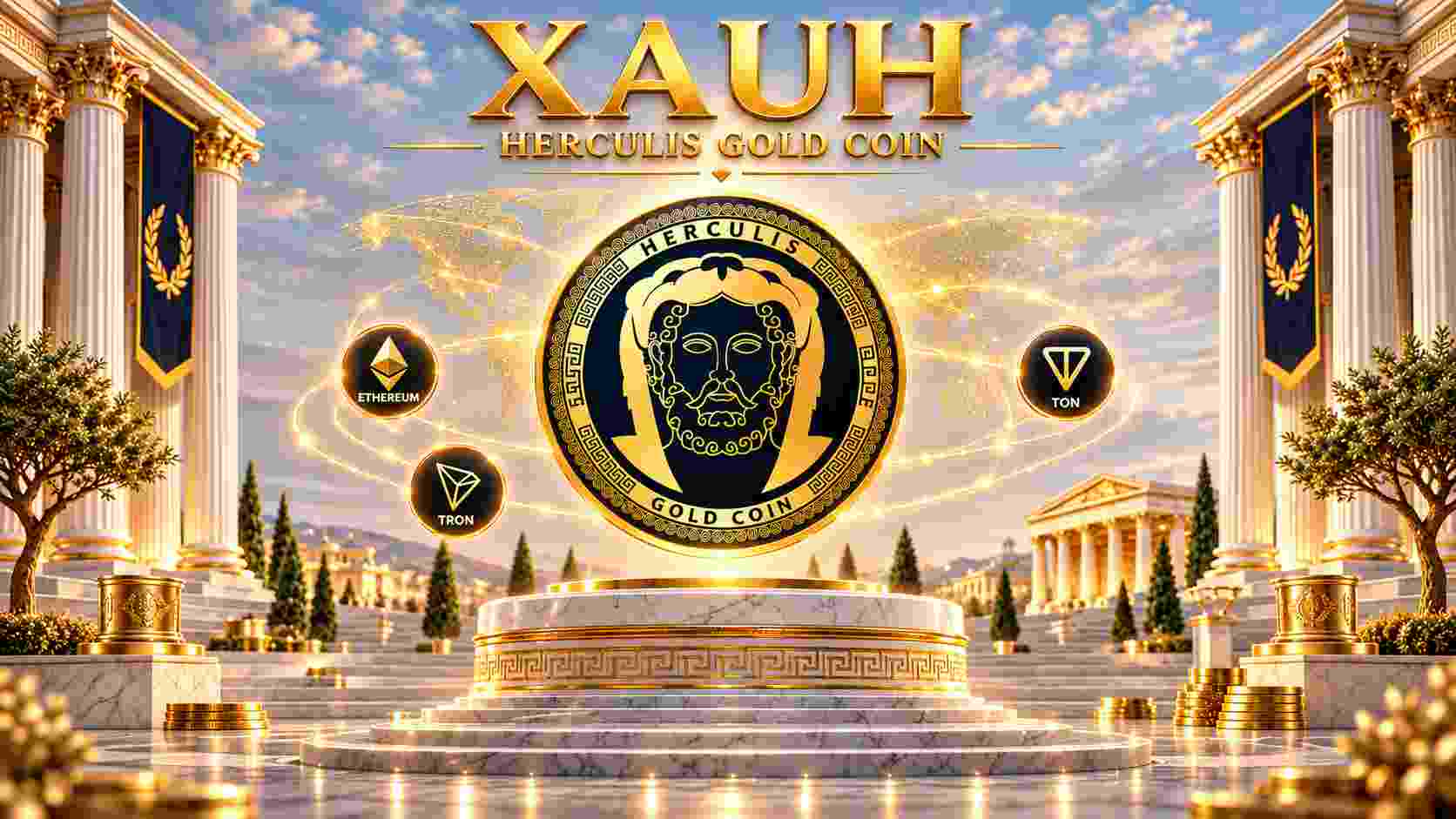
The XAUH gold token is marketed as a way to hold gold exposure through a blockchain-based asset. Its issuer describes each token as backed by one gram of 999.9 fine gold held in Switzerland. Physical redemption, however, has a much higher minimum than one token.
This overview examines the project’s published terms, proposed features and practical limitations. Statements about backing and custody are attributed to project documents; they are not an independent certification of reserves.
The broader concept is explained in CoinGabbar’s RWA tokenization guide.
What the XAUH Gold Token Is Designed to Represent
The project’s current whitepaper is Version 4.0, dated 21 May 2026. It describes a payment token linked to vaulted gold. This stated purpose should be distinguished from regulatory approval and the legal rights available to an individual holder.
Tokenization can make an asset-linked balance divisible and transferable. It does not move the physical metal onto a blockchain. Whether a holder has an enforceable property interest depends on the legal structure behind the token.
The issuer markets divisibility down to 0.01 gram. Divisibility is different from an exchange’s minimum order size, and a small token balance is not independently redeemable for a tiny physical bar. Its purchase price also changes with the market, spread and fees.
Issuer Identity and Legal Structure
The current XAUH terms identify Herculis Tokens S.A., Panama, as the issuer. A separate Herculis website identifies Herculis Trading SPC in Oman as the issuer. That inconsistency warrants clarification; Swiss gold storage should not be confused with Swiss incorporation.
The documents distinguish direct services from secondary-market trading. Buying through an exchange does not itself establish eligibility for direct redemption. A description such as “payment token” should not be read as a regulator’s endorsement.
Minting Fees and Physical Redemption
The stated model links issuance to eligible reserve gold. This is a contractual backing commitment, not a guarantee that exchange prices always equal the value of one gram. Market spreads, demand and access to redemption can affect pricing.
The published terms specify the following conditions:
-
Institutional direct tokenization: 0.30%, unless a binding agreement or fee schedule provides otherwise.
-
Physical redemption minimum: 500 XAUH, subject to verification, eligibility and available bar denominations.
-
Redemption charge: 3% for 500 grams, or 1% for one kilogram or more.
-
Additional costs may include delivery, insurance, customs, taxes and third-party charges.
A person holding less than the redemption minimum may need to sell through a trading venue. The price received depends on available buyers and execution costs. Fractional access therefore does not eliminate exit constraints.
The whitepaper describes a 0.02% transfer charge, while actual transaction costs also depend on the network and service used. Transfers cannot be assumed to cost a fraction of a cent across every blockchain.
Gold Market Context
Gold’s limited supply is part of the project’s marketing case, but the market figures need dated sources. The World Gold Council’s January 2026 report estimated 2025 mine production at 3,671.6 tonnes. Gold supply should be evaluated using current production estimates rather than an assumed continuing decline.
Scarcity alone does not establish the value or safety of a particular token. Even if gold rises, token holders remain exposed to pricing differences, issuer performance and trading conditions. There is no guaranteed return.
Security Networks and Wallet Compatibility
The whitepaper describes smart-contract reviews and multisignature controls. These measures are intended to manage technical and access risks. They do not prove that a deployed contract is immune from exploits or unauthorized changes.
A meaningful security review should identify the exact contract, audit date, audit scope and unresolved findings. It should also explain who can mint, pause, freeze, upgrade or otherwise administer the token. Network compatibility is not evidence that every deployment is live.
Before transferring tokens, users should match the contract and network with official information and the receiving platform’s requirements. A wallet’s ability to display a token does not prove that it supports trading or redemption.
Reserves Custody and Holder Rights
The project documents name Herculis House, Brink’s and Loomis as custody or vault providers. Naming providers does not establish how much gold each currently holds. A reserve assessment needs dated records and evidence linking the metal to outstanding supply.
The current terms describe contractual holder rights. The effectiveness of property rights and insolvency protection depends on executed custody arrangements and applicable law. Bankruptcy protection should therefore not be presented as an unconditional guarantee.
For tokenized gold, a useful reserve review covers physical existence, weight, purity, ownership, encumbrances and reconciliation with circulating tokens. A blockchain record alone cannot establish all of these facts.
Reports should be read for their exact scope. A report of agreed-upon procedures is not automatically an assurance opinion on the whole product. A physical count should not be portrayed as proof of every holder’s enforceable ownership.
Likewise, an oracle can publish data without independently establishing the legal status of the underlying gold. This article does not verify a live XAUH Chainlink reserve feed or independently certify the project’s reserves. Those claims should not be treated as established here.
Trading Access and Proposed Features
The issuer’s website links to BTSE, Biconomy, Uniswap and STON.fi. These links identify routes promoted by the issuer; they do not establish current liquidity, availability in every country or suitability for a particular buyer.
The project describes broader ambitions involving other assets and financial applications. Silver, fine art, lending and partner integrations should be understood as proposals unless supported by current launch documentation.
Holding gold does not itself generate income. This review does not establish a live XAUH staking service. Any separate lending or liquidity arrangement needs its own explanation of rewards, withdrawal rules and additional risks.
For context on the wider asset classes involved, see CoinGabbar’s real-world asset overview.
A Balanced Assessment
The XAUH gold token offers a proposed route to fractional gold exposure and blockchain transfers. Its practical value depends on fees, usable liquidity, reserve evidence and enforceable rights. Those factors matter more than a broad promise of cheaper access.
Readers should distinguish what an issuer promises, what an independent report establishes and what is operational today. Gold-price risk remains, alongside custody, counterparty, regulatory, wallet and smart-contract risks.
Key Takeaways
-
The issuer describes a one-gram backing model; that statement is not independent reserve certification.
-
Fractional token balances and eligibility for physical redemption are different matters.
-
Published fees, network charges and trading spreads all affect the total cost.
-
Claims about custody, audits and legal protection require evidence with a clear scope.
-
Roadmap features and potential yield should not be presented as guaranteed or already available.
Glossary
Real-world asset: A physical or financial asset represented by a token or associated legal claim.
Custodian: An entity responsible for holding or safeguarding an asset.
Redemption: Exchanging eligible tokens for the underlying asset under specified terms.
Proof of reserves: Evidence intended to connect reported assets with outstanding obligations or token supply.
Rehypothecation: Reusing assets as collateral for another obligation.
Liquidity: The ability to buy or sell without a substantial effect on price.
Sources and Review Basis
Issuer documentation: XAUH whitepaper — Version 4.0, 21 May 2026.
Contractual provisions: XAUH terms and conditions — Version 1.1, effective 24 September 2026.
Additional sources reviewed: World Gold Council, Gold Demand Trends Q4 and Full Year 2025, Supply, 29 January 2026; CertiK, Designing Proof of Reserves for Tokenized Gold, 22 February 2026; the XAUH and Herculis Trading SPC websites. Reviewed on 29 October 2026.
This is a document-based review. It does not include vault inspection, contract testing, an independent legal opinion or verification of live liquidity.
Disclaimer
This guest post is for general information and is not financial, investment, legal or tax advice. CoinGabbar does not endorse the token or guarantee reserves, returns, liquidity or redemption. Project claims may change and should be checked against current documents.
Gold and digital assets can lose value. Readers should assess eligibility, local rules, fees and risks independently and seek qualified advice when needed. An issuer’s description of a token does not establish regulatory approval or protection in every jurisdiction.