Zcash NU7.1 Proposal Would Cut Block Time to 20 Seconds

Key Takeaways
The Zcash NU7.1 proposal would cut the target time between blocks from 25 to 20 seconds, so a first confirmation would arrive sooner. It is only a draft, and it still needs a community poll before it can join the NU7.1 upgrade.
The developers say it should not raise daily private transaction capacity or change ZEC issuance.
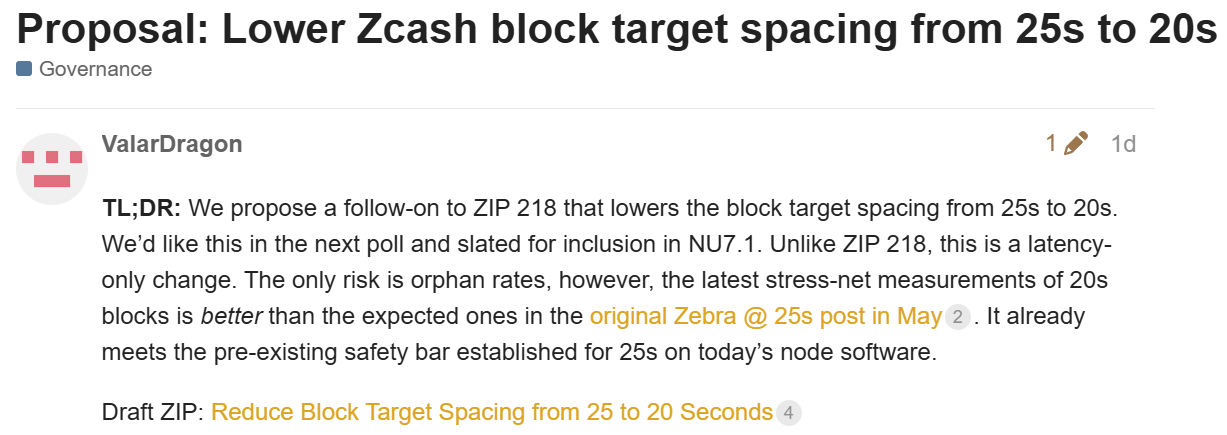
The Zcash proposal would lower the target block time from 25 to 20 seconds, developers said on the Zcash community forum. The idea comes just days after the NU7 upgrade went live and cut the same setting from 75 seconds to 25.
It is a draft for now, so nothing changes on the network unless the community backs it and the update ships. Zcash is a privacy coin that lets users hide the details of a payment, so every second saved on confirmation matters for everyday use.
What Is the Zcash NU7.1 Proposal, and What Would It Change?
The draft is a follow-on to ZIP 218, the rule that sets the 25-second target in NU7, and it asks to lower that target to 20 seconds.
Block time is the gap between new blocks on a blockchain, so a shorter gap means a payment gets its first confirmation faster, which helps shop payments, exchange deposits, and swaps between chains.
The developers add that the change should keep the ZEC issuance schedule and the daily private transaction capacity the same, since block rewards and other limits would be adjusted to match.
Why Do Zcash Developers Want 20-second Blocks After NU7?
The authors call 20 sec. the next step after NU7 and say the 25-second goal was never meant to be the last one, as they explain in their forum post.
A faster block also helps users who wait for several confirmations, since an exchange that asks for three would wait 60 seconds and not 75, which means less waiting at checkout and deposits that clear a little sooner.
The main risk they name is orphan blocks, which are blocks that lose a race and get dropped when two miners find one at nearly the same time, and they say their latest stress test numbers for 20 second blocks look better than the earlier 25 second estimates.
Zcash NU7.1 Proposal: Confirmed Details
The poll date, release date, and the activation block have not been shared in the sources reviewed, so those points are still unconfirmed.
What Are the Risks of Faster Zcash Block Times?
Faster blocks leave miners less time to share and check each new block, so more of them can end up orphaned, and ZIP 218 already puts the theoretical rate near 3.26 percent at 25 seconds.
Developers still need to show that 20-second blocks stay safe in real use, since a lab test does not always match how the live crypto network behaves.
What Should ZEC Holders Watch Next in Zcash News?
Three things matter from here, which are the community poll result, the final text of the draft, and the release plan.
Wallet and exchange teams will also watch how the network runs at 25 seconds first, since that data will shape how much support a faster setting gets.
If you follow privacy coins and crypto news, treat this as an early step toward quicker private payments and not as a done deal.
Is the Zcash NU7.1 proposal approved?
No, it is a draft that still needs a community poll, and if the poll fails, the block time would stay at 25 seconds.
The Bottom Line
The Zcash proposal is a small change on paper, just five seconds, yet it shows a clear push for faster private payments, and its fate now rests with the community poll and more testing on the live network.
YMYL Disclaimer: This article is for information only and is not financial, legal, investment, or trading advice. Crypto assets are volatile, so always check official sources first.






