BIS Stablecoin Bank Deposits Study Points to One Tool Banks Hold


BIS Stablecoin Bank Deposits Study: Can Banks Slow a $299B Market?
As of October 18, 2026, crypto news today comes from a research desk, not a price chart.
The Bank for International Settlements published a working paper on October 13, 2026, titled Are Stablecoins and Bank Deposits Substitutes?.
The BIS stablecoin bank deposits study finds that higher deposit rates are followed by slower stablecoin growth.
The BIS stablecoin paper is BIS Working Paper 1382, written by Rashad Ahmed and Iñaki Aldasoro.
Crypto news readers comparing stablecoins vs bank deposits get the question in the title.
CryptosR_Us also covered this news in its post on X, saying have to pay up to stop savers leaving for crypto. The paper is more cautious, calling the assets partial substitutes.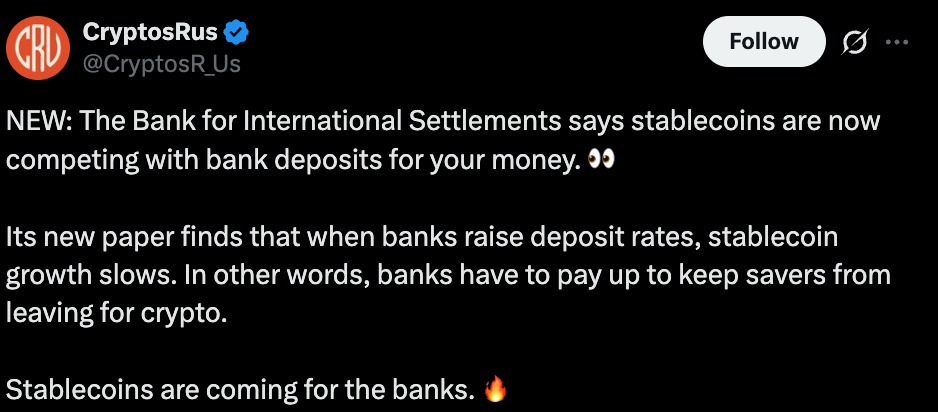
BIS Stablecoin Bank Deposits Paper Explained: What Was Tested?
The authors used weekly US data from January 2019 to June 2025 and tracked demand as changed deposit pricing.
The paper notes that stablecoins generally pay little or no interest. For non-yielding stablecoins, a higher bank rate could raise the cost of holding them.
BIS Stablecoin Research Findings 2026: Key Numbers
The table below summarises the BIS working stablecoins results.
Item | Detail |
Publication | BIS Working Paper 1382 |
Average 10-week growth | About 15% |
Estimated effect | About 3 percentage points lower per basis point |
Instrumental variable estimate | Roughly three times larger |
Do Higher Bank Deposit Rates Slow Stablecoin Growth?
In this sample, yes. Stablecoin growth slows when raise rates, and banks reprice deposits more aggressively once the federal funds rate passes about 3%, so a deposit rate hike feeds through more strongly there.
Banks compete through savings account interest rates and certificate of deposit (CD) rates, and the BIS says its results remain across different products.
Tokens supplied to DeFi protocols, where holders earn DeFi lending yield, showed the same direction.
How Do Deposit Rates Affect Stablecoin Market Cap?
In the BIS stablecoin bank deposits data, the effect falls on the pace of stablecoin market cap growth, not a drop in the total. The pattern was not found for non-stablecoin cryptoassets.
USDC vs USDT Growth When Deposit Rates Rise
The effect was stronger for USDC than USDT, which the authors tie to USDC’s closer US depositor links.
Can Stablecoins Replace Bank Deposits?
Not on this evidence. The BIS stablecoin bank deposits analysis concerns where funds are allocated, and it does not establish that stablecoin growth cuts total deposits or lending.
Posts asking why banks are losing deposits to go beyond the paper, since the authors do not establish bank outflows.
Headlines saying BIS says compete with banks capture only part of it. Readers asking stablecoins vs bank savings which is better will find no ranking.
Stablecoin News Today BIS Report: Market Snapshot
Data from CoinGecko, as of October 18, 2026:
Metric | Value |
Stablecoin market cap | $298.92B |
USDT market cap | $183.51B |
USDC market cap | $72.53B |
Expert View: Will Stablecoins Take Money From Banks?
Analysts may read the study as a pricing contest in commercial banks vs crypto, not a replacement story.
If deposit pricing keeps shaping stablecoin adoption, and stablecoin issuers could both face funding choices, and stablecoin reserves held at banks may matter. Stablecoin regulation could shape that.
The BIS stablecoin bank deposits link rests on data ending in June 2025, so later rate moves may test it. Price impact, if any, stays uncertain.
Disclaimer: This article is for information only and is not financial, legal, or investment advice. Crypto assets are volatile, and you can lose money. Verify details with official sources before making any decision.






